What Is the Best Climate Chamber to Buy in 2026?

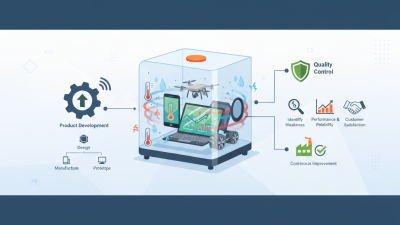
Choosing the best climate chamber in 2026 is less about buying the largest unit and more about matching test conditions to real product risks. A chamber that cycles from cold storage temperatures to humid heat may suit electronics, while battery components or automotive parts can demand different temperature ranges, ramp rates, and safety features. Small details matter: usable interior volume, shelf spacing, sensor placement, and the time required to recover after opening the door. A poor fit can waste energy and testing time. It happens.

Industry research offers useful context, but forecasts are not buying specifications. MarketsandMarkets’ Environmental Test Chambers Market analysis tracks demand across sectors including automotive, aerospace, and electronics. Its findings reflect growing use of controlled environmental testing, but do not identify one chamber as best for every laboratory. For technical requirements, IEC 60068 environmental testing standards provide a more practical reference. Their test methods describe conditions such as temperature change and damp heat, helping buyers compare equipment against intended procedures. Always verify the current standard edition and the chamber’s documented performance before purchase.

This guide compares chamber types, control accuracy, humidity capability, temperature range, uniformity, and service support. It also considers operating costs, calibration, installation space, and whether the manufacturer provides traceable test data. Those points are easy to overlook in a polished product brochure. A wider temperature range may look impressive, yet deliver little value if the unit cannot maintain stable conditions at your actual load. The best choice depends on your samples, test profile, budget, and facility. A little uncertainty remains until those needs are clearly defined.
What Is the Best Climate Chamber to Buy in 2026?

What a Climate Chamber Is and How It Simulates Environmental Conditions

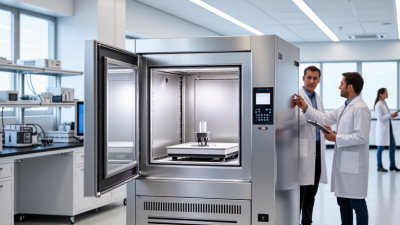
A climate chamber is an insulated test enclosure that controls conditions such as temperature and humidity around a product or material. Some models also control light or other environmental factors, but capabilities vary. WMO’s State of the Global Climate 2023 report puts global mean near-surface temperature at 1.45 ± 0.12°C above the 1850–1900 average. That shift makes controlled testing useful: researchers can expose samples to repeatable conditions rather than wait for weather to cooperate.

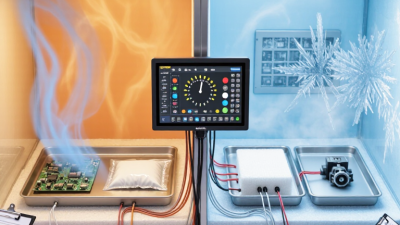
A chamber’s controller sets a target, while sensors monitor the air inside. Fans circulate it, and heating, cooling, or humidification systems adjust conditions over time. IEC 60068-2-1, -2-2, and -2-78 describe cold, dry-heat, and steady-state damp-heat test methods. A setpoint is not the whole story. Sample size, placement, airflow, and chamber recovery can affect what a test piece actually experiences. This sounds exact. It isn’t.

For example, a small electronic unit on a crowded shelf may warm differently from one near the circulating air. Technicians therefore check calibration, temperature uniformity, humidity control, and ramp rates against the test plan. They also record the conditions and sample location. One overlooked detail: opening the door can disturb the chamber’s environment, even during a brief inspection. The right test profile depends on the product, its intended use, and the question the test must answer.

Which Climate Chamber Types Suit Different Testing Needs

Choosing a climate chamber starts with the conditions your product will actually face. Temperature-and-humidity chambers suit electronics, coatings, and packaging that need controlled heat, cold, and moisture exposure. Check humidity capability at the temperatures you plan to use; some chambers cannot maintain high humidity near their coldest settings. For rapid temperature transitions, a thermal shock chamber moves samples between hot and cold zones. It can reveal stress that gradual cycling may miss. That matters.

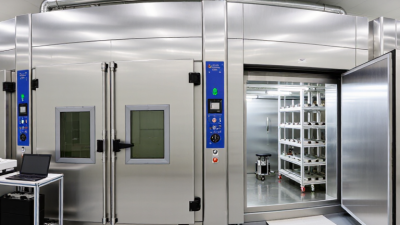
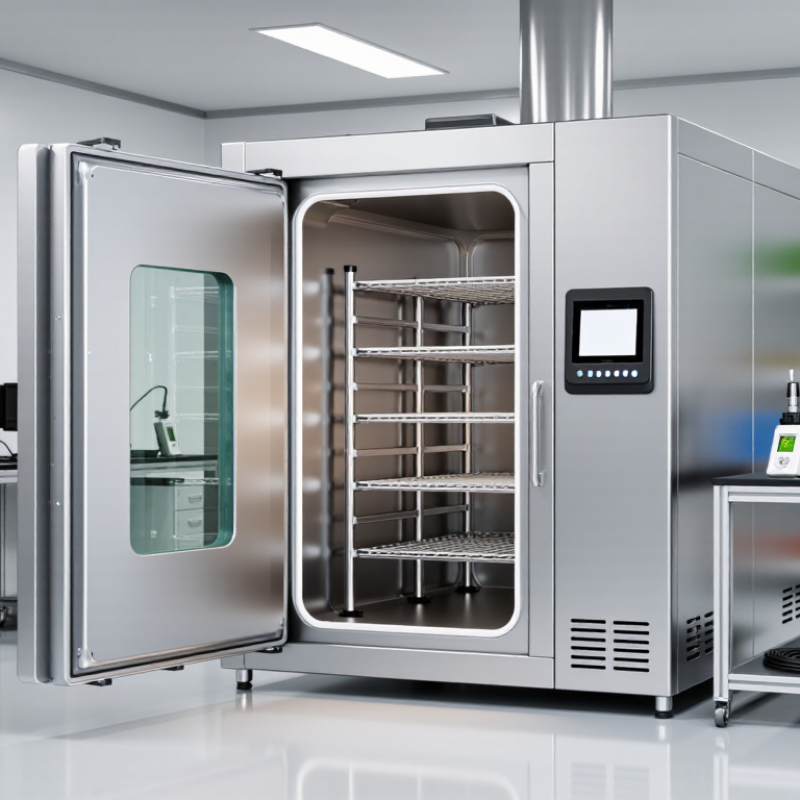
For large assemblies or batches, a walk-in chamber offers room for realistic loading, but requires more floor space and careful airflow planning. Reach-in models suit smaller components and routine qualification work. Altitude chambers add reduced-pressure conditions for products exposed to changing atmospheric pressure. A frequent purchasing mistake is prioritizing the widest temperature range over temperature uniformity and recovery time. Ask for test data with a representative load, not just an empty-chamber specification. It is easy to overlook setup time, too. Review sample size, sensor placement, humidity needs, and test cycles before choosing; the right chamber is the one that reproduces your conditions consistently.

Key Performance Specifications to Compare in 2026

What Is the Best Climate Chamber to Buy in 2026?

Key Performance Specifications to Compare in 2026

Compare chambers under realistic operating conditions, not just their advertised temperature limits. Check the usable temperature and humidity ranges, ramp rates, stability, and uniformity across the workspace. A chamber may reach the required temperature but struggle to hold it when fully loaded. Ask for test data showing performance with a representative load, including recovery time after the door opens. Small details matter. Sensor placement can affect readings near shelves, corners, and sample surfaces.

Look closely at control and verification features. Ask whether the system records temperature and humidity continuously, flags excursions, and exports time-stamped data. Confirm how calibration is performed and whether the stated uniformity reflects a defined test method, such as IEC 60068-3-5. Compare power use at your usual setpoints, not only at maximum output. The U.S. Department of Energy’s 2022 Industrial Decarbonization Roadmap identifies industry as responsible for about 30% of U.S. energy-related emissions, making operating efficiency a practical purchasing consideration. Still, a low energy figure is not enough if recovery is slow or conditions drift. I would also examine maintenance access and support response times; these are easy to overlook until a test schedule is already underway.

What Is the Best Climate Chamber to Buy in 2026? - Key Performance Specifications to Compare in 2026
Specification Practical Comparison Point What to Verify Before Buying
Temperature range Compare the required test limits with chamber options such as −40°C to +150°C or, for more demanding cold tests, approximately −70°C to +180°C. Confirm that the stated range applies to the intended chamber configuration and that the chamber can maintain the required temperature with the actual test load.
Humidity range A common comparison range is 10% to 98% RH, but the usable humidity range depends on temperature and chamber design. Request the temperature–humidity operating envelope. Check specifically whether the required RH can be controlled at the temperatures used in your test profile.
Temperature fluctuation Compare the stated fluctuation at a fixed sensor location; a target around ±0.5°C may be suitable for many controlled test applications. Check the test conditions, measurement period, sensor location, and whether the figure is specified with an empty or loaded chamber.
Temperature uniformity Use a target such as ±1.0°C as a comparison point, not as a universal requirement or guarantee. Ask for the measurement method, number and placement of sensors, chamber operating conditions, and whether the value applies to the usable workspace.
Temperature change rate Compare heating and cooling rates separately. Rates around 1–3°C per minute are useful reference points for many applications, but actual performance varies. Confirm whether the rate is an average or a specified segment, and whether it was measured empty, under load, or across the full temperature range.
Humidity control stability Compare RH stability using the same conditions and measurement period; a figure around ±2–3% RH can serve as an initial evaluation target. Check the temperature at which the value applies, sensor accuracy, and whether the chamber can recover humidity after door openings or load changes.
Usable workspace and load Choose internal volume and shelf capacity based on sample dimensions, quantity, airflow clearance, and total load—not nominal volume alone. Request the usable workspace dimensions, maximum shelf and total load, and guidance on spacing samples to avoid obstructing airflow.
Air circulation Assess airflow design alongside uniformity, especially when samples occupy a large portion of the workspace. Review the airflow layout and confirm whether performance specifications remain valid with the intended shelf arrangement and sample loading.
Controller and data logging Look for programmable temperature and humidity profiles, alarms, time-stamped records, and convenient data export. Check available interfaces, data retention, user access controls, alarm history, and whether exported records meet your documentation needs.
Safety and protection Compare over-temperature protection, independent safety cut-outs, alarms, and safeguards appropriate to the samples being tested. Confirm how the system responds to sensor faults, power interruptions, and out-of-range conditions. Review electrical and site-safety requirements.
Power and installation Compare supply voltage, phase, rated current, heat rejection, footprint, and service access with the intended installation site. Check facility power capacity, ventilation or cooling needs, door clearance, floor loading, drainage requirements, and any installation limitations.
Calibration and qualification Include calibration access and the ability to verify performance across the usable workspace in the purchase comparison. Ask what calibration or qualification documentation is available and whether mapping can be performed under conditions representative of your tests.
Comparison note: Numerical values above are practical evaluation targets, not universal standards. Confirm all quoted performance figures, operating limits, and test conditions in the supplier’s written specification.

How to Assess Reliability, Compliance, and Service Support

Buying a climate chamber in 2026 should begin with evidence, not glossy specifications. Ask for temperature and humidity uniformity data across the usable workspace, not just an empty chamber. Request test conditions, sensor locations, stabilization time, and measurement uncertainty. Small details matter. Compare the operating limits with your actual product load, packaging, and test profile. A chamber that reaches a setpoint may still recover slowly after door openings.

For compliance, review calibration traceability, documented procedures, and change-control records before purchase. Confirm that qualification support covers installation, operational checks, and performance mapping where your quality system requires it. Keep the records. A certificate alone does not prove that every test method fits your application. Ask who performs calibration, how deviations are handled, and whether reports identify instruments and dates. Requirements differ, so have your quality or engineering team assess fit against applicable standards and internal procedures.

Service support is easiest to judge before a fault occurs. Ask about response targets, parts availability, remote diagnostics, and technician coverage at your site. Get commitments in writing. A practical demonstration can reveal alarm clarity, controller usability, and how quickly staff can retrieve logs. Speak with users of comparable chambers, while remembering that their workloads may differ. I would leave time for this review; procurement schedules often make it feel optional. Actual reliability still depends on installation, maintenance, and day-to-day use.

What Is the Best Climate Chamber to Buy in 2026?

Use your required test conditions to assess chamber range, compliance, reliability, and service support.

The bars show preferred cold-test temperatures listed in IEC 60068-2-1, not chamber performance ratings. When comparing chambers, confirm that the specified operating range covers your test points and that the supplier can document required control performance, applicable compliance, maintenance arrangements, and service response.

How to Match a Chamber to Your Budget and Long-Term Costs

A climate chamber’s purchase price is only the first number to compare. Match its usable test volume to your typical load, not your largest imaginable one. An oversized chamber can waste energy and floor space; an undersized one may force extra test cycles. Check temperature and humidity ranges, recovery time after door openings, and whether shelves fit your actual products. Ask suppliers for measured energy use under a representative test profile. Rated power alone can mislead.

Include electricity, maintenance, calibration, and downtime in your budget. The U.S. Energy Information Administration reported an average commercial electricity price of about 12.7 cents per kilowatt-hour in 2023.

At that rate, a chamber drawing one kilowatt continuously would cost roughly $1,113 per year. That is a planning estimate, not a prediction: real chambers cycle, and local tariffs vary.

The Department of Energy’s Federal Energy Management Program recommends evaluating life-cycle costs, rather than relying on initial price alone. Request service intervals and parts estimates, too. A low quote can hide expensive upkeep. A common planning mistake is assuming the door stays shut; frequent access can change both energy use and test stability. Leave room in the budget for that imperfect reality.

Request a Quote

For more information on our instruments, consumables, or services, or to request a quote, complete the contact form below, and one of our associates will reach out to you!

Request a Service Quote

To request service on your machine(s), complete the contact form below, and one of our associates will reach out to you!

Browse by:

  • Test Property
  • Manufacturer