What Is a Thermal Test Chamber?
A thermal test chamber is a controlled enclosure used to expose products to precise temperature conditions. It helps engineers evaluate performance, safety, durability, and reliability before products reach customers. Depending on the design, the chamber may create cold, heat, rapid temperature changes, or controlled humidity. Small electronics, vehicle components, batteries, medical devices, and industrial materials often require this type of testing.
The process looks simple, but dependable results require careful control. Sensors measure the chamber’s internal temperature, while calibrated systems maintain the programmed profile. Engineers may test a device at -40°C, raise the temperature to 85°C, and repeat the cycle several times. They then inspect failures, response changes, and recovery behavior. Test records should include the product setup, sensor locations, ramp rates, exposure time, and calibration status. Details matter.
A thermal test chamber is not merely a heated or cooled box. Airflow, sample placement, door openings, and load size can influence results. Poor setup may produce misleading data. That is why experienced laboratories follow documented procedures and relevant industry standards. Yet no chamber represents every real-world condition perfectly. This limitation deserves attention. Test plans should match the product’s intended environment, not just a convenient temperature range. By understanding chamber operation, test methods, and measurement uncertainty, readers can make more informed equipment and reliability decisions. The goal is confidence, supported by evidence.
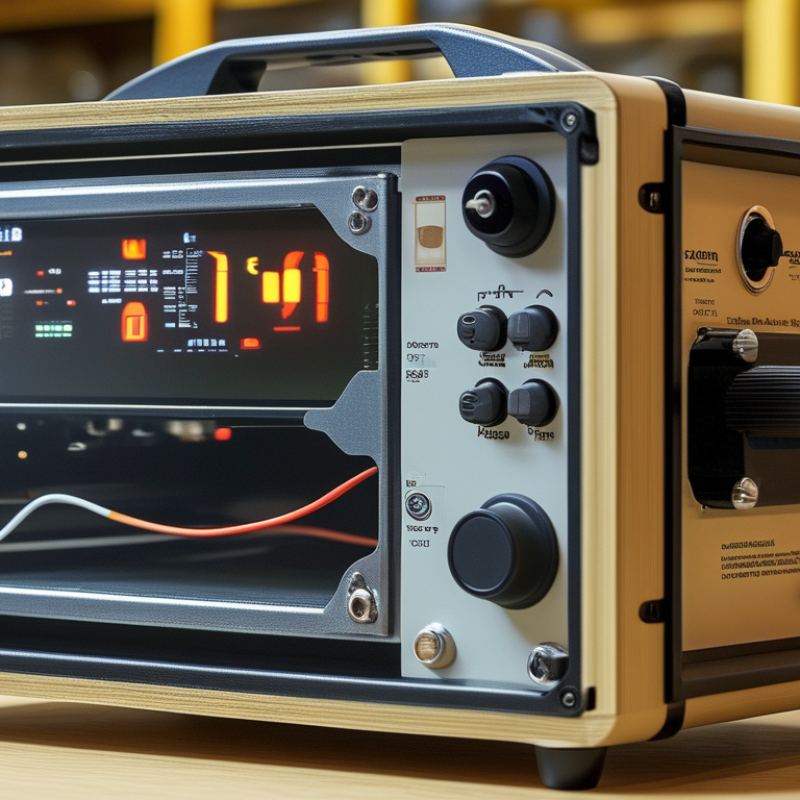
Definition and Purpose of a Thermal Test Chamber
What Is a Thermal Test Chamber?
A thermal test chamber is an enclosed system that exposes products to controlled temperature conditions. It can create cold, heat, or rapid temperature changes. Engineers use these chambers to examine how materials, electronics, batteries, and assemblies respond before field deployment. A typical test may hold a component at 85°C for several hours, then cool it to -40°C. Sensors record the chamber temperature and the product’s actual response.
The purpose of a thermal test chamber is to reveal weaknesses that normal room conditions may hide. Repeated exposure can uncover cracked seals, unstable circuits, brittle plastics, or weakened connections. Test engineers usually define ramp rates, dwell times, loading conditions, and acceptance limits before testing begins. Calibration matters. A displayed temperature is not always the temperature around every product surface. Chamber airflow, product placement, and test load can change results. No chamber is perfectly uniform. That assumption can mislead.
Tips: Place sensors near critical parts, not only chamber walls. Allow the product to stabilize before judging performance. Record unexpected behavior instead of dismissing it. A failed test may expose an unrealistic test profile, poor packaging, or a design weakness. Reviewing these details improves reliability. It also makes later test decisions more defensible.
| Data Dimension | Key Information | Practical Purpose |
|---|---|---|
| Definition | A thermal test chamber is an enclosed test system that controls temperature, and in some designs humidity, to expose products or materials to repeatable environmental conditions. | It enables controlled laboratory testing without relying on changing outdoor weather conditions. |
| Primary Variables | Temperature is the core variable. Additional variables may include relative humidity, temperature change rate, pressure, light exposure, or vibration when combined with other test equipment. | Different variables help reveal weaknesses related to heat, cold, moisture, condensation, and environmental cycling. |
| Temperature Capability | Many general-purpose chambers operate across a range near -70 °C to +150 °C, although the actual range depends on chamber design, load, and test requirements. | Products can be evaluated under both low-temperature and high-temperature conditions. |
| Humidity Capability | Temperature-and-humidity chambers commonly control relative humidity over a broad mid-to-high humidity range, often approximately 10% to 95% RH within a specified temperature range. | Humidity testing helps assess corrosion risk, moisture absorption, insulation performance, and condensation-related failures. |
| Temperature Cycling | The chamber can automatically alternate between selected hot and cold setpoints according to a programmed profile. | Repeated cycling helps identify expansion, contraction, seal damage, solder-joint fatigue, and other temperature-related weaknesses. |
| Thermal Shock Testing | A thermal shock system rapidly transfers test specimens between separately conditioned hot and cold zones, or changes conditions at a high controlled rate. | It is used to evaluate sudden temperature transitions that may cause cracking, delamination, leakage, or mechanical stress. |
| Common Chamber Types | Common configurations include temperature chambers, temperature-and-humidity chambers, thermal shock chambers, walk-in chambers, and benchtop chambers. | The chamber type is selected according to specimen size, environmental variables, transition speed, and required test duration. |
| Typical Test Specimens | Test specimens may include electronic assemblies, batteries, automotive components, plastics, coatings, packaging, sensors, medical devices, and finished products. | Testing can be performed on individual materials, components, subsystems, or complete products. |
| Reliability Evaluation | Thermal testing is commonly used for environmental stress screening, qualification testing, design verification, reliability testing, and failure analysis. | Controlled stress can expose defects before products are released or placed into service. |
| Test Profile | A test profile normally specifies setpoints, ramp rates, dwell times, cycle counts, humidity conditions, specimen configuration, and acceptance criteria. | A defined profile makes test results repeatable and easier to compare between samples or production lots. |
| Measurement and Control | Chambers use temperature sensors, humidity sensors when applicable, a control system, air circulation, heating elements, and mechanical or cascade refrigeration systems. | These systems maintain and record the environmental conditions applied to the specimen. |
| Typical Test Outcomes | Results may include functional performance, dimensional change, electrical resistance, insulation behavior, appearance, leakage, corrosion, cracking, or complete failure. | Measured outcomes help determine whether the product meets its specified environmental requirements. |
| Important Test Controls | Accurate calibration, proper specimen placement, adequate air circulation, suitable load size, stable power, and documented chamber conditions are important for reliable results. | Good test control reduces measurement uncertainty and prevents chamber setup from influencing the result. |
| Main Purpose | The main purpose of a thermal test chamber is to simulate controlled thermal and moisture environments so that product behavior, durability, and reliability can be assessed. | It supports safer product development, earlier defect detection, performance validation, and compliance with applicable test requirements. |
Related Posts
-

Choosing the Right Temperature Humidity Chamber: A Comprehensive Comparison Guide
-

Essential Checklist for Selecting the Right Temperature Test Chamber for Your Testing Needs
-

Top Climate Chamber Innovations for Research and Development in 2025
-
How to Choose the Right Thermal Test Chamber for Your Product Development Needs
-
Exploring the Role of Climatic Test Chambers at the 138th Canton Fair 2025 in China's Testing Industry
-

Why is a Test Chamber Essential for Quality Control in Product Development