Top 10 Climatic Test Chambers for Global Buyers
A climatic test chamber helps manufacturers examine how products respond to heat, cold, humidity, and changing environmental conditions. For global buyers, choosing one is not just a matter of temperature range. Sample size, humidity control, recovery time, uniformity, service access, and calibration records all affect whether test results are useful and repeatable.
Demand for dependable environmental testing is growing alongside complex products and global supply chains. The International Energy Agency’s Global EV Outlook 2024 reports that nearly 14 million electric cars were sold worldwide in 2023, about 18% of all car sales. Batteries, sensors, and vehicle electronics must operate across demanding climates. Standards also matter. IEC 60068-2-1, IEC 60068-2-2, and IEC 60068-2-30 describe cold, dry-heat, and cyclic damp-heat test methods. A chamber supports testing; it does not, by itself, prove product compliance.
This guide compares ten options for buyers with different test needs and budgets. It considers usable chamber volume, temperature and humidity performance, control systems, safety features, energy use, and after-sales support. The comparison is intended to help narrow a shortlist, not replace a technical review of each model’s specifications. Small details matter. A door that opens easily can save time during repeated sample changes; poor recovery after opening can disrupt a test schedule. Published specifications may also differ from performance under real operating conditions. So ask for test data, clarify installation requirements, and verify local service coverage before purchasing. No chamber fits every laboratory.
What Climatic Test Chambers Are and How They Work
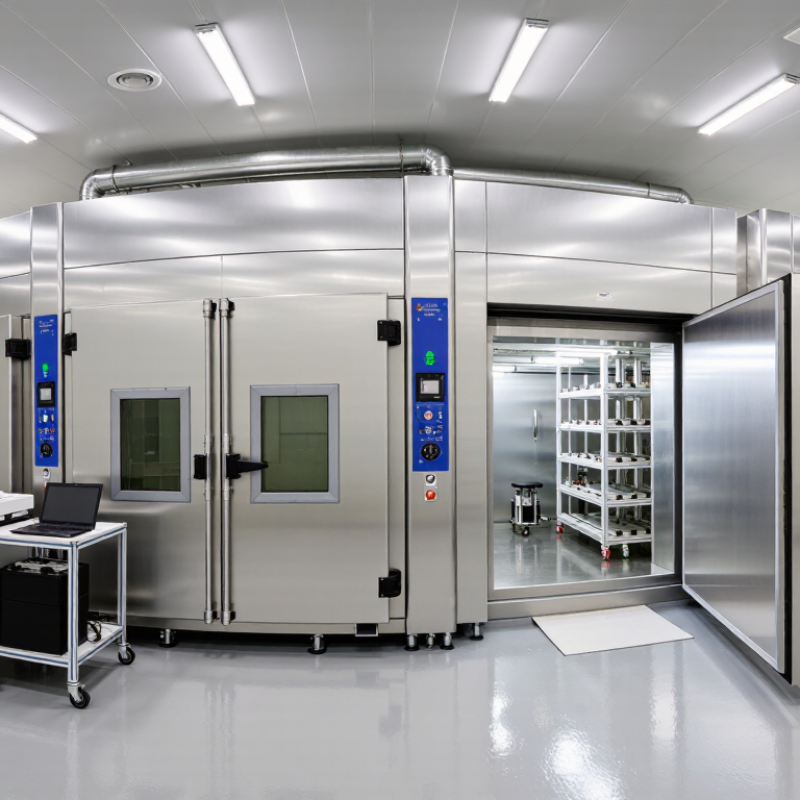
A climatic test chamber is an insulated enclosure that exposes products or materials to controlled temperature and humidity. It helps engineers observe how samples respond to conditions such as heat, cold, and moisture. Think of a small metal cabinet with a viewing window, shelves, and sensors placed near the test item. The exact setup depends on the product and the question being tested.
Inside, heating and refrigeration systems adjust the air temperature. A humidifier adds moisture, while a dehumidifying system can remove it. Sensors send readings to a controller, which compares actual conditions with the programmed settings and makes corrections. The chamber may hold one steady condition or cycle through changing levels over time. Small adjustments matter. A crowded shelf can restrict airflow and create uneven exposure.
Reliable results depend on more than the chamber’s display. Test teams consider sample placement, stabilization time, sensor calibration, and how often the door is opened. These details can affect readings. That is easy to overlook. A chamber also cannot reproduce every real-world factor, such as vibration or sunlight, unless those stresses are included in the test. Results should therefore be interpreted alongside the test method and the product’s intended use, not treated as a perfect prediction of service life.
Climatic Test Chamber Examples: Selected Temperature Setpoints
A climatic test chamber controls temperature and, when equipped for humidity testing, relative humidity. Heaters and refrigeration change the chamber temperature; a humidifier adds moisture, while sensors and a controller monitor conditions and adjust the system. The chart shows example test setpoints—not universal requirements, since the severity depends on the applicable standard and product test plan.
Examples: cold test at −40°C (IEC 60068-2-1); steady-state damp heat at 40°C (IEC 60068-2-78); cyclic damp heat upper temperature at 55°C (IEC 60068-2-30); dry heat at 85°C (IEC 60068-2-2). Verify the required test conditions in the applicable standard and product specification.
Key Criteria for Comparing Climatic Test Chamber Suppliers
A chamber’s headline temperature range is only a starting point. Ask suppliers for mapped uniformity, stability, recovery time, and humidity control under loaded conditions. These results matter when sensors sit near shelves, cable ports, or airflow returns. IEC 60068-3-5 and IEC 60068-3-6 describe performance confirmation methods for temperature and humidity chambers. Request the test setup, sensor locations, and calibration certificates—not only a brochure figure. Small details matter.
Check measurement uncertainty transparently. NIST Technical Note 1297, Guidelines for Evaluating and Expressing the Uncertainty of NIST Measurement Results, explains how to combine uncertainties and report expanded uncertainty. A coverage factor of k=2 is commonly associated with about 95% coverage, when assumptions are met. Ask whether quoted tolerances include sensor uncertainty and apply across the usable workspace. Compare ramp rates with realistic payloads, condensation management, alarm records, and service response times. An empty-chamber ramp may impress, then disappoint with a full rack. Review energy figures only when setpoints and ambient conditions are specified. Supplier documentation is not always tidy. Treat missing data as a question, not proof of poor quality, and request a witnessed acceptance test before purchase.
Top 10 Climatic Test Chambers for Global Buyers - Key Criteria for Comparing Climatic Test Chamber Suppliers
| No. | Comparison criterion | What to compare | Evidence to request | Why it matters to global buyers |
|---|---|---|---|---|
| 1 | Temperature range and performance | Specified minimum and maximum temperatures, ramp rates, stability, and uniformity. Check whether figures apply to an empty chamber or a defined test load. | Technical specification and temperature mapping results stating test conditions, sensor locations, and measurement uncertainty. | Published performance can vary with chamber size, ambient conditions, specimen mass, and airflow. Like-for-like test conditions make comparisons meaningful. |
| 2 | Humidity range and control | Relative-humidity operating range, control accuracy, stability, and the temperature limits at which humidity can be maintained. | Humidity performance data across the required temperature range, plus details of the measurement and control method. | A humidity range stated without its corresponding temperature limits may not represent the conditions needed for a test program. |
| 3 | Usable workspace and payload | Internal working dimensions, shelf area, maximum distributed load, feed-through options, and clearance for the largest specimen or fixture. | Dimensioned drawings, loading limits, and confirmation that the proposed specimen and fixtures fit without obstructing airflow. | Chamber volume alone does not establish usable capacity; specimen placement and heat load can affect test performance. |
| 4 | Applicable test methods | Compatibility with the buyer’s required procedures, such as IEC 60068-2-1 for cold tests, IEC 60068-2-2 for dry heat, IEC 60068-2-30 for cyclic damp heat, or IEC 60068-2-78 for steady damp heat. | A requirement-by-requirement compliance statement and details of any needed chamber options or external equipment. | Standards define test procedures and conditions; a chamber’s ability to support a test should be confirmed against the applicable method and edition. |
| 5 | Control system and data records | Programmable profiles, alarm handling, user access controls, data export formats, timestamps, and options for remote monitoring or communication with laboratory systems. | Controller demonstration, sample data file, available interfaces, and documentation on data storage and access. | Clear, retrievable records support repeatable testing, investigation of interruptions, and laboratory documentation requirements. |
| 6 | Calibration and verification | Sensor calibration provisions, calibration intervals, traceability of calibration results, and support for chamber uniformity or performance verification. | Example calibration certificate, instrument details, and, where required, evidence that calibration is performed within an ISO/IEC 17025-accredited scope. | Calibration and verification evidence helps laboratories assess measurement reliability and meet their own quality-system requirements. |
| 7 | Energy, utilities, and installation | Electrical supply, rated power, water or drainage needs if applicable, heat rejection, ventilation, floor loading, access route, and installation clearances. | Site-preparation checklist, utility drawings, installation requirements, and energy or power-consumption data under stated conditions. | Site constraints and local utility differences can affect installation cost, commissioning time, and ongoing operating expenses. |
| 8 | Safety and protective functions | Over-temperature protection, alarms, door interlocks where applicable, electrical protection, emergency procedures, and compatibility with the specimen’s hazards. | Risk and safety documentation, descriptions of protective devices, and a list of options needed for the intended application. | Required safeguards depend on the chamber configuration, local regulations, and the materials or devices being tested. |
| 9 | Service, spare parts, and warranty | Warranty coverage, service availability in the destination country, response arrangements, spare-parts lead times, maintenance requirements, and user training. | Written warranty terms, service coverage details, recommended maintenance schedule, and parts availability information. | Local service capability and access to parts can reduce downtime, especially when the chamber is used for scheduled or time-sensitive testing. |
| 10 | Delivery, documentation, and lifecycle cost | Lead time, shipping and import responsibilities, commissioning scope, operating and maintenance documentation, consumables, and expected service costs. | Itemized quotation, delivery and commissioning plan, documentation language options, and a lifecycle-cost breakdown with stated assumptions. | Purchase price alone does not capture shipping, installation, utilities, maintenance, and downtime over the equipment’s service life. |
Note: Chamber capabilities and compliance should be verified for the specific model, configuration, test procedure, specimen load, and destination site.
Ten Climatic Test Chamber Manufacturers and Their Specialties
Top 10 Climatic Test Chambers for Global Buyers
Ten Climatic Test Chamber Manufacturers and Their Specialties
Choosing a chamber starts with the test, not the brochure. MarketsandMarkets’ environmental test chamber report estimated the market at about USD 1 billion in 2023 and projected continued growth. Forecasts vary by scope, so treat market size as context, not a buying specification.
IEC 60068-2-1 and IEC 60068-2-2 define cold and dry-heat test methods; they help buyers compare test conditions, not chamber quality.
Ten manufacturer specialties serve different needs:
Fit matters.
For global buyers, check usable volume, sensor placement, recovery time, and calibration records. Ask how the supplier verifies uniformity with a loaded chamber, not just an empty one. A neat specification sheet can hide awkward details, such as a door that blocks a trolley. I would compare service access and local support as carefully as temperature range; that judgment is less glamorous, but often more useful.
Regional Compliance, Availability, and After-Sales Support
For global buyers, a climatic test chamber is only useful when it fits local operating conditions. Check the required temperature and humidity range against the test standard used at your site. Confirm supply voltage, phase, frequency, plug type, and available floor space before comparing models. A chamber listed as “ready to ship” may still need weeks for freight, customs processing, and installation planning. Timing can slip.
Regional compliance deserves careful attention. Ask for the documentation your quality team needs, such as calibration records, operating manuals, and electrical specifications. Requirements can differ by country, industry, and test method, so verify them with your compliance staff rather than relying on a sales description. If a supplier cannot explain how its records support your procedures, pause. That gap matters.
After-sales support should be practical and measurable. Ask how quickly technicians respond in your time zone, whether remote diagnosis is available, and where common replacement parts are stocked. A failed door seal or sensor can interrupt a test schedule; a clear service path reduces uncertainty. Check whether installation, operator training, and periodic calibration are available locally. Not every buyer needs the same package, and I would not assume that the cheapest quote includes the support a laboratory actually needs. Get the service terms in writing.
How to Match Chamber Specifications to Testing Needs
Top 10 Climatic Test Chambers for Global Buyers
How to Match Chamber Specifications to Testing Needs
A climatic chamber should reproduce a product’s service conditions, not merely offer an impressive temperature range. Define the lowest and highest expected temperatures, humidity levels, exposure duration, and transition rates before comparing models. Include the product’s size and thermal mass; a densely loaded chamber may behave differently from an empty one. Small details matter.
The World Meteorological Organization’s State of the Global Climate 2023 report estimated that the global mean temperature was 1.45 ± 0.12°C above the 1850–1900 average. That figure describes a global trend, not a test setpoint. Use local weather records and the product’s actual shipping, storage, and operating conditions to establish realistic limits. Extreme conditions may matter more than annual averages.
Check usable workspace, temperature uniformity, humidity control, recovery time after door openings, and data logging. IEC 60068-3-5:2018 and IEC 60068-3-6:2018 describe methods for confirming temperature and temperature-humidity chamber performance. Ask for mapped test results under representative loading, not only empty-chamber specifications. A faster ramp can shorten a cycle, but it may create unrealistic stress or uneven conditions. This is a judgment call worth reviewing with the test engineer. Some requirements will remain uncertain until actual product trials expose them.
Related Posts
-
Essential Checklist for Selecting the Right Temperature Test Chamber for Your Testing Needs
-
What Is an Environmental Chamber Used For?
-
Exploring the Role of Climatic Test Chambers at the 138th Canton Fair 2025 in China's Testing Industry
-
What Is a Thermal Test Chamber?
-
2025 Top 10 Climatic Test Chambers for Accurate Environmental Testing
-
How to Choose the Right Test Chamber for Your Needs?
Have Questions? We're Here to Help!
Give us a call at (864) 989-0566 or send us a message to discuss our testing equipment with an expert.