Top Thermal Conductivity Testing Equipment for Buyers?
Choosing thermal conductivity testing equipment is not just a search for the lowest measurement uncertainty. Buyers must match the method to their materials, sample dimensions, temperature range, and testing workflow. A dense insulation board, a polymer pellet, and a thin coating can require very different fixtures. Small details matter: surface flatness, contact pressure, and sample thickness can all affect results.
The stakes extend beyond the laboratory. The 2023 Global Status Report for Buildings and Construction, published by UNEP and the Global Alliance for Buildings and Construction, reported that buildings accounted for 34% of global energy demand and 37% of energy- and process-related carbon dioxide emissions in 2022. Better material measurements support more informed insulation and product decisions. They do not, by themselves, guarantee real-world energy savings. That distinction matters.
This guide compares common equipment types and the buying questions behind them. Guarded heat-flow-meter systems, such as those covered by ASTM C518, suit many insulation materials. Laser-flash instruments, described in ASTM E1461, determine thermal diffusivity; conductivity calculations also require density and specific heat data. Transient methods can offer different advantages for certain sample forms. No method fits every buyer. A manufacturer’s brochure may highlight precision while saying less about calibration, operator training, or sample preparation. Ask for traceable calibration information, applicable standards, measurement ranges, and representative test data before comparing quotes. Specifications deserve scrutiny. A sensible shortlist starts with the sample, not the sales claim.
What Thermal Conductivity Testing Equipment Measures
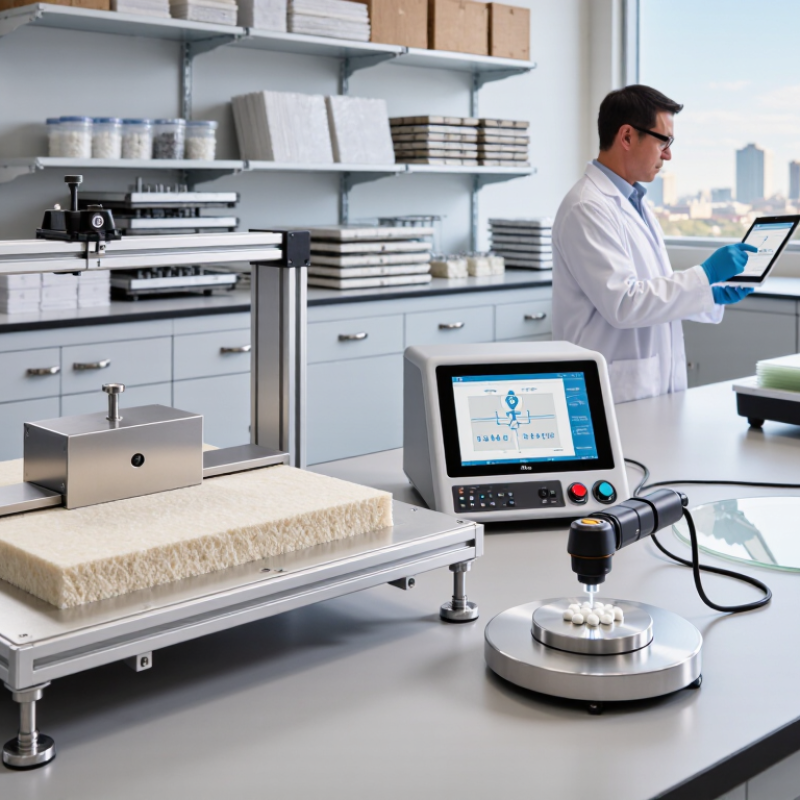
Thermal conductivity testing equipment measures how readily heat moves through a material, reported as thermal conductivity in watts per metre-kelvin (W/m·K). A guarded hot plate creates a steady temperature difference across a flat specimen and measures the heat flow needed to maintain it. Heat-flow meters use calibrated sensors to estimate the same property more quickly. Both methods depend on specimen thickness, surface contact, temperature, and moisture. Small setup differences can shift results.
Some instruments also measure thermal diffusivity, which describes how quickly a temperature change travels through a sample. With density and specific heat capacity, diffusivity can help calculate conductivity, but it is not conductivity itself. ASTM C177 and C518 describe steady-state methods; ISO 22007-2 covers a transient plane heat source method. Choose a method suited to the material and its expected range. That distinction is easy to miss.
The IEA’s 2023 Global Status Report for Buildings and Construction estimated that buildings used 34% of global energy in 2022 and produced 37% of energy- and process-related CO₂ emissions.
Accurate material measurements matter. Yet a lab result can still differ from field performance when joints, air gaps, or moisture change heat flow.
How Thermal Conductivity Testers Work
Thermal conductivity testers measure how readily heat moves through a material. A steady-state instrument places a sample between a heated plate and a cooler surface. Sensors track temperatures on both sides while the system controls the heat flow. Once readings stabilize, the instrument uses heat input, sample thickness, and temperature difference to calculate conductivity.
Some testers use a transient method instead. A fine probe, often shaped like a wire or needle, warms the sample briefly. The tester records how quickly the nearby material heats up. This approach can be useful for powders, liquids, and some building materials. The probe must make suitable contact, though. Small air gaps can distort readings.
Details matter. Operators check sample dimensions, surface condition, and sensor placement before testing. Many instruments also need calibration against reference materials. A damp sample may behave differently from a dry one, so record moisture and temperature with each result. The process sounds tidy, but real materials are rarely perfect. Even careful measurements carry uncertainty. A useful tester shows its method, operating range, and repeatability, helping buyers judge whether the results fit their material and test conditions.
Main Types of Thermal Conductivity Testing Equipment
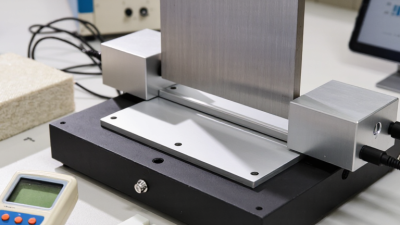
Thermal conductivity testing equipment is usually selected by sample form, temperature range, and required accuracy. A guarded hot plate measures steady heat flow through a flat specimen. The central meter section is surrounded by a heated guard, which limits sideways heat loss. It suits insulation boards and other solid materials, but testing can take hours. Contact pressure and surface flatness matter.
A heat flow meter also tests flat solids, often with a simpler setup and shorter cycle. It compares heat passing through the specimen with calibrated sensors, so reference materials and careful calibration are important. For thin wires, powders, or liquids, transient hot-wire equipment records how quickly a heated probe loses heat. Small air gaps can distort results. They are easy to overlook.
Laser-flash equipment measures thermal diffusivity, not conductivity directly. The operator combines diffusivity with density and specific heat to calculate conductivity. This method is useful for small, dense samples and elevated temperatures. It demands precise sample preparation. No setup is perfect. A familiar instrument can still produce weak data when moisture, temperature gradients, or specimen thickness go unchecked. Match the method to the material, then verify the test conditions before trusting a number.
Top Thermal Conductivity Testing Equipment: Main Types
Approximate thermal conductivity ranges commonly addressed by major measurement methods (W/m·K). The ranges are indicative, not guaranteed instrument specifications.
Guarded hot plate and heat flow meter methods are commonly used for insulation. Transient methods cover broader material types, while laser flash measures thermal diffusivity; conductivity is calculated from diffusivity, density, and specific heat capacity. Actual measurement limits depend on the instrument, sample, and test conditions.
Key Factors for Choosing a Thermal Conductivity Tester
Choosing a thermal conductivity tester starts with the material, not the instrument’s feature list. A rigid ceramic tile, a soft insulation blanket, and a thin polymer sheet behave differently during measurement. Check which test method suits your samples. Transient methods can be useful for varied materials and quicker checks, while steady-state methods may suit stable, uniform specimens. Confirm the tester’s temperature range, sample-size limits, and required contact pressure. These details matter. Surface flatness, thickness, and moisture can all affect readings, even when the instrument is capable. Record how each specimen is prepared so later results remain comparable.
Then consider repeatability, calibration, and day-to-day usability. Ask how the system handles small or uneven samples, and whether its software flags unstable measurements. In practice, real surfaces are less cooperative than catalog examples suggest. I would not treat a best-case accuracy figure as a promise for every sample. Request method-relevant performance data and traceable calibration records. If several operators will use the equipment, check whether setup steps are clear and sample positioning is consistent. A low purchase price may not include fixtures or service support. Yet an overly complex system can slow routine work. Choose based on the materials and decisions you actually need to support.
How to Compare Equipment for Different Materials and Applications
Equipment choice should follow the material, temperature range, and measurement question—not a headline accuracy figure.
For flat insulation boards, ASTM C518 heat-flow meters support routine comparative testing; ASTM C177 guarded-hot-plate equipment is suited to steady-state measurements where tighter control matters. Flexible foams, composites, and layered panels may need transient methods, such as ISO 22007-2, because contact pressure and interfaces can affect readings. Check specimen dimensions, calibration traceability, repeatability, and stated uncertainty before comparing equipment.
There is no perfect fixture.
The IEA and UNEP’s 2023 Global Status Report on Buildings and Construction estimates that
building operations used about 30% of global final energy in 2022.
That makes reliable insulation data useful, but it does not mean every lab needs the same instrument. Compare the instrument’s conductivity range and test time with your actual materials, then ask how moisture, thickness, and surface finish are controlled.
Small details matter.
Keep reference specimens and record conditioning, temperature, and preparation for each test. I would be cautious about any universal ranking: a tidy laboratory result may not represent a rough or moisture-sensitive field sample.