Top Tensile Strength Testing Machine Suppliers Worldwide

Tensile strength testing machine suppliers are becoming more important as manufacturers demand safer, lighter, and more traceable materials. Automotive, aerospace, construction, medical, and packaging companies all depend on reliable force measurement. A broken specimen in a laboratory may reveal a hidden production weakness. It may also expose an incorrect testing setup.

Recent market studies from Grand View Research and MarketsandMarkets report continued growth in materials testing equipment, driven by advanced manufacturing, infrastructure investment, and stricter quality control. These reports also highlight automation, digital data capture, and software integration as major purchasing factors. However, market forecasts vary by research method and regional coverage. No ranking is perfect.

This guide examines top tensile strength testing machine suppliers worldwide through practical and technical criteria. These include load-cell accuracy, frame rigidity, test-speed control, extensometer compatibility, software usability, calibration support, and global service networks. Standards matter. ASTM E8/E8M defines tensile testing practices for metallic materials, while ISO 6892-1 provides internationally recognized guidance for metals. ISO 7500-1 addresses verification of force-measuring systems.

A capable supplier should provide more than a polished brochure. It should offer traceable calibration, clear technical documentation, operator training, and responsive maintenance. Machine capacity must match the specimen, not merely the purchasing budget. A small polymer strip and a thick steel coupon require different fixtures and force ranges. That detail is easy to overlook.

The comparison ahead is designed for engineers, laboratory managers, and procurement teams. It balances published specifications with real-world usability. Readers should still verify current certifications, regional support, and application performance before making a final decision.
Top Tensile Strength Testing Machine Suppliers Worldwide

What Tensile Strength Testing Machines Measure and Why They Matter

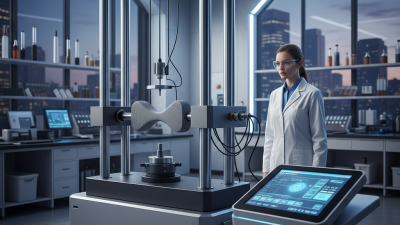
Tensile strength testing machines measure how a material behaves while being pulled. A specimen is clamped between two grips. The machine applies controlled force until deformation or fracture occurs. It records tensile strength, yield strength, elongation, and elastic modulus. These values reveal whether steel, plastic, wire, or composite material can survive real service loads.

The test also exposes weakness that visual inspection misses. A smooth metal rod may contain inconsistent processing zones. A plastic part may stretch excessively before breaking. ISO 527 and ASTM D638 define widely used procedures for polymer testing. ASTM E8 supports tensile testing of metallic materials. The World Steel Association reported approximately 1.89 billion tonnes of crude steel production in 2023. That scale makes repeatable material verification essential across factories and laboratories.

Test results guide material selection, process control, and quality documentation. A higher strength value does not always mean a safer product. Excessive strength can accompany poor ductility or sudden fracture. I would not trust one curve alone. Operators should check specimen dimensions, gripping alignment, test speed, and calibration records. Measurement uncertainty also deserves attention. NIST guidance on uncertainty reminds engineers that every reported value has limits. A result reading 500 MPa may not truly separate a 498 MPa sample from a 502 MPa sample. Small details matter.

Key Machine Types and Performance Features to Compare

Top Tensile Strength Testing Machine Suppliers Worldwide

Key Machine Types and Performance Features to Compare

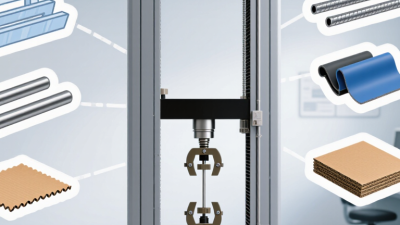
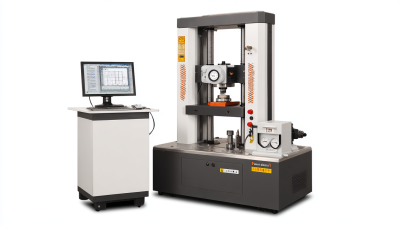
Choosing a tensile tester starts with the material, not the supplier. Electromechanical machines suit plastics, films, metals, and composites. Hydraulic systems handle higher loads and thicker specimens. Tabletop models save space, but their capacity can limit future testing.

Grand View Research reported a mid-single-digit annual growth forecast for the universal testing machine market through 2030. MarketsandMarkets also projected growth above 5% during the same period. These figures suggest rising demand for flexible, digitally controlled equipment. Still, market growth does not guarantee suitable performance.

Compare load capacity, accuracy, crosshead speed, and frame stiffness. A 10 kN load cell may fit polymer testing, while structural metals often require 600 kN or more. Check whether the machine supports ISO 6892-1 and ASTM E8/E8M methods. Extensometers should match elongation range and gauge length. Automatic alignment reduces uneven loading around the specimen. It sounds minor. It is not.

Software matters during daily testing. Look for live stress-strain curves, exportable raw data, calibration records, and user permissions.

Temperature chambers add value for plastics and aerospace materials. Safety doors, overload protection, and emergency stops deserve equal attention.

I would not trust a glossy accuracy claim without calibration uncertainty. One overlooked detail is service access; a precise machine becomes frustrating when replacement parts take weeks.

How to Evaluate Global Tensile Testing Machine Suppliers

Top Tensile Strength Testing Machine Suppliers Worldwide

When evaluating global tensile testing machine suppliers, inspect evidence rather than polished demonstrations. A reliable supplier should provide traceable calibration records, clear measurement uncertainty, and test results linked to recognized standards. Ask which standards the machine supports, such as ISO or ASTM requirements. Confirm the load cell range, crosshead speed, extensometer accuracy, and software controls. Small specifications often affect real laboratory decisions.

Request a live test using your own material and specimen dimensions. Observe grip alignment, slippage, noise, and data stability during fracture. The machine should record force, extension, yield point, and elongation without hidden manual adjustments. Ask for raw data in an accessible format. A supplier that explains limitations openly usually deserves more trust. I once saw a convincing demonstration fail because the grips marked thin samples. That experience still influences my evaluation.

Global support needs equal attention. Check response times across time zones, training options, spare-part availability, installation procedures, and warranty exclusions. Review the supplier’s quality system and technician qualifications. A factory audit or video inspection can reveal assembly discipline and storage conditions. Compare the full ownership cost, including calibration, software updates, freight, and service visits. Cheap equipment may become expensive when a replacement sensor crosses borders. Do not rely only on certificates. Test practical support before purchase, because impressive documentation can still hide slow communication. The assessment may remain imperfect, especially when supplier data is self-reported. Record every assumption and revisit it after the first service interaction.

Leading Supplier Regions and Their Industry Strengths

Top Tensile Strength Testing Machine Suppliers Worldwide

Leading Supplier Regions and Their Industry Strengths

Supplier capability often reflects its industrial environment. East Asian manufacturers typically offer broad model ranges, efficient production, and flexible customization. Their machines may include digital load cells, automatic extensometers, and software for plastics, metals, textiles, and packaging. Buyers should inspect weld quality, frame stiffness, and software translation before choosing a lower-cost system.

European suppliers are widely associated with precision engineering and strong documentation. Many support ISO 7500-1 verification, ISO 6892 metal testing, and ASTM methods. Their strengths often include stable mechanics, advanced safety systems, and long-term calibration control. This can suit aerospace, automotive, and research laboratories. However, replacement parts and service visits may cost more.

North American suppliers commonly emphasize application engineering, robust software, and responsive technical support. Their teams may help configure grips for wire, sheet, elastomers, or composite coupons. India and Southeast Asia are developing strong regional manufacturing networks, especially for general-purpose laboratory equipment and local service. Quality can vary between factories. It must be checked carefully.

Service matters. A dependable supplier should provide traceable calibration certificates, installation records, training, and spare-part access. Factory acceptance testing can reveal unstable readings or poor alignment before shipment. Buyers should also request sample test reports and verify the machine’s performance under real laboratory loads. No region is perfect. A polished brochure cannot replace repeatable results, clear maintenance procedures, and accountable support.

Top Tensile Strength Testing Machine Suppliers Worldwide - Leading Supplier Regions and Their Industry Strengths
Supplier Region Typical Equipment Strength Common Capacity Range Major End-Use Industries Frequently Applied Test Standards Regional Industry Strengths Procurement Considerations
North America Advanced electromechanical universal testing machines, high-force systems, extensometers, and automated test software 1 kN–2,000 kN Automotive, aerospace, defense, construction materials, plastics, medical devices, and research laboratories ASTM E8/E8M for metallic materials; ASTM D638 for plastics; ASTM D412 for vulcanized rubber and thermoplastic elastomers Strong demand for traceable measurement, laboratory automation, aerospace materials testing, and standards-based quality assurance Check ASTM method compatibility, extensometer accuracy, calibration traceability, software validation, and local service coverage
Western Europe Precision universal testing systems, servo-hydraulic machines, environmental chambers, and integrated quality-control platforms 500 N–2,000 kN Automotive, renewable energy, rail transport, aerospace, metals, polymers, packaging, and civil engineering EN ISO 6892-1 for metallic materials; ISO 527 for plastics; ISO 7500-1 for verification and calibration of force-measuring systems High emphasis on CE compliance, laboratory accreditation, sustainable materials, lightweight structures, and European harmonized standards Confirm CE documentation, EN and ISO test templates, uncertainty reporting, temperature-control options, and accreditation support
East Asia Broad range of computer-controlled bench-top, floor-standing, servo-hydraulic, and high-speed tensile systems 100 N–3,000 kN Electronics, semiconductors, batteries, automotive, consumer goods, textiles, metals, and academic research ISO 6892-1 for metals; ISO 527 for plastics; ASTM E8/E8M and ASTM D638 for international export-oriented production Large manufacturing base, strong electronics and battery supply chains, high-volume quality control, and rapid equipment customization Evaluate software language options, data-integrity functions, sample throughput, factory acceptance testing, and regional technical support
South Asia Cost-effective universal testing machines, textile tensile testers, packaging testers, and customized systems for teaching and production laboratories 500 N–1,000 kN Textiles, packaging, pharmaceuticals, construction materials, automotive components, polymers, and educational laboratories ASTM D5035 for textile fabrics; ISO 13934-1 for textile tensile properties; ASTM E8/E8M and ISO 6892-1 for metals Strong textile, pharmaceutical, infrastructure, and engineering sectors with growing laboratory modernization and export testing requirements Review method-specific grips, textile specimen fixtures, calibration certificates, operator training, spare-parts availability, and total cost of ownership
Southeast Asia Production-oriented universal testers, rubber and plastics testers, packaging systems, and compact laboratory machines 100 N–1,000 kN Rubber products, electronics assembly, automotive parts, footwear, packaging, palm-oil-related materials, and construction products ISO 37 for rubber tensile stress-strain properties; ISO 527 for plastics; ASTM D412 and ASTM D638 for export manufacturing Important regional manufacturing hub for rubber, electronics, footwear, automotive components, and contract production Prioritize humidity-resistant fixtures where applicable, multilingual software, preventive maintenance, fast service response, and production-line integration
Middle East Heavy-duty materials testing systems, concrete and steel testing equipment, and machines configured for harsh operating environments 100 kN–3,000 kN Oil and gas, petrochemicals, construction, infrastructure, steel, cement, pipeline materials, and inspection laboratories ASTM E8/E8M for metals; ISO 6892-1 for metallic materials; ASTM C39/C39M for compressive strength of concrete cylinders Construction expansion, energy infrastructure, pipeline qualification, and demand for robust systems suitable for centralized laboratories Confirm environmental protection, cooling and ventilation requirements, heavy-duty grips, local installation capability, and calibration support
Latin America Universal testing machines for metals, polymers, construction products, food packaging, and academic laboratories 1 kN–2,000 kN Mining, steel, automotive, agriculture, packaging, construction, cement, and polymer processing ASTM E8/E8M for metals; ISO 527 for plastics; ASTM C39/C39M for concrete; ISO 7500-1 for force verification Resource industries, infrastructure development, construction-materials testing, and increasing adoption of computerized laboratory systems Assess voltage compatibility, Spanish or Portuguese software, import support, calibration logistics, training, and availability of replacement components
Data scope: The table summarizes widely observed regional equipment capabilities, manufacturing sectors, and internationally recognized test methods. Capacity ranges are indicative rather than supplier-specific, and actual specifications vary by machine configuration, load cell, grips, fixtures, and test application.

Purchasing, Installation, Calibration, and After-Sales Support Factors

Choosing a tensile strength testing machine requires more than comparing prices and maximum loads. Purchasing teams should match the machine’s force range, grip design, test speed, and software with actual materials. A polymer laboratory may need delicate pneumatic grips, while a metal workshop may require stronger wedge grips. Request calibration certificates, sample test data, and a clear list of included accessories. A low price can still be expensive.

Installation deserves equal attention. The supplier should provide foundation requirements, electrical specifications, operating space, and training before delivery. Technicians should level the frame, verify load cell connections, and inspect emergency controls on site. Ask whether remote commissioning is available when travel is limited. It can work. However, complex fixtures often need hands-on adjustment, especially after shipping vibration.

Calibration should follow recognized procedures and include traceable reference loads. Confirm the calibration interval, permitted force tolerance, and certificate format before signing the order. After-sales support should cover spare grips, software updates, troubleshooting response times, and operator refresh training. Keep service records beside the machine, not in an unknown email folder. One practical weakness is often overlooked: support may be excellent during installation but slower after warranty expiry. A written service agreement can reduce that risk, although it will not prevent every delay. Test communication with the supplier before purchase by sending technical questions and checking the clarity of each reply.

Top Tensile Strength Testing Machine Suppliers Worldwide: Key Evaluation Factors

This suggested procurement framework assigns the greatest importance to measurement performance and calibration traceability, followed by installation, commissioning, and after-sales support. Buyers should verify force accuracy, displacement measurement, software functionality, ISO/IEC 17025 calibration documentation, installation training, spare-parts availability, and service response commitments before selecting a supplier.

Request a Quote

For more information on our instruments, consumables, or services, or to request a quote, complete the contact form below, and one of our associates will reach out to you!

Request a Service Quote

To request service on your machine(s), complete the contact form below, and one of our associates will reach out to you!

Browse by:

  • Test Property
  • Manufacturer