China Top Tensile Machine Manufacturers Which One to Choose?
Choosing among China’s top tensile machine manufacturers requires more than comparing prices or polished product pages. A tensile machine must deliver stable force, accurate elongation readings, and repeatable results under real laboratory conditions. In practice, small details matter. Frame stiffness, load-cell quality, software usability, and calibration support can influence every test report.
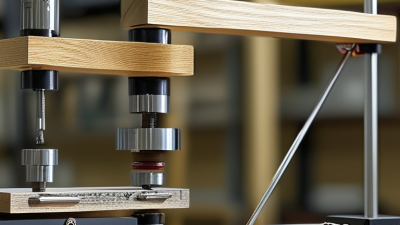
This guide examines manufacturers through an evidence-based lens. It considers testing capacity, material compatibility, control systems, safety features, and after-sales service. Compliance with relevant ASTM or ISO methods may support reliable testing, but buyers should verify the exact standard and configuration. A machine designed for plastics may not suit steel, textiles, rubber, or packaging materials. The sample grips tell part of the story.
No single supplier is ideal for every buyer. A low quotation may hide limited training, delayed spare parts, or software restrictions. A famous brand may still provide the wrong fixture for a specific application. That is worth remembering. Factory audits, reference users, calibration records, and video demonstrations can reveal more than brochures. Yet remote evaluation has limits, and even careful research can miss production realities.
The comparison ahead focuses on practical selection rather than simple rankings. It explores technical credibility, manufacturing experience, customization ability, and long-term service reliability. Readers will see which questions to ask before placing an order, including how the tensile machine will be installed, calibrated, maintained, and supported. The strongest choice is not always the most expensive one. It is the model that produces trustworthy data for your materials, operators, and testing goals.
What Is a Tensile Testing Machine and Where Is It Used?
What Is a Tensile Testing Machine and Where Is It Used?
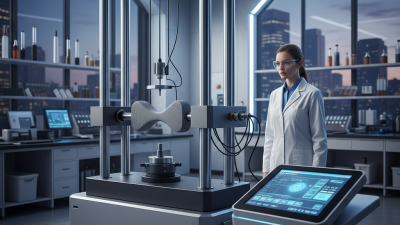
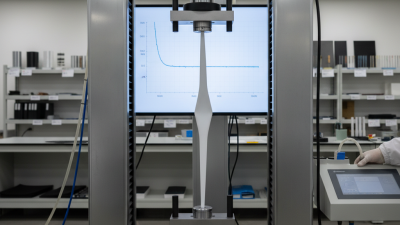
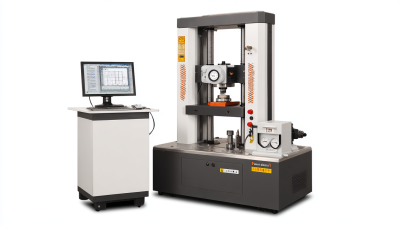
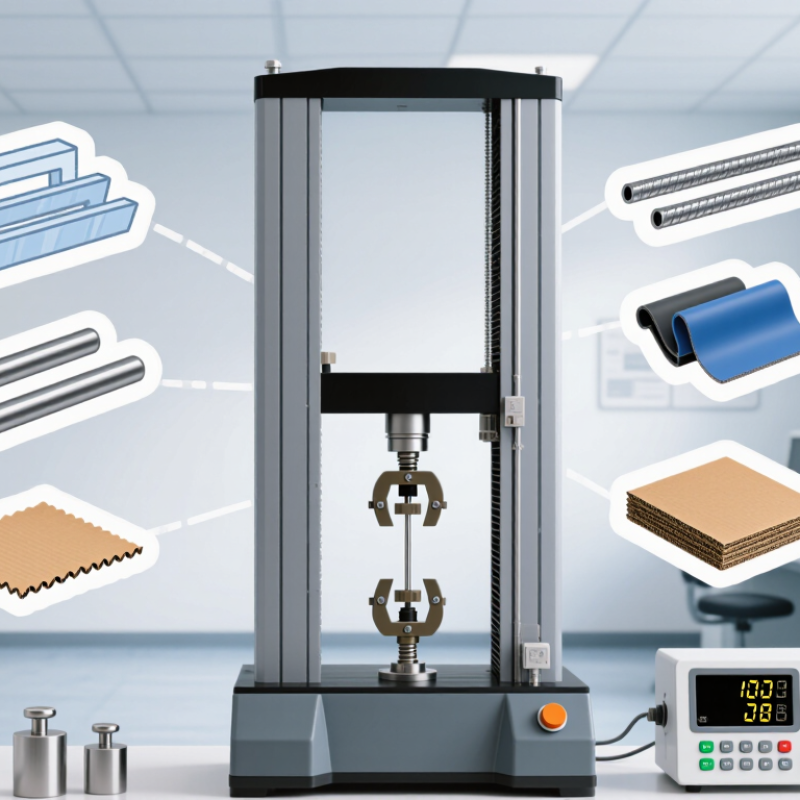
A tensile testing machine measures how a material behaves under controlled pulling force. It grips a prepared specimen and moves one jaw at a fixed speed. The system records force, elongation, yield strength, tensile strength, and break position. A dog-bone metal sample may stretch visibly before failure. A plastic strip may whiten first, then tear. That difference matters.
Manufacturers use tensile machines for metals, plastics, rubber, textiles, wires, films, fasteners, and medical materials. Laboratories commonly follow ASTM E8/E8M for metallic specimens and ISO 6892-1 for metal testing. ISO 7500-1 also addresses force verification. In production, the machine checks incoming materials and supports process control. Engineers use the results when selecting thickness, joining methods, or safety margins.
A 2024 MarketsandMarkets industry report estimates the global materials-testing market will grow at roughly 4–5% annually through 2028. Reported figures vary because some studies include hardness and impact equipment. The trend is still clear: manufacturers need traceable data, not only attractive graphs. A reliable machine requires calibrated load cells, aligned grips, suitable extensometers, and stable software. Small grip slippage can distort elongation results. Not every failed test indicates weak material. Sometimes, the specimen was cut poorly or mounted unevenly. That is the part many purchasing guides understate.
What Is a Tensile Testing Machine and Where Is It Used?
A tensile testing machine applies a controlled pulling force to a specimen until it stretches or breaks. The representative tensile-strength values below show why different testing capacities and fixtures are required for metals, plastics, and construction materials. Actual results vary according to grade, specimen geometry, temperature, and testing standard.
How to Evaluate Manufacturer Quality, Compliance, and Technical Support
Choosing among China’s top tensile machine manufacturers requires more than comparing prices or polished websites. A clean showroom proves little. Examine the load frame, grips, extensometer, and software during a live demonstration. Ask for calibration records with traceable standards, not only a factory-stamped document. Confirm whether the machine follows relevant requirements such as ISO 7500-1, ASTM E8, or ISO 6892-1. The correct standard depends on your material and test method. This detail is often overlooked.
Compliance should be checked before payment. Request the manufacturer’s quality certificates, electrical safety documentation, inspection procedures, and previous export experience. A factory audit can reveal inconsistent wiring, weak packaging, or missing component records. Test samples from your actual production line are more useful than generic brochures. They may expose fixture slippage or software settings that need adjustment. That is valuable evidence.
Technical support can decide whether the machine remains productive after installation. Ask about installation training, response times, spare parts, software updates, and remote troubleshooting. A clear warranty is helpful, but practical support matters more. Request a sample test report and an English operating manual. Speak with an existing user if possible, while recognizing that one reference cannot represent every project. My own evaluation habit is to record every unanswered question. Small gaps often become expensive delays. No supplier answers perfectly. The credible ones explain limitations and propose measurable solutions.
Which Chinese Tensile Machine Suppliers Fit Different Testing Needs?
Choosing among China’s top tensile machine manufacturers depends on your testing needs, not catalogue size. ISO 6892-1 guides metal testing, while ISO 527 covers plastics. ASTM E8/E8M is widely used for metallic specimens. A supplier should explain these methods clearly. Ask for force accuracy, crosshead speed, extensometer resolution, and calibration records. Small details matter.
Grand View Research’s 2024 market analysis identifies automotive, construction, and aerospace as major demand sectors. Research and Markets’ 2024 forecast also highlights automation and digital traceability. These trends suit factories needing repeatable reports, barcode records, and software export. A 10 kN frame may fit films or plastics. Heavy steel samples may require 600 kN or more. Choose the load cell around your real test range, not the maximum advertised capacity.
I would inspect the test software personally. It should show live curves clearly and recover data after power interruption. Ask for sample reports before ordering. Check whether the supplier supports local calibration and replacement parts. This sounds obvious. Buyers still overlook it. A lower quotation can hide weak fixtures, slow service, or poor English documentation. Request a video test using your specimen shape. Then compare repeatability, not only price. The best supplier is the one matching your material, standards, force range, and after-sales reality.
How to Choose the Right Tensile Machine for Your Laboratory or Factory
Choosing the right tensile machine begins with the material and test method, not the machine’s advertised capacity. Start with the specimen. Measure its expected force, elongation, thickness, and shape before comparing equipment. A polymer strip may need a different grip from a metal rod or textile sample. Select a load cell that keeps normal results within a practical measuring range. Oversizing can reduce sensitivity, while undersizing risks damage.
Your laboratory also needs suitable control over speed, temperature, and data recording. Check whether the software supports your required standards and exports traceable test reports. In a factory, consider testing frequency, operator training, floor space, and sample loading time. A strong frame is useful, but awkward fixtures can slow production every day. Ask difficult questions. Can the grips prevent slipping without damaging delicate samples? Can operators change fixtures safely with limited training?
Reliability depends on calibration, maintenance, and technical support after installation. Request calibration records, service intervals, spare-part availability, and realistic response times. Inspect the machine’s safety features, emergency stop, guarding, and electrical requirements. I have seen equipment selected for its maximum force while its extension accuracy was overlooked. That decision looked efficient at purchase but created inconsistent reports later. Leave room for future materials and testing methods, yet avoid paying for functions your team will never use. A documented trial with your actual specimens is often more valuable than a polished demonstration.
China Top Tensile Machine Manufacturers Which One to Choose? - How to Choose the Right Tensile Machine for Your Laboratory or Factory
| Machine Configuration |
Typical Capacity |
Typical Speed Range |
Typical Force Accuracy |
Recommended Test Materials |
Recommended Use |
| Benchtop Electromechanical Tester |
1–5 kN |
0.001–1,000 mm/min |
Class 1 or better when properly calibrated |
Plastic films, textiles, paper, rubber, wire, small components |
Routine laboratory quality control and educational testing |
| Floor-Standing Electromechanical Tester |
10–600 kN |
0.001–500 mm/min |
Class 1 or Class 0.5, depending on configuration |
Metals, welds, fasteners, ropes, composites, pipes and structural components |
Factory production testing and medium-to-high load laboratory work |
| Servo-Hydraulic Universal Tester |
100–2,000 kN |
Typically 0.001–100 mm/min in displacement control |
Usually Class 1 or Class 0.5 with suitable load cells |
Reinforcing steel, concrete-related components, heavy forgings and large structural parts |
Heavy-duty testing, research institutions and large production facilities |
| High-Temperature Tensile System |
1–100 kN |
0.001–500 mm/min |
Class 1 or better, subject to temperature-compensated calibration |
Metals, alloys, ceramics and polymers tested at elevated temperature |
Materials research and high-temperature qualification testing |
| Textile and Film Tensile Tester |
10 N–5 kN |
10–1,000 mm/min |
Typically Class 1 or better |
Yarns, fabrics, films, laminated materials, adhesive tapes and thin sheets |
Fast repetitive testing with specialized grips and software |
Key Selection Criteria for a Tensile Testing Machine
| Selection Dimension |
What to Check |
Practical Recommendation |
Why It Matters |
| Maximum Force |
The highest expected breaking or yield force of the specimen |
Select a capacity approximately 20–30% above the expected peak force where practical |
Provides operating margin without unnecessarily reducing measurement resolution |
| Force Accuracy |
Load-cell accuracy, calibration range and compliance with ISO 7500-1 or equivalent requirements |
Use Class 1 for general quality control and Class 0.5 for stricter laboratory work |
Determines the reliability and traceability of force measurements |
| Speed Control |
Required test speed, speed stability and control mode |
Choose a system that supports the speeds specified by the applicable test method |
Tensile strength and elongation can change significantly with test speed |
| Test Space |
Vertical clearance, horizontal clearance and maximum specimen elongation |
Allow room for grips, extensometers, fixtures and specimen deformation |
Insufficient space can prevent valid testing even when the force capacity is adequate |
| Grips and Fixtures |
Grip type, jaw capacity, self-alignment and compatibility with specimen geometry |
Specify grips according to the actual material, thickness and failure mode |
Poor gripping can cause slippage, premature failure or uneven stress distribution |
| Measurement Channels |
Force, displacement, strain, temperature and optional extensometer inputs |
Include an extensometer when accurate modulus or strain-at-yield data are required |
Crosshead displacement alone may not represent true specimen strain |
| Applicable Standards |
Relevant ISO, ASTM, EN, GB/T or other industry-specific methods |
Confirm that the machine, fixtures and software support the required method before purchase |
Standards define specimen dimensions, speed, calculations and reporting requirements |
| Software and Data Export |
Automatic calculations, curve display, batch testing, audit trails and file formats |
Choose software that exports raw data and calculated results in commonly used formats |
Improves repeatability, reporting efficiency and traceability |
| Calibration and Service |
Calibration certificates, service response, spare parts and preventive maintenance |
Set a documented calibration schedule and verify local technical support |
Long-term accuracy depends on maintenance and traceable calibration, not only initial specifications |
| Factory Environment |
Power supply, floor space, temperature, humidity, vibration and dust conditions |
Confirm installation requirements and environmental limits before shipment |
Environmental conditions can affect safety, measurement stability and equipment life |
Note: The specifications above are typical selection ranges for common tensile-testing configurations. Actual capacity, speed, accuracy, test space and standard compliance depend on the selected load cell, grips, extensometer, control system and calibration configuration.