Why Are Science Museum Exhibits Essential for Global Buyers?
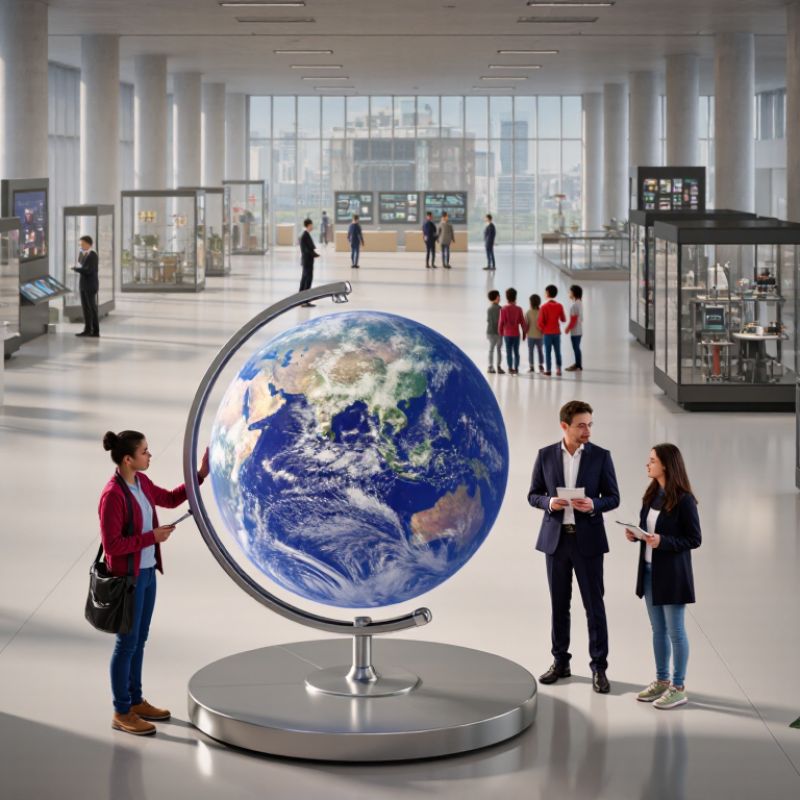
Science Museum Exhibits are becoming essential tools for global buyers seeking meaningful, durable, and educational visitor experiences. Museums, science centers, schools, and public institutions need more than attractive displays. They require exhibits that explain complex ideas clearly, withstand daily use, and support different learning styles. A rotating planet model, for example, should invite touch while presenting accurate information about Earth’s movement.
Experienced buyers often evaluate exhibit design, material quality, safety features, accessibility, and long-term maintenance. They also examine whether the supplier provides installation guidance, staff training, replacement parts, and reliable technical documents. These details can determine whether an exhibit remains useful after the opening ceremony. It must work every day.
International purchasing adds further challenges. Buyers may need multilingual labels, regionally suitable electrical systems, adaptable software, and compliance with local safety expectations. Professional suppliers should explain these requirements openly rather than hide them behind impressive visuals. Curators, educators, engineers, and procurement teams should review the exhibit together. Their combined judgment reduces avoidable risks.
However, no exhibit is perfect. A beautiful interactive screen may attract visitors but offer weak educational value. A scientifically accurate display may still confuse younger audiences. Buyers should test prototypes, observe real users, and request evidence from previous projects. Some decisions will remain uncertain. That is normal.
The strongest Science Museum Exhibits connect reliable science with practical operation and human curiosity. They help visitors see, touch, question, and remember. For global buyers, careful evaluation creates better learning environments and more responsible investments.
What Science Museum Exhibits Are and How They Support Learning
Science museum exhibits are physical learning tools designed to make scientific ideas visible, touchable, and easier to question. They may include interactive models, working demonstrations, specimens, digital displays, or hands-on experiments. For global buyers, a strong exhibit should combine accurate content with durable construction and clear visitor guidance.
In a well-designed gallery, a child can turn a wheel and watch a gear system move. Another visitor might compare rock samples under focused lighting. These details connect abstract concepts with real actions.
Exhibits support learning by encouraging observation, prediction, testing, and discussion. Educators can use them to introduce lessons or assess understanding. Labels should use accessible language, while evidence-based explanations protect accuracy.
No exhibit teaches perfectly. A crowded interface may distract visitors, and a difficult control can exclude people with limited mobility. Teams need visitor feedback, educator review, and repeated testing. We still revise exhibits after opening.
Tips: Choose exhibits with replaceable parts and simple maintenance procedures. Request documentation for learning objectives, materials, accessibility, and safety testing. Check whether examples can be adapted for different languages and cultural contexts. Ask for realistic cleaning requirements. A beautiful prototype is not enough. Reliable operation matters every day. Track visitor behavior after installation, because actual use may differ from initial expectations.
Why Science Exhibits Matter to Global Buyers
For global buyers, science exhibits are not decorative purchases. They are learning tools that must work across cultures, languages, and age groups. A well-designed exhibit turns a complex idea into a visible experience. Visitors may adjust a lever, watch a light change, or compare two physical results. These moments build understanding faster than a long information panel.
Buyers need more than attractive photographs. They need evidence of visitor testing, durable materials, clear learning goals, and dependable maintenance guidance. An exhibit should support local curricula without becoming limited to one education system. Multilingual labels, accessible controls, and replaceable components also matter. Climate can affect performance. Heat, humidity, dust, and heavy daily use require practical planning. Experienced suppliers should explain these risks honestly and provide measurable specifications.
However, science exhibits do not always succeed. Some look impressive but offer little meaningful interaction. Others contain accurate information that visitors cannot understand. I have seen projects give too much attention to appearance and too little to staff training. That is a costly mistake. Buyers should ask how the exhibit was evaluated, who reviewed the scientific content, and how feedback changed the design. Real reliability comes from testing, documentation, and continued support. Sometimes, a simpler exhibit creates deeper learning.
Why Are Science Museum Exhibits Essential for Global Buyers?
Audience-demand signals from the European Commission’s Special Eurobarometer 516: European Citizens’ Knowledge and Attitudes Towards Science and Technology show why interactive science exhibits can be valuable for international buyers: they support public interest, positive perceptions, and everyday relevance.
Key takeaway: Exhibit concepts that make science understandable, useful, and connected to daily life are more likely to engage diverse audiences across international markets.
Source: European Commission, Special Eurobarometer 516, “European Citizens’ Knowledge and Attitudes Towards Science and Technology” (2021).
How Exhibits Improve Public Engagement and Educational Value
Why Are Science Museum Exhibits Essential for Global Buyers?
Science exhibits can turn difficult ideas into visible, memorable experiences. Visitors can touch a model, compare temperature changes, or watch a live reaction. This physical contact often supports discussion between children, teachers, and families.
The UNESCO Global Education Monitoring Report 2023 highlights the importance of inclusive, engaging learning environments. It also warns that technology alone does not guarantee better learning. This matters for global buyers. A large screen may attract visitors, but clear storytelling creates educational value. The Wellcome Global Monitor 2018 reported that 79% of people believe science has made life better. However, trust varies across regions and communities. Exhibits should therefore use local examples, accessible language, and transparent evidence. A water-quality display, for example, feels more relevant when visitors can test a familiar sample. Not every interactive feature works. Some become noisy, confusing, or difficult to maintain.
Tips: Ask suppliers for visitor-testing data, learning objectives, maintenance plans, and accessibility records. Request evidence from different age groups and cultural settings. Measure more than attendance. Track questions asked, time spent, completed activities, and changes in understanding.
The Association of Science and Technology Centers reports that science centers collectively reach hundreds of millions of visitors each year. That scale creates responsibility, not just commercial opportunity. Buyers should examine whether an exhibit encourages curiosity after the visit. Short surveys, teacher interviews, and follow-up tasks can reveal this. Evaluation is often imperfect. Yet honest feedback can improve the next version.
| Evaluation Dimension | Verified Global Data | What It Means for Science Exhibits | Value for International Buyers | Reference |
|---|---|---|---|---|
| Global museum reach | Approximately 104,000 museums operate worldwide. | Exhibits can serve a broad international audience and support cross-cultural science communication. | Modular, adaptable designs are more suitable for museums with different floor plans, visitor profiles, and educational missions. | International Council of Museums, museum sector resources. |
| Public access and resilience | Nearly 90% of museums closed temporarily during the COVID-19 crisis. | Exhibits need durable components, easy maintenance, flexible visitor flows, and options for digital or hybrid access. | Resilient exhibit systems can reduce operational disruption and extend the useful life of an investment. | UNESCO and ICOM, Museums Around the World in the Face of COVID-19. |
| Inclusive participation | About 16% of the world's population, or approximately 1.3 billion people, experience significant disability. | Accessible exhibit heights, tactile elements, captions, audio description, clear contrast, and alternative interaction methods are essential. | Universal-design features expand the addressable audience and help institutions meet accessibility expectations in different markets. | World Health Organization, Disability and Health. |
| Language accessibility | UNESCO reports that approximately 40% of the global population does not have access to education in a language they speak or understand well. | Visual storytelling, multilingual labels, icons, subtitles, and language-independent interaction can improve comprehension. | Localization-ready content makes one exhibit platform easier to deploy across regions without rebuilding the entire experience. | UNESCO, If You Don't Understand, You Can't Learn. |
| Learning through interaction | Research on active learning consistently finds that learners perform better when they actively engage with content rather than only receive information passively. | Hands-on experiments, question prompts, adjustable variables, and immediate feedback can support inquiry-based learning. | Interactive systems provide stronger educational functionality than display-only installations and can serve school groups as well as general visitors. | Freeman et al., Proceedings of the National Academy of Sciences, Active learning increases student performance in science. |
| Informal science learning | Science learning takes place across formal and informal settings, including museums, science centers, libraries, homes, and digital environments. | Exhibits should connect physical activities with take-home resources, teacher materials, and online extensions. | Connected learning features increase the exhibit's usefulness beyond a single visit and support repeat engagement. | National Research Council, Learning Science in Informal Environments. |
| Visitor-centered design | Visitor studies show that learning in museums is influenced by personal interest, social interaction, physical context, and the design of the exhibit. | Exhibits should offer multiple levels of depth, social participation, and self-directed exploration instead of a single fixed path. | Flexible visitor journeys make the same installation suitable for families, students, tourists, and specialist audiences. | National Research Council, Learning Science in Informal Environments. |
| Digital engagement potential | UNESCO identifies digital technologies as an important channel for extending museum access, especially when physical access is limited. | QR-linked explanations, accessible digital twins, remote demonstrations, and downloadable learning materials can complement physical exhibits. | Digital extensions help buyers reach remote audiences, support pre-visit planning, and create measurable engagement beyond the gallery. | UNESCO, Museums Around the World in the Face of COVID-19. |
| Evaluation and accountability | Museum evaluation commonly measures visitor numbers, dwell time, interaction, satisfaction, learning outcomes, and demographic reach. | Exhibits should be designed with counters, feedback tools, observation points, and optional analytics from the beginning. | Clear evaluation data helps buyers demonstrate educational value, improve future versions, and justify public or institutional funding. | American Alliance of Museums, Museum Evaluation Resources. |
What Buyers Should Evaluate Before Selecting Science Exhibits
Before selecting a science exhibit, global buyers should examine learning value, audience fit, and long-term reliability. A visually impressive machine may attract visitors briefly. That is not enough. The exhibit should explain a clear scientific idea through interaction, observation, and feedback. UNESCO’s Science Report 2021 shows that research investment remains uneven across regions. Buyers should therefore assess whether the content can be adapted to local curricula, languages, and public knowledge levels.
Start with measurable learning outcomes. Ask suppliers what visitors should understand after three minutes, ten minutes, and one visit. Request trial data, visitor interviews, or pre- and post-activity assessments. PISA 2022 reported a decline in science performance across many education systems, making informal learning more valuable. However, an exhibit should not pretend to solve every education problem. That expectation needs restraint. Accessibility also requires evidence. The World Health Organization estimates that 1.3 billion people, or 16% of the global population, experience significant disability. Buyers should check wheelchair clearance, audio guidance, readable text, tactile elements, and adjustable interaction heights.
Operational details often decide success. Request maintenance schedules, spare-part availability, software support periods, and energy-consumption figures. A complex exhibit with fragile sensors may become unusable after repeated school visits. Total cost should include installation, staff training, translation, updates, and repairs. Safety documentation must cover pinch points, heat, electrical systems, and emergency procedures. Before approval, invite educators, technicians, children, and visitors with disabilities to test the exhibit. Their feedback may expose weaknesses that polished demonstrations conceal.
How Science Museums Adapt Exhibits for Global Audiences
Science museums adapt exhibits for global audiences by studying how visitors learn, move, and ask questions. A display designed for one city may confuse families elsewhere. Museum educators often test instructions with school groups, tourists, and multilingual visitors before opening. Their notes reveal small problems, such as unclear arrows or unfamiliar measurement units.
Language is only one part of adaptation. Exhibits may include captions in several languages, audio guides, visual symbols, and hands-on demonstrations.
A model showing coastal flooding should use locally relevant examples without overstating scientific certainty. Visitors need evidence, sources, and accessible explanations. They also need space to question the information.
Small details matter. A child may understand a rotating planet model faster than a paragraph. An older visitor may need stronger lighting and larger labels. Staff training supports accurate answers when visitors ask difficult questions. It also helps teams explain uncertainty honestly. Not every adaptation works. Some translations sound correct but feel unnatural. Some interactive features favor confident visitors and exclude quieter ones. Regular observation, visitor feedback, and expert review help museums improve these weaknesses. The process remains unfinished. That is useful.
Article Source:
Have Questions? We're Here to Help!
Give us a call at (864) 989-0566 or send us a message to discuss our testing equipment with an expert.