Why Choose a Wifi Humidity Sensor for Smart Monitoring?
Indoor humidity is easy to ignore until condensation darkens a window frame or a storeroom develops a musty smell. A Wifi Humidity Sensor brings that hidden condition into view, sending readings to a phone, dashboard, or building-management platform. Small changes become visible before they become expensive repairs. That matters in homes, offices, museums, greenhouses, and server rooms.
The U.S. Environmental Protection Agency recommends keeping indoor relative humidity between 30% and 50% when possible. The 2024 Grand View Research report valued the global smart home market at approximately $121.6 billion in 2023, showing why connected monitoring is moving into ordinary buildings. MarketsandMarkets also projects strong expansion in the broader IoT sensors market through 2028. These figures do not prove that every room needs a smart sensor. They do show a clear direction: people want measurable, remote control over indoor conditions.
Building-science expert Dr. Joseph Lstiburek has repeatedly stressed, “Buildings fail from water.” His warning remains practical. A Wifi Humidity Sensor cannot repair a leaking roof, seal a pipe, or replace professional inspection. It can, however, reveal a rising humidity pattern at 2 a.m., beside a cold exterior wall, or inside a rarely opened cabinet. That evidence supports faster decisions and better maintenance records. Still, wireless signals can fail, batteries can weaken, and inexpensive devices may drift. The technology is useful, not magical. Choosing calibrated equipment, placing it carefully, and checking readings against a trusted reference are essential steps toward reliable smart monitoring.
What Is a WiFi Humidity Sensor and How Does It Work?
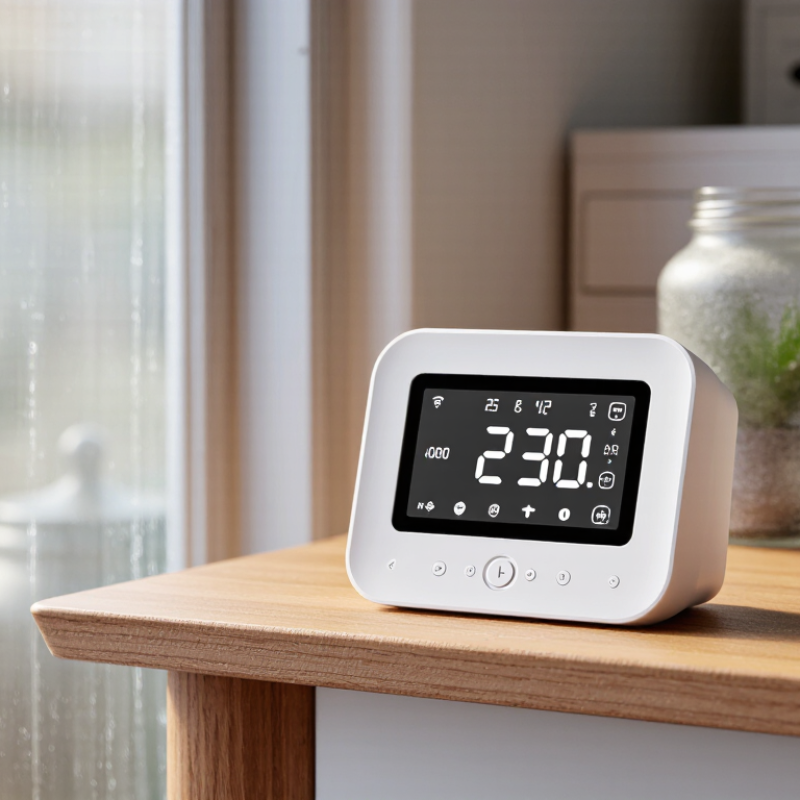
A WiFi humidity sensor is a small device that measures moisture in the air and sends readings through a wireless network. Inside, a humidity-sensitive element detects changes in water vapor. A built-in processor converts those changes into digital data. The sensor then transmits the information to a phone, dashboard, or home automation system.
It works continuously.
For example, a sensor in a basement may report 68% relative humidity at 8 a.m. If the level stays high, the system can send an alert before condensation damages stored materials. In a nursery, it can help caregivers notice dry air during winter heating. Accurate placement matters. Keep the device away from windows, vents, direct sunlight, and dripping surfaces.
Reliable monitoring needs more than a live number. Check the sensor against a trusted reference device occasionally, especially after months of use. WiFi interruptions can also create missing readings, so local memory or automatic reconnection is useful. Batteries may weaken faster in cold rooms. I have found that many readings look precise, yet placement errors quietly reduce their value.
A good monitoring setup records changes over time, not just current humidity. Reviewing daily peaks can reveal poor ventilation, hidden leaks, or an oversized humidifier. Still, a WiFi sensor is an indicator, not a professional inspection. It supports informed decisions, but it cannot explain every moisture problem.
How WiFi Humidity Sensors Enable Real-Time Remote Monitoring
Why Choose a Wifi Humidity Sensor for Smart Monitoring?
How WiFi Humidity Sensors Enable Real-Time Remote Monitoring
A WiFi humidity sensor turns invisible moisture changes into actionable information. It measures relative humidity and sends readings through a wireless network. Facility teams can view conditions remotely, even when buildings are closed. The U.S. Environmental Protection Agency recommends keeping indoor humidity between 30% and 50%. A reading above that range may support mold growth, condensation, or material damage. Alerts can reach a technician before a storage room develops a musty smell. That timing matters.
Real-time monitoring also supports wider operational control. IoT Analytics reported approximately 16.6 billion connected IoT devices worldwide in 2023. Humidity sensors are small contributors to this expanding infrastructure. They can track greenhouses, archives, server rooms, and warehouses from one dashboard. A sudden rise at 3 a.m. becomes visible without an overnight inspection. Useful data arrives early.
However, wireless monitoring is not automatic perfection. Weak signals, dead batteries, and poor sensor placement can create misleading readings. Calibration also deserves attention. A sensor beside a cooling vent may report an unrealistically dry environment. Practical teams should compare readings with a reference instrument and record maintenance dates. Remote access improves visibility, but human judgment still matters. The system can be wrong. That possibility should remain visible in every monitoring plan.
Key Benefits of Using WiFi Humidity Sensors
Why Choose a WiFi Humidity Sensor for Smart Monitoring?
Key Benefits of Using WiFi Humidity Sensors
Humidity changes quietly, often before people notice discomfort or material damage. A WiFi humidity sensor turns that hidden shift into readable, time-stamped data. The U.S. Environmental Protection Agency recommends keeping indoor relative humidity between 30% and 50%. That range supports comfort and helps limit conditions favorable to mold. A connected sensor can report readings from storage rooms, archives, server spaces, or homes without daily inspections.
Key benefits begin with remote visibility. Facility teams can view trends on a phone or dashboard, then receive alerts when humidity crosses a chosen threshold. This matters in rooms that remain closed overnight. Historical graphs also reveal slow seasonal drift, not just dramatic spikes. ASHRAE Standard 55-2023 provides recognized guidance for thermal environmental conditions, including humidity considerations. Pairing that guidance with local measurements supports more defensible maintenance decisions. It can also reduce unnecessary site visits and document responses after an incident.
WiFi connectivity supports practical coordination. A sensor can notify several responsible people, while logged data helps technicians check whether ventilation, dehumidification, or drainage solved the problem. Yet connectivity is not perfection. It can fail. Batteries need testing, networks can drop, and poorly placed sensors can mislead. The EPA’s A Brief Guide to Mold, Moisture and Your Home stresses that moisture control requires fixing leaks and condensation, not merely watching numbers. Smart monitoring works best with calibrated devices, sensible thresholds, and human follow-up.
Important Features to Consider When Choosing a Sensor
A WiFi humidity sensor becomes useful when it measures more than relative humidity. The U.S. Environmental Protection Agency recommends indoor humidity between 30% and 50%. This range helps reduce condensation, mold risk, and uncomfortable dryness. Choose a sensor with stated accuracy, calibration information, and a response time suited to the room. A reading updated every few minutes is practical for bathrooms, basements, and storage areas.
Connectivity matters just as much. Reliable WiFi should support stable alerts when humidity crosses a chosen threshold. Look for encrypted data transmission, secure account access, and continued operation after router interruptions. Local memory is valuable because it preserves readings during outages. The NISTIR 8259 cybersecurity guidance stresses secure configuration and software maintenance for connected devices. Small details matter.
Battery life needs honest evaluation. Frequent alerts and weak signals can drain batteries faster than advertised. A low-battery warning prevents silent data loss. For kitchens or plant rooms, consider splash resistance and suitable placement. Avoid windows, vents, and direct sunlight. The sensor may be accurate, yet the location can make its data misleading. I would verify important readings with a calibrated reference meter. No sensor is perfect. 马会
Common Applications for Smart Humidity Monitoring
A WiFi humidity sensor supports smart monitoring in places where moisture changes quickly. In homes, it can track bedrooms, bathrooms, basements, and laundry areas. A sudden rise may reveal poor ventilation, a leaking pipe, or condensation near a window. Mobile alerts help residents respond before damp walls develop stains or mold. The data also supports better heating and ventilation decisions. Small changes matter.
Commercial buildings use these sensors in offices, schools, clinics, and storage rooms. Facility teams can compare humidity readings across floors and identify uncomfortable or risky zones. In archives and museums, stable humidity helps protect paper, wood, textiles, and other sensitive materials. Warehouses benefit too. Products such as food packaging, electronics, and furniture may suffer when moisture remains high. Staff can review historical readings instead of relying on occasional manual checks.
Greenhouses are another practical application. Growers can connect humidity data with temperature and airflow observations. This helps reduce fungal risks and improve plant conditions. However, placement affects accuracy. A sensor near a vent may not represent the whole room. Calibration can also be overlooked. No sensor is perfect. WiFi interruptions may delay alerts, so critical spaces need a backup inspection routine. Even with these limits, continuous records provide stronger evidence than guesswork and make maintenance more deliberate.