What Is a Three Phase Diesel Generator?
A Three Phase Diesel Generator converts diesel fuel into dependable three-phase electrical power. It combines a diesel engine, alternator, fuel system, control panel, and cooling equipment. Unlike a single-phase unit, it delivers three alternating currents separated by 120 degrees. This arrangement supports balanced loads and efficient power distribution.
These generators commonly serve factories, hospitals, construction sites, data centers, and commercial buildings. A 500 kVA model may power motors, pumps, lighting, and control systems simultaneously. Its deep engine sound, warm exhaust, and steady voltage indicate active operation, but appearance alone proves little. Load testing, insulation checks, coolant inspections, and battery measurements provide stronger evidence of reliability. Experienced technicians also review maintenance records before trusting a standby unit.
Sizing requires more than adding equipment nameplates. Large motors can demand several times their running current during startup. Poor load balance may cause overheating, voltage fluctuation, or unnecessary fuel consumption. Engineers should assess starting loads, operating hours, ambient temperature, altitude, and required backup duration. Manufacturer data and applicable electrical standards should guide the final selection. Real installations still reveal limitations. A generator can be correctly sized yet fail when neglected batteries, blocked airflow, or contaminated fuel are ignored. Regular servicing matters.
Understanding these practical details makes the technology less mysterious. It also helps buyers compare prime, standby, and continuous ratings with greater confidence. Reliable power begins with accurate planning, careful installation, and disciplined maintenance.
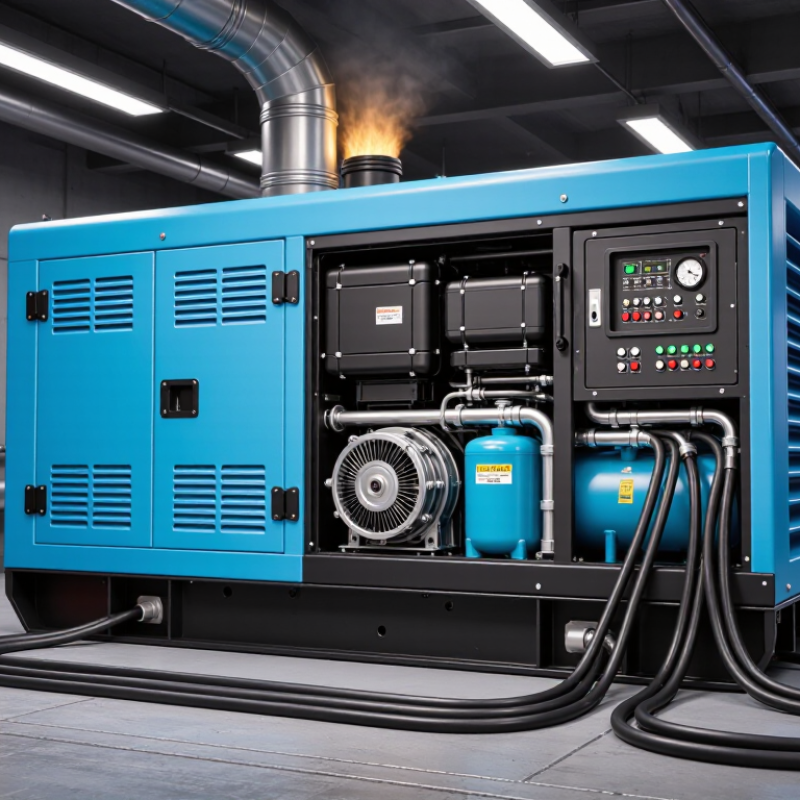
What Is a Three-Phase Diesel Generator?
A three-phase diesel generator is a machine that produces electrical power through a diesel engine and alternator. It burns diesel fuel to create mechanical energy. The alternator converts that energy into electricity. Its three electrical outputs are separated by 120 degrees. This arrangement delivers smoother power for motors, pumps, compressors, and commercial equipment. It also reduces conductor size compared with some single-phase systems.
In practical installations, technicians calculate the total running load and starting current. Motors may briefly demand much more power during startup. A generator rated only for normal running loads can still trip unexpectedly. That mistake is common. A load-bank test helps verify performance under controlled conditions. Technicians also inspect voltage balance, frequency, grounding, and transfer-switch operation. Real loads fluctuate, so sizing should include a sensible reserve rather than guesswork.
Diesel generators require disciplined maintenance. Oil, coolant, filters, batteries, and belts need scheduled inspection. Fuel quality matters because moisture or sediment can damage injection components. Ventilation must remove heat, while exhaust piping needs proper support and safe discharge. An automatic transfer switch can move critical circuits to backup power after an outage. Operators should record test results and unusual vibration. Noise and vibration can reveal developing faults. That detail is easy to overlook. A professional assessment remains important when loads change or installation conditions are uncertain.
How Three-Phase Power Generation Works
What Is a Three Phase Diesel Generator?
How Three-Phase Power Generation Works
A three-phase diesel generator converts fuel energy into steady electrical power. The diesel engine turns the alternator through a controlled mechanical connection. Inside the alternator, copper windings sit around a rotating magnetic field. This movement induces electrical voltage in three separate phases. Each phase reaches its peak at a different moment, separated by 120 electrical degrees. That timing matters.
The three currents travel through separate conductors and work together as one power system. Their combined output supports motors, pumps, compressors, and large building loads. Three-phase motors usually start smoothly and produce more consistent torque than single-phase motors. The generator’s speed and pole design determine the output frequency, commonly 50 or 60 hertz. An automatic voltage regulator adjusts excitation when electrical demand changes.
In practical installations, balanced loading is important. Unequal loads can increase neutral current, create voltage differences, and heat cables unnecessarily. Technicians measure phase voltage, current, frequency, and engine speed during commissioning. They also inspect fuel lines, exhaust routing, grounding, and cooling airflow. Small details matter.
A simplified explanation can hide real operating challenges. A generator may appear stable while one phase carries excessive current. Regular testing reveals that problem earlier. Load behavior also changes when motors start, which may briefly reduce voltage. Good sizing must consider starting current, not only normal running watts. That part is often underestimated.
Main Components of a Three-Phase Diesel Generator
What Is a Three Phase Diesel Generator?
Main Components of a Three-Phase Diesel Generator
A three-phase diesel generator converts diesel fuel into stable electrical power. It suits factories, data rooms, farms, and large buildings. Three alternating currents share the load more evenly than single-phase output. This reduces voltage imbalance when equipment operates continuously.
The diesel engine supplies mechanical energy through a crankshaft. The alternator then converts that movement into electricity. Inside it, the rotor spins within the stator windings. A fuel tank, injection system, and fuel filter support steady operation. The governor adjusts engine speed when the electrical load changes. Even small speed changes can affect frequency.
The automatic voltage regulator controls output voltage. The control panel displays voltage, frequency, running hours, alarms, and shutdown conditions. A cooling system prevents overheating, while the exhaust system removes hot gases safely. The starting battery and charger provide reliable engine ignition. A strong frame reduces vibration, although poor mounting can still create noise and loose connections. Technicians should inspect cables, oil levels, coolant, belts, and battery terminals before operation. Field checks often reveal simple faults that sensors miss.
Tips: Match the generator rating to the actual load. Leave capacity for motor starting currents. Keep ventilation openings clear. Test protective shutdowns regularly. A common mistake is checking only the engine and ignoring phase balance. This can overheat cables or sensitive equipment. Load testing should follow the manufacturer’s technical requirements and local electrical standards.
| Component | Primary Function | Key Technical Details | Typical Design Characteristics | Maintenance Focus |
|---|---|---|---|---|
| Diesel Engine | Converts the chemical energy of diesel fuel into mechanical power to drive the generator. | Uses compression ignition and normally operates at a governed speed to maintain a stable electrical frequency. | Common generator speeds are 1,500 rpm for 50 Hz systems and 1,800 rpm for 60 Hz systems when paired with a four-pole alternator. | Check engine oil, coolant, fuel filters, air filters, belts, hoses, and starting performance. |
| Alternator | Converts the engine’s mechanical rotation into three-phase electrical energy. | Contains a rotor, stator, excitation system, insulation system, and terminal connections. | Three-phase output is produced with voltage waveforms separated by 120 electrical degrees. | Inspect insulation, terminals, ventilation passages, bearings, and signs of overheating or vibration. |
| Automatic Voltage Regulator | Controls excitation current to keep the generator output voltage within an acceptable range as the load changes. | Responds to variations in terminal voltage and adjusts the alternator excitation level. | Voltage regulation depends on the alternator design, load type, and control settings; exact performance is specified by the generator manufacturer. | Check sensing wires, connections, cooling, and voltage stability under changing loads. |
| Engine Governor | Regulates engine speed so that the electrical frequency remains stable. | Adjusts fuel delivery in response to load changes and engine-speed deviations. | Frequency is directly related to engine speed and the number of alternator poles. | Verify speed control, response to step loads, actuator operation, and linkage condition. |
| Fuel System | Stores, filters, and delivers diesel fuel to the engine at the required flow and pressure. | Usually includes a fuel tank, supply lines, fuel filters, injection equipment, and return lines. | Fuel consumption varies with engine size, load percentage, operating speed, and installation conditions. | Drain water and sediment, replace filters, inspect for leaks, and keep stored fuel clean. |
| Cooling System | Removes heat from the engine and keeps operating temperatures within the specified range. | May include a radiator, coolant pump, thermostat, fan, hoses, and expansion tank. | Radiator airflow and ambient temperature affect the generator’s allowable output and reliability. | Check coolant level and concentration, radiator cleanliness, fan condition, hoses, and leaks. |
| Lubrication System | Reduces friction and removes heat and contaminants from engine moving parts. | Includes an oil sump, oil pump, oil filter, pressure sensor, and lubrication passages. | Correct oil grade and oil pressure are essential for protecting bearings, pistons, and the crankshaft. | Replace engine oil and filters at scheduled intervals and investigate abnormal oil pressure or consumption. |
| Starting System | Cranks the diesel engine until it reaches the speed required for combustion. | Common parts include batteries, a starter motor, battery cables, a charger, and starting controls. | Battery capacity and starting performance are affected by temperature, engine size, and cranking time. | Test battery voltage, electrolyte condition where applicable, terminals, charger output, and starter operation. |
| Control Panel | Monitors operating conditions and allows operators to start, stop, configure, and protect the generator. | May display voltage, current, frequency, engine speed, oil pressure, coolant temperature, and operating hours. | Protection functions commonly include overspeed, low oil pressure, high coolant temperature, overvoltage, and overload. | Test alarms, shutdown circuits, sensors, display readings, wiring, and emergency-stop functions. |
| Circuit Breaker and Protection Devices | Disconnect the generator from the load during short circuits, overloads, or abnormal electrical conditions. | Protection may include thermal-magnetic or electronic trip functions, residual-current protection, and surge protection. | Breaker ratings must match the generator’s rated current, voltage, fault level, and installation requirements. | Inspect terminals, test trip operation, verify settings, and check for heat discoloration or loose connections. |
| Exhaust System | Routes combustion gases away from the engine and reduces exhaust noise. | Typically includes an exhaust manifold, flexible connector, silencer, piping, insulation, and an outlet. | Back pressure must remain within the engine’s specified limit to prevent performance loss and excessive heat. | Inspect for leaks, corrosion, loose supports, damaged insulation, and excessive back pressure. |
| Base Frame and Vibration Isolators | Supports the generator set and limits vibration transmitted to the foundation. | The frame may include an integrated fuel tank, lifting points, drain points, and resilient mounts. | Correct alignment and foundation strength help reduce mechanical stress, noise, and premature component wear. | Check mounting bolts, isolators, frame condition, alignment, and signs of abnormal vibration. |
| Output Terminals | Provide the connection point between the alternator and the distribution system or connected load. | Three-phase systems normally use three line conductors; a neutral conductor may be provided depending on the connection and load requirements. | Common low-voltage systems include 400/230 V at 50 Hz or 480/277 V at 60 Hz, subject to local standards and system design. | Check phase sequence, insulation, torque, cable sizing, grounding, and signs of overheating. |
Advantages and Common Applications
What Is a Three Phase Diesel Generator?
Advantages and Common Applications
A three phase diesel generator converts diesel engine power into electrical energy. Its alternator produces three alternating currents with balanced timing. This design supplies steady power for motors, pumps, compressors, and industrial equipment. Compared with single phase systems, it handles heavier loads more efficiently. It can also reduce voltage drops across long cable runs.
The main advantage is dependable power distribution. A balanced load helps motors start with less stress and operate more smoothly. Fuel consumption may also improve when the generator matches the real electrical demand. In field service, technicians check oil levels, coolant temperature, battery voltage, and exhaust color. Small warning signs matter. A loose cable can become a serious failure during peak demand.
Three phase diesel generators are common on construction sites, farms, factories, commercial buildings, and water treatment facilities. On a muddy construction site, one unit may run lighting, welding equipment, and drainage pumps.
In a hospital or data center, it can support essential systems when utility power fails. Automatic transfer equipment can switch loads quickly, but correct installation remains essential.
Engineers must calculate starting currents, running loads, cable size, ventilation, and fuel storage. Oversizing seems safer, yet it can waste fuel and create poor engine loading. Undersizing is worse. The generator may overheat or trip repeatedly. Regular testing under real load is often overlooked, although idle testing can hide problems.
Key Factors for Selecting the Right Generator
What Is a Three Phase Diesel Generator?
Key Factors for Selecting the Right Generator
A three-phase diesel generator produces electricity through three alternating currents. This design supports large motors, pumps, workshops, and commercial buildings. Compared with single-phase systems, it usually delivers smoother power and better motor-starting performance. However, three-phase does not automatically mean “more suitable.” The site’s electrical design must match the generator output.
Start with the real load, not the hoped-for load. List lighting, motors, heating equipment, compressors, and sensitive electronics. Record both running watts and starting demand. A pump may draw several times its normal current for a few seconds. Undersizing can cause voltage drops, overheating, and nuisance shutdowns. Oversizing is also wasteful. Diesel engines may run lightly loaded, which can increase maintenance problems and fuel inefficiency. Load-bank testing can reveal weaknesses that a basic calculation misses.
Frequency, voltage, phase balance, and standby duty require careful checking. Confirm whether the generator will operate continuously or only during outages. Review fuel storage, ventilation, exhaust routing, noise limits, service access, and ambient temperature. High heat and altitude can reduce available output. An automatic transfer switch should match the building’s switching arrangement and safety requirements. Local electrical rules still matter, even when the equipment seems technically correct. A practical assessment should include future expansion, because a perfect calculation today may become restrictive next year. Yet adding excessive capacity “just in case” is not always wise.
Article Source:
Have Questions? We're Here to Help!
Give us a call at (864) 989-0566 or send us a message to discuss our testing equipment with an expert.