Top 2026 Machinery Trends You Need to Know About?
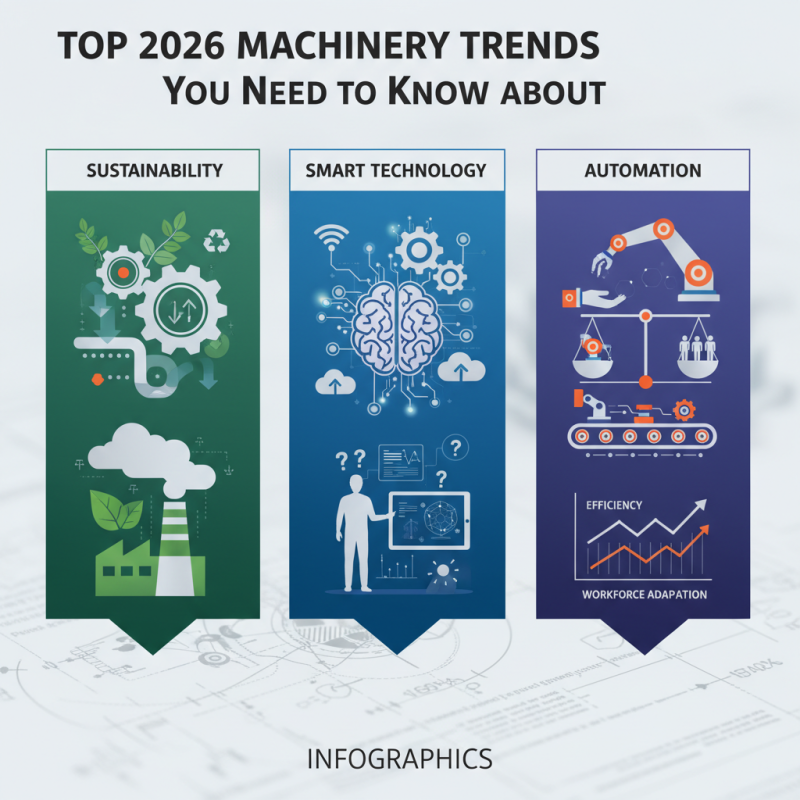
In the ever-evolving world of machinery, 2026 brings exciting trends that redefine innovation. "Maquinarias Nuevas" are not just about improved efficiency; they emphasize sustainability. Modern machinery integrates eco-friendly technologies, reducing waste. Companies prioritize green designs, aiming for lower carbon footprints.
Smart technology is a pivotal trend. Machinery equipped with AI and IoT enhances productivity. However, these advancements come with challenges. Workers must adapt to new skills and updated workflows. This shift can lead to uncertainty and resistance within teams.
Lastly, automation continues to rise. While it promises efficiency, it raises questions about job security. The balance between human input and machine reliance needs careful consideration. Embracing these trends requires thoughtful reflection on their broader impact. Organizations must invest not only in machinery but also in their workforce’s adaptation.
Emerging Trends in Automation: Increasing Efficiency in Machinery Operations
Emerging trends in automation are revolutionizing machinery operations. The global automation market is expected to reach $214 billion by 2026. Advances in AI and machine learning drive this growth, pushing for smarter machinery. Automation can increase efficiency by up to 30% while reducing operational costs. This shift allows companies to allocate resources more effectively.
Tips: Invest in training for your workforce. Understanding automation will enhance productivity. Regular assessments of automation tools can identify areas for improvement.
Integrating IoT technology is another trend reshaping the industry. Real-time data helps predict equipment failures. This predictive maintenance approach can reduce downtime by 20%. However, connecting devices also raises cybersecurity concerns. Not all companies are prepared for these risks.
Tips: Implement robust cybersecurity measures. Keep your systems updated to protect valuable data. Regularly review your security protocols to adapt to new threats. As automation evolves, continuous learning becomes crucial for staying competitive.
Top 2026 Machinery Trends You Need to Know About
| Trend | Description | Impact on Efficiency | Expected Adoption Rate (%) |
| AI and Machine Learning | Integration of AI to analyze data and predict maintenance needs. | Increases predictive maintenance efficiency. | 78% |
| IoT Connectivity | Use of IoT devices to monitor machinery performance in real-time. | Enhances operational insights and decision-making. | 82% |
| Autonomous Machinery | Adoption of self-operating machines for increased productivity. | Reduces labor costs and increases output. | 65% |
| Robotics in Manufacturing | Incorporation of collaborative robots (cobots) in assembly lines. | Enhances speed and precision in production. | 75% |
| Augmented Reality (AR) for Training | Using AR tools for employee training and machinery maintenance. | Increases training efficiency and reduces downtime. | 70% |
The Role of AI and Machine Learning in Predictive Maintenance for Equipment
Predictive maintenance is transforming the machinery sector. AI and machine learning tools analyze equipment data in real-time. These tools identify patterns that indicate potential failures. By utilizing predictive models, businesses can reduce downtime.
Tips: Regularly train staff on new AI tools. This ensures better data interpretation and faster response times. Schedule consistent maintenance checks. It's an effective way to catch issues early.
Think about this: Not all machines generate useful data. Some might require upgrades to capture vital information. Companies must ensure they invest wisely in their technology. Adjusting to AI may require overcoming a learning curve for many teams. Trial and error can lead to significant improvements in maintenance practices.
Sustainability Innovations: How Eco-friendly Technologies Are Shaping Machinery
Sustainability is becoming crucial in the machinery sector. Innovations are evolving rapidly. Eco-friendly technologies are reshaping how machines operate. For instance, machinery that uses renewable energy sources is gaining traction. Solar-powered equipment and wind-driven tools exemplify this shift. They reduce reliance on fossil fuels.
Waste reduction is also pivotal. Companies are now designing machines to minimize scrap materials. Recyclable components are increasingly common. This reduces landfill waste and encourages a circular economy. However, many businesses struggle with the initial costs of such technologies. Budget limitations can hinder progress.
Moreover, machine efficiency is under scrutiny. Engineers aim to enhance durability and performance while using fewer resources. Sometimes, this approach leads to complexities. For example, integrating smart technologies can confuse traditional operators. Training is essential but often overlooked. The industry must adapt to these evolving standards. There is a need for constant learning and improvement.
Impact of Industry 4.0 on Machinery Design and Manufacturing Processes
Industry 4.0 significantly changes machinery design and manufacturing. It uses advanced technologies like IoT, AI, and data analytics. These tools improve efficiency and reduce costs. Manufacturers now focus on smart machinery. Smart machines can communicate vital information. They enhance decision-making on the production floor. This results in quicker responses to disruptions.
However, the shift to Industry 4.0 is not without challenges. Many companies struggle to integrate new technologies. Employee training is often overlooked. This leads to resistance to change. Additionally, cybersecurity concerns rise as more machines connect online. It is crucial for manufacturers to address these issues. They must develop strategies that prioritize security while embracing innovation.
The design process is evolving too. Traditional methods are being replaced by digital twins and simulation tools. These techniques allow for better visualization of machinery performance. Designers can iterate quickly based on real-time data. Nonetheless, there is a risk of over-reliance on technology. Human oversight remains essential to catch errors. Balancing automation with craftsmanship is key to success in this new era.
Demand for Smart Machinery: Statistical Growth Forecasts for 2026 and Beyond
The demand for smart machinery is on the rise. Companies are seeking efficiency and precision. This trend is fueled by technological advancements. More manufacturers are investing in automation. The benefits are clear: reduced costs and improved productivity. However, the transition isn't always smooth.
Statistical growth forecasts indicate that smart machinery will dominate industries by 2026. Analysts predict significant adoption rates in sectors like manufacturing and agriculture. Yet, this growth comes with challenges. Many businesses lack the expertise to implement these technologies. Training staff and integrating systems can be daunting tasks.
Furthermore, the environmental impact of machinery must be considered. Smart machines offer sustainable solutions, but they also require energy. Striking a balance between innovation and responsibility is crucial. The future of machinery lies in a thoughtful approach to technology. Making informed choices now is vital for longevity and success.
Top Machinery Trends 2026: Demand for Smart Machinery