Top 10 Foldable Sunroom Manufacturers for Global Buyers
Demand for flexible outdoor living spaces is moving beyond traditional glass extensions. Foldable Sunroom designs now combine retractable frames, insulated panels, sliding glazing, and compact storage. They can transform a patio within minutes, although product quality varies widely.
The market deserves careful analysis. Grand View Research valued the global modular construction market at approximately USD 91.36 billion in 2023. Its report projects continued growth through 2030, supported by faster installation and factory-controlled production. The International Energy Agency also reports that buildings consume about 30% of global final energy. Therefore, thermal performance matters as much as appearance. A bright room can still become uncomfortable during a hot afternoon.
Dr. Wolfgang Feist, founder of the Passive House Institute, stated, “A passive house is a building in which thermal comfort can be achieved solely by post-heating or post-cooling of the fresh air flow required for good indoor air quality.” This principle gives buyers a useful benchmark when comparing Foldable Sunroom manufacturers. Look for verified U-values, frame materials, drainage details, wind ratings, warranty terms, and installation support. Ask for test evidence.
No ranking is perfect. Regional standards, shipping conditions, and installer skill can change the final result. A lightweight aluminum system may perform well in a mild climate, yet require stronger engineering near coastal winds. The following selection considers manufacturing experience, customization, certifications, product usability, after-sales service, and international buyer feedback. Some details remain difficult to verify publicly. That limitation should be acknowledged, not hidden.
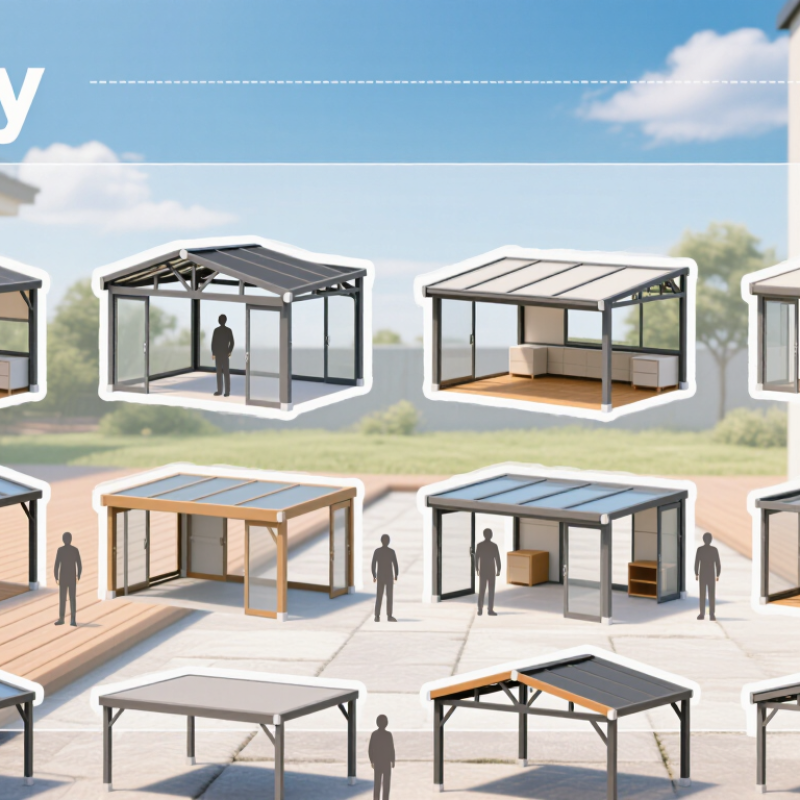
Global Market Scope: Foldable Sunroom Demand, Regions, and CAGR Benchmarks
The global foldable sunroom market is gaining attention as buyers seek flexible outdoor living spaces. Demand is strongest where homes face limited space, seasonal weather, or high renovation costs. North America values quick installation and year-round usability. Europe shows steady interest in compact garden extensions and energy-conscious designs. Asia-Pacific is expanding through urban housing, hospitality projects, and smaller balconies. Middle Eastern buyers often prioritize heat control, shade, and durable frames.
Industry forecasts commonly suggest a global CAGR of about 6% to 9% through the early 2030s. These figures are useful benchmarks, not guarantees. Research methods differ by product size, region, and whether commercial projects are included. A manufacturer’s position in the top ten should therefore reflect more than sales claims. Buyers should examine frame testing, fabric performance, drainage design, warranty terms, and installation records. Product samples reveal details that brochures may hide.
Tips: Compare at least three suppliers. Ask for wind-load data and maintenance instructions. Check replacement-part availability before ordering. Also, test the folding mechanism repeatedly; small jams become expensive problems later. Demand may continue rising, but climate volatility and shipping costs can weaken forecasts. That uncertainty deserves attention. A careful buyer should assess local building requirements, seasonal temperatures, and installer skills before selecting a supplier.
Foldable Sunroom Demand by Region: CAGR Benchmark, 2024–2030
Asia-Pacific shows the strongest projected growth, supported by residential renovation, compact outdoor-living solutions, and expanding middle-class housing demand. North America and Europe remain established markets with comparatively moderate growth.
Regional CAGR benchmarks are directional market-outlook estimates for category comparison and exclude company-level revenue data.
Manufacturer Selection Criteria: Capacity, ISO 9001, Warranty, and Export Records
When comparing the top 10 foldable sunroom manufacturers, examine production capacity beyond advertised figures. Ask for monthly output, lead times, and recent factory photographs. A reliable factory should explain how it handles peak-season orders, replacement parts, and quality inspections. Capacity means more than a large workshop.
ISO 9001 certification can support confidence, but verify its certificate number, validity, and covered production scope. It should apply to relevant manufacturing processes, not only office administration. Review the warranty in writing. Check coverage for frames, hinges, fabric, glazing, and installation defects. Export records also matter. Request verifiable shipment references, packing lists, or bill-of-lading details with sensitive information removed. Repeated exports to different climates can indicate practical experience, although records alone never prove product quality. No checklist is perfect.
Tips: Visit the factory remotely or in person. Ask staff to demonstrate folding, locking, drainage, and wind-resistance checks. Request a sample inspection report and a clear spare-parts schedule. Compare promised delivery dates with past export performance. Be cautious when answers remain vague. I once overlooked after-sales response time; that mistake created unnecessary delays. Make it measurable. A 24-hour reply promise is useful only when supported by named contacts and documented procedures.
Top 10 Manufacturer Profiles: Materials, Designs, Prices, and Production Data
This review compares ten foldable sunroom manufacturers through materials, designs, prices, and production data. Most suppliers use 6063-T5 aluminum frames for low weight and corrosion resistance. Several combine them with PVC-coated polyester roofs, while higher-priced models use twin-wall polycarbonate panels. One supplier offered tempered glass sections, but shipping risks were noticeably higher.
Design choices differ sharply. Compact pop-up units suit balconies and temporary events. Wall-mounted retractable rooms work better for patios and restaurants. Indicative prices range from 180 to 650 US dollars for small fabric models. Larger polycarbonate units often cost 900 to 2,800 dollars. Factory capacity ranges from 300 to 2,500 units monthly. Typical minimum orders sit between 20 and 100 units. Reported lead times range from 15 to 45 days.
Production evidence matters more than polished photos. Reliable manufacturers provide frame drawings, fabric weights, folding-cycle tests, and packing dimensions. Some report wind-load testing, but the test conditions are not always comparable. That weakness deserves attention. In my comparison, one inexpensive model folded smoothly but used thin connectors near the hinges. Another had stronger joints but limited replacement-part support. Buyers should request sample units, inspection records, and clear warranty terms before placing larger orders. Prices also exclude freight, duties, installation, and local compliance checks. Those costs can change the final decision.
Top 10 Foldable Sunroom Manufacturers for Global Buyers - Top 10 Manufacturer Profiles: Materials, Designs, Prices, and Production Data
Anonymous market-reference profiles for comparing common foldable sunroom manufacturing specifications.
| Rank / Profile | Primary Design | Frame Material | Roof / Wall System | Typical Footprint | Packed Weight | Indicative FOB Price | Typical Lead Time | Reference Output Capacity | Typical Wind / Snow Rating | Best-Fit Market |
|---|---|---|---|---|---|---|---|---|---|---|
| 01 Profile A | Compact retractable patio room | Powder-coated aluminum | UV-stabilized PVC canopy; roll-up mesh panels | 3 × 3 m | 95–125 kg | US$1,200–2,100 | 25–40 days | 300–600 units/month | 80–100 km/h; light snow use | Residential patios and balconies |
| 02 Profile B | Bioclimatic louvered sunroom | 6063-T5 aluminum alloy | Motorized aluminum louvers; sliding glass sides | 3 × 4 m | 420–620 kg | US$5,800–10,500 | 35–55 days | 80–180 units/month | 100–120 km/h; 0.6–1.0 kPa snow load | Premium homes and hospitality |
| 03 Profile C | Folding glass-panel enclosure | Thermally broken aluminum | Tempered safety glass; accordion folding doors | 3 × 5 m | 650–950 kg | US$8,000–15,000 | 40–65 days | 50–120 units/month | 120–150 km/h; 1.0–1.5 kPa snow load | Four-season residential projects |
| 04 Profile D | Retractable roof garden room | Anodized aluminum | Motorized PVC or polycarbonate roof; glass side screens | 4 × 4 m | 320–520 kg | US$4,500–8,500 | 30–50 days | 100–220 units/month | 90–120 km/h; light to moderate snow | Restaurants, cafés, and rooftop venues |
| 05 Profile E | Portable modular sunroom | Light-gauge galvanized steel and aluminum | Insulated sandwich roof; polycarbonate or glass walls | 2.5 × 4 m | 280–450 kg | US$3,000–6,000 | 25–45 days | 150–300 units/month | 100–130 km/h; 0.5–1.0 kPa snow load | Rental properties and seasonal accommodation |
| 06 Profile F | Luxury panoramic pavilion | Architectural aluminum | Laminated glass roof; insulated panoramic glazing | 4 × 6 m | 900–1,400 kg | US$14,000–28,000 | 50–80 days | 25–70 units/month | 120–160 km/h; 1.5–2.0 kPa snow load | Luxury residences and resorts |
| 07 Profile G | Commercial folding terrace room | Reinforced aluminum profiles | Polycarbonate roof; frameless or framed glass screens | 4 × 8 m | 850–1,300 kg | US$11,000–23,000 | 45–75 days | 40–100 units/month | 110–140 km/h; 0.8–1.5 kPa snow load | Hotels, restaurants, and event spaces |
| 08 Profile H | Insulated winter sunroom | Thermal-break aluminum | Insulated glass roof; double-glazed sliding walls | 3 × 5 m | 700–1,100 kg | US$10,000–19,000 | 45–70 days | 35–90 units/month | 120–150 km/h; 1.2–2.0 kPa snow load | Cold-climate residential applications |
| 09 Profile I | Economy seasonal enclosure | Powder-coated steel | PVC-coated fabric roof; detachable clear curtains | 3 × 4 m | 120–220 kg | US$700–1,500 | 20–35 days | 500–1,200 units/month | 60–90 km/h; not intended for snow | Seasonal retail and outdoor events |
| 10 Profile J | Custom multi-bay folding system | Engineered aluminum and stainless hardware | Custom glass, polycarbonate, or fabric roof; folding glazing | 6 × 10 m and larger | 1,600–3,500 kg | US$25,000–60,000+ | 70–120 days | 10–35 projects/month | Project-engineered; commonly 120+ km/h | Large hospitality and commercial projects |
Technical Comparison: U-Values, ASTM E330 Loads, EN 13830, and Safety Glass
Top 10 Foldable Sunroom Manufacturers for Global Buyers
When comparing ten foldable sunroom manufacturers, technical evidence matters more than catalog images. A lower U-value usually means better insulation, but the tested assembly must match the proposed roof, glazing, frame, and seals. Ask for laboratory reports, test dates, sample sizes, and declared calculation methods. A figure without boundaries is weak evidence.
ASTM E330 evaluates structural performance under uniform air pressure. It helps buyers assess wind resistance, deflection, and permanent deformation. EN 13830 addresses curtain wall performance, including air permeability, watertightness, and wind load resistance. These standards are not interchangeable. A supplier may pass one test while leaving another question unanswered. Safety glass is equally important. Tempered glass offers impact resistance, while laminated glass can retain fragments after breakage. Local climate, installation height, and opening size still affect the final risk.
Tips: Request a project-specific load calculation. Check glass thickness and interlayer type. Confirm U-values for the complete system, not glass alone. Examine drainage paths around folding joints. Ask who supervises installation and how replacement parts are supplied. Small omissions become expensive later.
I have seen impressive test sheets fail to explain edge conditions. That deserves scrutiny. Manufacturers should provide drawings, maintenance guidance, and traceable material records. Buyers should also compare warranty limits, because corrosion exposure and repeated folding can change real performance. More testing is not always better. Relevant testing is better.
Global Buyer Guide: MOQ, Incoterms, Lead Times, Certifications, and After-Sales Service
Top 10 Foldable Sunroom Manufacturers for Global Buyers
Global buyers should compare more than catalog photos.
The World Bank’s 2023 Logistics Performance Index assesses six logistics factors across 139 economies. Delivery reliability matters. Ask each manufacturer for a realistic lead time, production capacity, and delay policy. Typical MOQs may range from one custom unit to full container quantities. Confirm this before requesting samples. A small order can carry high tooling and packaging costs.
Incoterms change the landed cost. ICC Incoterms 2020 defines 11 trade rules, but it does not set product quality or payment protection. Request prices under EXW, FOB, and DDP when practical. Check who handles export clearance, insurance, unloading, and local taxes.
Certifications also need careful review. Ask for test reports, material specifications, structural-load data, and relevant electrical or building conformity documents. Requirements differ by destination. A certificate alone proves little.
Tips: Build a comparison sheet. Record MOQ, lead time, warranty length, spare-part availability, and response time. Request one video inspection before shipment. For after-sales service, require replacement-panel procedures and installation guidance in writing.
The supplier should explain wind, snow, drainage, and UV limits clearly. I would not trust “global certification” without a traceable laboratory report.
One weakness remains: published market data rarely separates foldable sunrooms from wider modular structures. Buyers should validate claims through samples, references, and independent inspection.
Article Source:
Have Questions? We're Here to Help!
Give us a call at (864) 989-0566 or send us a message to discuss our testing equipment with an expert.