Top 10 High Speed Lift Manufacturers Worldwide?

The global demand for vertical mobility is rising with urban density. CTBUH’s 2023 Tall Building Year in Review recorded 214 completed buildings measuring at least 200 metres worldwide. Each tower depends on reliable transportation, especially during crowded morning peaks and rapid tenant turnover.

High Speed Lifts serve more than speed alone. They must control vibration, pressure changes, noise, heat, and emergency performance. A lift travelling through a glass tower can cross dozens of floors in less than a minute. That experience should feel smooth, not dramatic. The International Energy Agency’s Buildings 2023 report states that buildings consume around 30% of global final energy. Therefore, efficient lift drives, standby controls, and regenerative systems deserve serious attention.

This article examines ten leading High Speed Lifts manufacturers worldwide. The comparison considers installed experience, technology, safety systems, customization, maintenance support, and performance in tall buildings. References include CTBUH data, the IEA Buildings 2023 report, and international requirements such as ISO 8100-1 and ISO 8100-2. These sources support a practical assessment rather than a simple popularity contest.

No ranking is flawless. Manufacturer disclosures often use different definitions of speed, efficiency, and market share. Some impressive projects also reveal difficult maintenance realities after handover. That matters. The strongest supplier is not always the fastest one. It is the company that combines dependable engineering, verified testing, responsive service, and long-term passenger comfort.
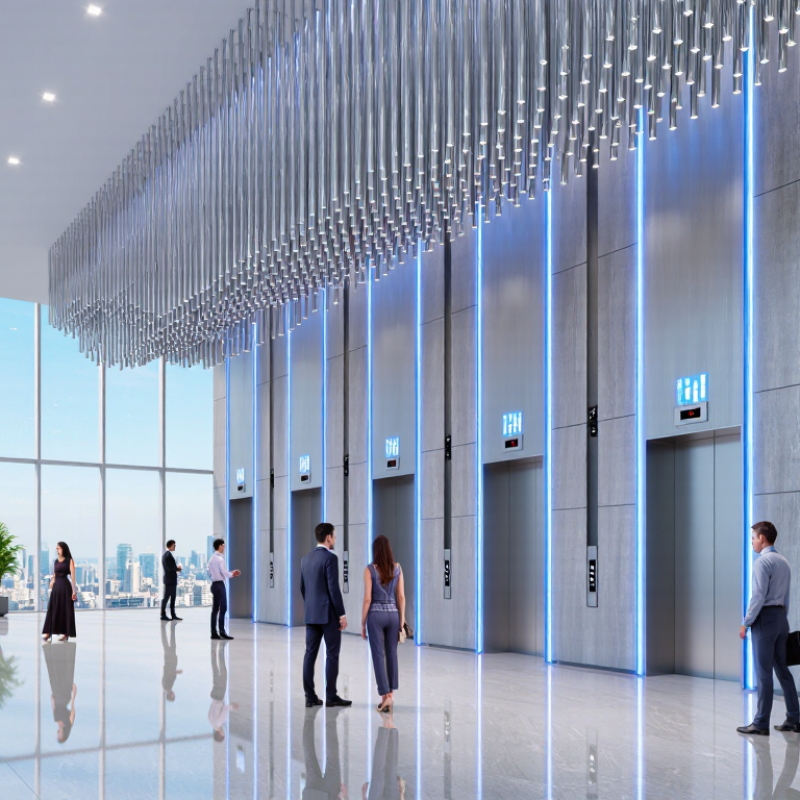
Top 10 High Speed Lift Manufacturers Worldwide?

What Defines a High-Speed Lift and Where It Is Used

A high-speed lift is defined by performance, not one universal number. In many engineering practices, lifts above 2.5 metres per second enter the high-speed category. The boundary is not perfectly fixed. Building height, traffic demand, and local safety rules also matter.

ISO 8100-1 addresses lift safety and passenger protection, while CIBSE Guide D focuses on transportation planning. Engineers assess acceleration, braking, vibration, door cycles, and handling capacity. At 8 metres per second, a lift can travel from a lower lobby to an upper office level within seconds. Yet poor control tuning may cause ear pressure, dizziness, or uncomfortable movement.

High-speed lifts are common in skyscrapers, financial towers, hotels, hospitals, and major transport hubs. They need carefully planned zoning, destination control, and efficient dispatching. A 2024 Grand View Research report valued the global elevator market at approximately US$88.26 billion in 2023. The report also projects strong growth through 2030, partly driven by urbanisation and taller buildings. Market scale does not automatically prove better passenger service.

In daily operation, the details are visible. A crowded lobby at 8:30 a.m. exposes weak traffic planning quickly. Counterweights, guide rails, suspension systems, and machine-room ventilation must work together. High speed alone is not enough. Sometimes, a slower lift with fewer stops serves people better.

Top 10 High Speed Lift Manufacturers Worldwide? - What Defines a High-Speed Lift and Where It Is Used

Manufacturer-neutral benchmark of high-speed lift categories, specifications, and typical applications

Rank High-Speed Lift Category Typical Rated Speed Typical Travel Height Typical Building Use Common Drive and Control Features Key Design Requirement
1 Supertall passenger lift 8.0–20.0 m/s 300–600+ m Supertall offices, observation towers, and mixed-use skyscrapers Permanent-magnet gearless traction, high-speed door operators, destination control, and multi-car group dispatch Ride comfort, pressure management, vibration control, and emergency evacuation planning
2 High-rise office passenger lift 4.0–10.0 m/s 150–400 m Commercial towers and central business district buildings Gearless traction, regenerative braking, load weighing, and destination dispatch Short waiting times, efficient zoning, and controlled acceleration and deceleration
3 High-speed residential tower lift 3.0–7.0 m/s 100–300 m Luxury apartments and high-rise residential complexes Gearless traction, low-noise cabin systems, variable-frequency drives, and access control Low noise, smooth leveling, passenger comfort, and reliable peak-period service
4 Airport terminal express lift 2.5–6.0 m/s 20–100 m Airport terminals, rail hubs, and large transport interchanges High-duty traction equipment, wide doors, destination control, and traffic monitoring High passenger throughput, fast door cycles, durability, and accessibility
5 Hotel and hospitality high-speed lift 2.5–5.0 m/s 50–200 m High-rise hotels, resorts, and serviced residences Gearless traction, quiet door systems, destination dispatch, and card-based access Quiet operation, smooth ride quality, architectural integration, and dependable service
6 Hospital and medical-center lift 2.5–4.0 m/s 30–150 m Large hospitals and multi-building medical campuses High-capacity traction, stretcher-compatible cabins, priority controls, and emergency operation Reliable priority service, hygienic materials, accessibility, and precise leveling
7 Large shopping and mixed-use complex lift 2.5–4.0 m/s 20–100 m Shopping malls, retail podiums, and mixed-use developments Energy-efficient traction, group control, wide entrances, and high-cycle door equipment Peak traffic handling, energy efficiency, passenger flow, and maintenance access
8 High-speed service and freight lift 2.0–3.5 m/s 20–150 m Warehouses, logistics centers, hotels, and commercial back-of-house areas Heavy-duty traction, reinforced cabins, robust door systems, and programmable loading controls Load durability, frequent cycling, impact resistance, and safe goods handling
9 Parking-garage and transit-connection lift 2.0–3.5 m/s 15–80 m Airport parking structures, urban garages, metro stations, and rail facilities Traction drive, vandal-resistant finishes, weather protection, and remote monitoring High availability, environmental resistance, accessibility, and low operating cost
10 Observation and scenic tower lift 2.5–10.0 m/s 100–600+ m Landmark towers, observation decks, and tourist attractions High-speed traction, panoramic cabins, active vibration management, and controlled acceleration profiles Passenger comfort, pressure changes, transparency, safety systems, and visitor throughput
Technical note: In many international projects, a lift is commonly described as high-speed when its rated speed exceeds approximately 2.5 m/s. The exact threshold varies by local codes, building height, traffic requirements, and project specifications. Actual performance also depends on acceleration, deceleration, door time, dispatch logic, and ride comfort—not rated speed alone.

How the Top 10 Global Manufacturers Are Selected

Top 10 High Speed Lift Manufacturers Worldwide?

Selecting the top ten global high-speed lift manufacturers requires more than checking travel speed. A credible review examines engineering experience, verified installations, and long-term operating results. Projects in airports, towers, hospitals, and major business districts provide useful evidence. However, public data can be incomplete. A perfect ranking is impossible.

The selection should compare rated speed, ride comfort, stopping accuracy, emergency systems, and energy performance. Independent testing and recognized safety certifications also matter. Maintenance coverage deserves equal attention. A fast lift is not reliable if technicians wait days for replacement parts. We also review uptime records, modernization support, local code compliance, and the manufacturer’s ability to manage complex traffic patterns. Customer references can reveal practical weaknesses that brochures often hide. Some companies publish impressive figures, yet provide limited evidence from demanding buildings.

Tips: Check complete project histories. Ask for measured performance, not promotional claims. Request maintenance response times and parts availability. Compare lifecycle costs, not only purchase prices. Inspect the control room when possible. Small details matter. A quiet motor, clear fault records, and stable door movement often reveal stronger engineering. Selection teams should record their scoring method and update it when new evidence appears. Their judgment may still contain bias, especially when regional data is uneven. That limitation should remain visible.

Top 10 High Speed Lift Manufacturers Worldwide

How the Top 10 Global Manufacturers Are Selected

The selection framework prioritizes safety and regulatory compliance, high-speed engineering capability, international service coverage, proven project experience, energy efficiency, modernization expertise, and delivery capacity. The percentages represent the editorial weighting used to compare global manufacturers, rather than company-specific performance data.

Profiles of the World’s Leading High-Speed Lift Manufacturers

High-speed lift manufacturing is shaped by urban density, not speed alone. The leading ten manufacturers typically serve towers, airports, hospitals, and large transit complexes. Their profiles reveal different strengths: one group leads in permanent-magnet traction systems, another focuses on double-deck cabins, while others develop machine-room-less designs for tighter rooftops. Several manufacturers also combine regenerative drives, destination dispatch, and predictive maintenance platforms.

Fortune Business Insights valued the global elevator market at approximately US$88.4 billion in 2023, with continued growth expected through 2032. Its analysis identifies modernization and high-rise construction as important demand drivers. CTBUH research also records hundreds of completed buildings above 200 meters each year, creating practical demand for lifts that can travel faster without making passengers uncomfortable. The strongest manufacturers therefore invest in vibration control, aerodynamic cabin design, and staged evacuation planning. Not every manufacturer performs equally across these areas.

Speed matters.

A reliable profile must examine more than advertised metres per second. ISO 8100-1 addresses lift safety requirements, while local codes influence testing, fire response, and accessibility. Leading suppliers usually publish data on acceleration, stopping accuracy, energy use, and service response. Yet comparisons remain imperfect because projects use different shaft heights, traffic patterns, and loading assumptions. A lift reaching 10 metres per second may still underperform in a busy tower if dispatch software is weak. This is where manufacturer experience becomes visible: technicians monitor door cycles, cabin sway, heat, and peak-hour queues rather than relying only on showroom figures. Mistakes still happen, especially when digital systems receive more attention than daily maintenance.

Key Technologies Behind Modern High-Speed Lift Systems

Modern high-speed lift systems depend on more than powerful motors. Leading manufacturers combine gearless traction machines, lightweight car frames, and precision-machined guide rails. These components reduce vibration during rapid travel. A well-tuned system can feel surprisingly calm at high speed.

Aerodynamic design also matters. Rounded car shapes, sealed doors, and smooth shaft surfaces reduce air resistance and pressure noise. Multi-zone control can prevent uncomfortable ear pressure between floors. Regenerative drives return braking energy to the building’s electrical network. Destination-control software groups passengers by floor, reducing unnecessary stops and crowding.

Safety remains the central engineering challenge. Real-time sensors monitor rope tension, door movement, speed, temperature, and unusual vibration. Independent braking systems must respond even when the main controller fails. Manufacturers test emergency stopping, repeated cycling, fire conditions, and power interruptions under strict standards. Field technicians then inspect alignment and braking performance after installation.

The technology is impressive, but it is not flawless. Sensor errors can create false alarms. Poor maintenance can weaken even advanced equipment. Engineers still debate how much automation should control emergency decisions. A reliable lift therefore needs skilled inspection, transparent testing records, and operators who understand its limits. Passenger comfort is measured in small details: a steady floor, a quiet door, and no sudden movement.

How to Compare High-Speed Lift Brands for Different Projects

Top 10 High Speed Lift Manufacturers Worldwide?

Comparing high-speed lift manufacturers requires more than reading rated speed. A project team should examine traffic calculations, shaft dimensions, travel height, and local building codes. A 6 m/s lift may suit a 40-storey office, yet waste energy in a shorter hotel tower. Ask for measured acceleration, stopping accuracy, and door-opening times. These figures affect comfort during the morning peak. Request independent test records, not only sales brochures. Good evidence includes commissioning data from similar buildings.

Compare each supplier’s control system, motor efficiency, cabin stability, and braking performance. A quiet ride can reveal good vibration isolation. Look for smooth starts, steady movement, and accurate leveling within a few millimeters. Safety systems need clear inspection procedures and documented testing. Maintenance planning is equally important. Check local technicians, spare-parts availability, remote diagnostics, and response times after faults. A low purchase price can become expensive when a specialized component takes weeks to arrive.

My first comparison focused too heavily on speed. That was a mistake. A slightly slower lift with better uptime may serve passengers more effectively. Ask manufacturers to model peak traffic using your actual floor plan and passenger numbers. Review warranty limits carefully, especially for intensive daily use. Energy claims should include operating conditions, not just laboratory figures. References from similar climates and building types are valuable. Still, one reference cannot prove everything. Visit an operating site when possible, listen inside the cabin, and observe how technicians perform routine inspections.

Request a Quote

For more information on our instruments, consumables, or services, or to request a quote, complete the contact form below, and one of our associates will reach out to you!

Request a Service Quote

To request service on your machine(s), complete the contact form below, and one of our associates will reach out to you!

Browse by:

  • Test Property
  • Manufacturer