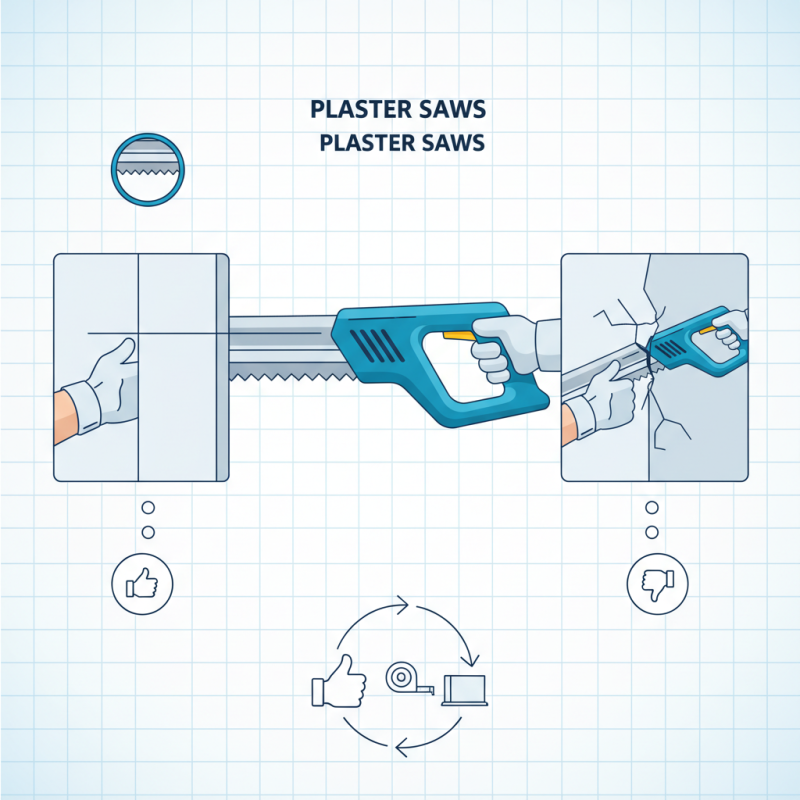
What is a Plaster Saw and How is it Used?
A Plaster Saw is a specialized tool used in the construction and remodeling industry. John Anderson, a noted expert in drywall installation, states, "A good plaster saw can make or break your project." This emphasizes the importance of quality tools in achieving professional results.
The Plaster Saw is designed to cut through plaster and drywall effectively. With its serrated edges, it allows for precise cuts. Users can navigate tight spaces with ease. However, not all saws perform equally. Selecting the right one is crucial for efficiency and accuracy.
Many novice users struggle with the Plaster Saw's unique design. They may experience uneven cuts or damage surrounding materials. Reflection is needed on their technique and choice of tools. The right guidance can enhance their skills. Investing in a quality Plaster Saw pays off in the long run. A tool that fits well into your hands can lead to transformative results.
What is a Plaster Saw?
A plaster saw is a specialized tool designed for cutting plaster materials. It features a serrated blade that easily slices through plaster, making it ideal for both construction and repair work. The saw’s shape allows for precise cuts, especially in tight spaces where other tools struggle. Craftsmen often rely on it when shaping plaster elements for walls or artistic features.
Using a plaster saw requires some skill. Holding it steady is crucial. If the saw slips, it can ruin a carefully prepared surface. Practicing on scrap pieces is a smart choice. This helps build confidence in using the tool effectively. Over time, you learn how much pressure to apply. Too much force can lead to uneven cuts and a messy finish.
Care is essential for maintenance. Keeping the saw clean prevents plaster build-up on the blade. This ensures smoother operation. Some users forget this step, leading to frustration during a project. It's a reminder that attention to detail is key in crafting with plaster. Each cut should reflect both precision and artistry.
The Structure and Design of a Plaster Saw
A plaster saw is a specialized tool designed for cutting through plaster material. Its structure consists of a thin, serrated blade. This blade is flexible, allowing for precise and controlled cuts. The handle is ergonomically designed for a comfortable grip, enabling users to maneuver with ease. This tool is essential in both repair and installation jobs involving drywall or plaster.
The design of a plaster saw emphasizes functionality and efficiency. Many industry reports suggest that the right saw reduces cutting time by up to 30%. The unique blade shape minimizes dust generation, which is important for maintaining a clean workspace. Proper maintenance is required for optimal performance. Users often overlook this aspect. Dull blades can lead to jagged cuts, causing unnecessary rework.
Understanding the structure of a plaster saw helps in effective usage. A well-maintained saw can last for years. However, improper handling can damage it easily. Users are sometimes unaware of how their technique affects the saw's longevity. Taking time to learn the proper cutting technique is worthwhile. It can prevent frustration and promote better results in plaster work.
What is a Plaster Saw and How is it Used? - The Structure and Design of a Plaster Saw
| Feature | Description | Usage |
| Blade Type | Flexible, serrated blade | Cuts through plaster and drywall |
| Handle Design | Ergonomic and often rubberized | Allows for a comfortable grip |
| Length | Typically 12 to 14 inches | Provides leverage for cutting |
| Weight | Lightweight for ease of use | Reduces fatigue during prolonged use |
| Primary Use | Cutting and shaping plaster | Ideal for creating openings and adjustments |
Common Uses of a Plaster Saw in Construction
A plaster saw is a specific tool designed to cut through plaster and drywall. It's essential in construction projects, especially during renovations. One common use of a plaster saw is for creating openings in walls. Whether for windows or electrical outlets, precise cuts are crucial. The saw’s fine teeth help avoid damaging surrounding materials.
Using a plaster saw can be tricky. It requires steady hands and attention. Many beginners struggle with straight lines. It's easy to go too deep or too shallow. Some may find themselves frustrated, wondering if they should have practiced more. Proper technique can make a significant difference.
Another use is removing old plaster when updating walls. This process can be messy. Dust clouds can obscure vision, making cuts harder. Proper safety gear is essential but sometimes overlooked. Experienced workers still face challenges with uneven walls. Each job presents unique hurdles, reminding us that mastery comes with experience.
Safety Tips When Using a Plaster Saw
When using a plaster saw, safety is paramount. This tool can make precise cuts, but it poses risks. Always wear protective gear. Safety goggles are essential to shield your eyes from dust. A dust mask can help you avoid inhaling harmful particles. Heavy-duty gloves protect your hands from sharp edges and debris.
Before you start, ensure your workspace is organized. A cluttered area can lead to accidents. Make sure the plaster saw is in good working condition. Check the blade for any signs of wear. A dull blade can cause more accidents. Test the saw on a small piece of plaster first. This helps you gauge its performance and your comfort level.
Keep your fingers away from the cutting area. It’s easy to get distracted. If you feel tired or unsure, take a break. Sometimes, stepping away can help you regain focus. Remember to follow all safety guidelines. A moment of carelessness can lead to injuries. Always prioritize your safety over the task at hand.
Maintenance and Care for Your Plaster Saw
Taking care of your plaster saw is essential for optimal performance and longevity. Regular maintenance can prevent issues that might arise over time. According to industry reports, neglecting tools can reduce efficiency by up to 35%. Dust and debris can accumulate on the blade, affecting its sharpness. Sharp blades are crucial for clean cuts. Dull blades lead to rough edges, requiring extra finishing work.
Cleaning your plaster saw after each use is vital. A quick wipe with a soft cloth removes plaster residue. For deeper cleaning, consider using soapy water and a brush. Ensure all components are dry before storage. Additionally, lubricating moving parts can prevent rust, extending the tool's lifespan.
Proper handling also impacts your tool's durability. Avoid dropping or mishandling the saw, as this can lead to misalignment. Regularly check the alignment and tightness of screws. Reports suggest that improper handling can lead to a 20% increase in maintenance costs. Developing a routine for inspections is beneficial. Small issues can escalate if ignored, leading to costly repairs or replacements.