What Is a Heavy Duty Cable Reel and How Does It Work?
A Heavy Duty Cable Reel stores and manages long cables on a sturdy drum. Its frame supports the drum, while an axle lets it rotate during winding and unwinding. Some models use a hand crank; others use a powered mechanism. Electrical reels may include slip rings to maintain connection as the drum turns, though designs vary. The basic idea is simple. The details matter.
On a workshop floor, a reel can keep cable away from moving equipment and reduce tangles during setup. You might see one used with power, welding, or industrial cables, depending on its rating. The label “heavy duty” sounds reassuring, but it does not tell the whole story. Capacity, cable type, operating environment, and load all affect whether a reel is suitable. A reel rated for one cable may not safely accommodate another of the same length. That can be easy to overlook.
This article explains the main parts of a heavy-duty reel and how they work together as cable is paid out or rewound. It also looks at practical selection factors, including drum size, frame strength, handling, and protection from dust or moisture. Check the manufacturer’s specifications and inspect the cable and reel before use. A robust frame helps, but it cannot compensate for incorrect loading or damaged insulation. There is no single reel for every job. Choosing well starts with the cable and the conditions it will face.
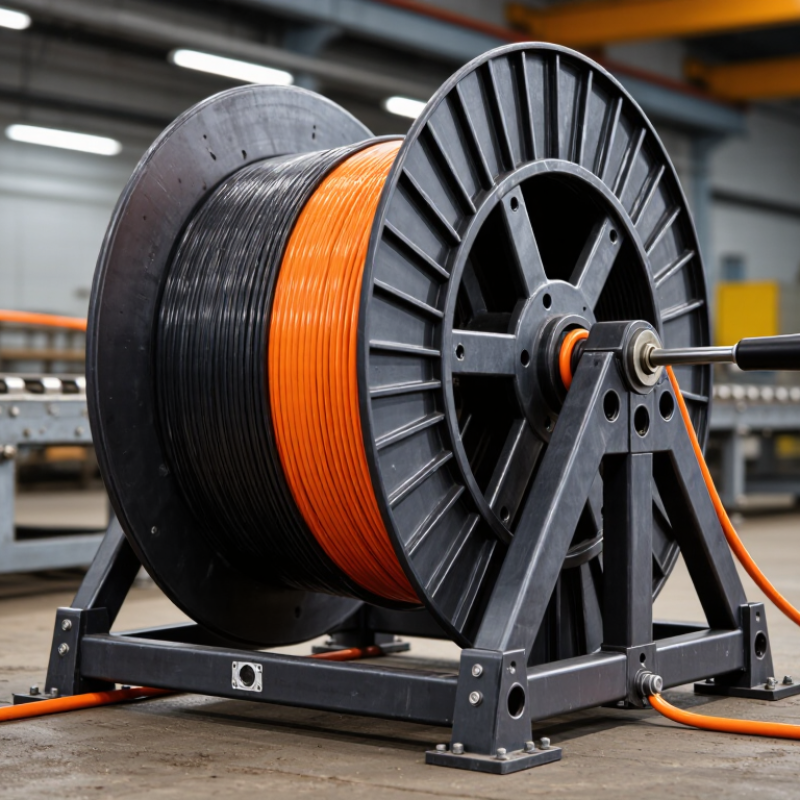
Definition and Key Components of a Heavy-Duty Cable Reel
A heavy-duty cable reel stores and pays out long lengths of electrical cable while protecting them from tangles, abrasion, and sharp bends. Its main parts are a rigid frame, a rotating drum with side flanges, an axle and bearings, and a winding handle or drive. Powered models may include a slip ring and brush assembly, which carries current across the rotating connection. A brake or ratchet helps control payout. The label alone can mislead: capacity depends on cable diameter, length, and the reel’s rated load.
For electrical safety context, NFPA’s Home Structure Fires Involving Electrical Distribution or Lighting Equipment report estimated about 32,620 such fires annually in U.S. homes from 2015 to 2019. This broad category does not attribute those fires to cable reels, but it reinforces the need to check heat and electrical ratings. A tightly wound energized cable can retain heat, so follow the reel maker’s stated current rating and fully unwind cable when required. That detail matters.
Tips: Match the reel to the cable’s gauge, length, and environment. Inspect the plug, insulation, brake, and frame before use. Stop if the drum feels unusually hot; a small warning sign can be easy to overlook.
How the Drum, Brake, and Slip Ring Feed Power as Cable Unwinds
A heavy duty cable reel stores and deploys long electrical cables while protecting them from tangles, abrasion, and sharp bends. Its drum turns on a shaft, with side flanges keeping the cable in place. Reels may be spring-driven, motorized, or manually operated. The right design depends on cable length, weight, voltage, and how often it moves. That matters.
As cable unwinds, the drum rotates while a brake controls its speed. The brake helps prevent overspin, which can leave loose loops on the floor or strain the cable. In many powered reels, a slip ring sits at the rotating joint. Its conductive contacts maintain an electrical path between the stationary supply and the turning drum, so power can continue flowing as the cable moves. Slip rings have wear limits, though; dust, heat, or poor maintenance can affect performance. The details vary by reel design, so check its specifications rather than assuming every model works the same way.
Tips: Pull cable smoothly, and avoid sudden jerks. Inspect the brake, cable jacket, and slip-ring area for heat or wear. A warm connector is a warning sign, not something to ignore.
What Is a Heavy Duty Cable Reel and How Does It Work? — How the Drum, Brake, and Slip Ring Feed Power as Cable Unwinds
| Part or Stage | What It Is | How It Works | Why It Matters |
|---|---|---|---|
| Reel frame and mounting | A rigid support structure that holds the drum, drive, brake, and electrical components. | Mounting points transfer reel loads into the machine, vehicle, or fixed structure. | A correctly designed and secured frame helps keep the drum aligned and supports operating loads. |
| Drum | The rotating cylinder and side flanges around which the cable is wound. | As the drum rotates, cable is paid out or retrieved. The usable drum width and diameter determine how cable is stored. | Suitable drum dimensions help prevent excessive bending, crushing, and cable overfill. |
| Cable and winding layers | The flexible electrical cable, stored in one or more layers on the drum. | Cable pays off the drum as equipment moves away and winds back on as it returns. A level-wind guide may distribute cable across the drum. | Correct cable selection and orderly winding help manage current, mechanical strain, and cable wear. |
| Drive or rewind mechanism | A spring, electric motor, hydraulic motor, or other drive that rotates the drum. | A spring reel stores energy during payout and uses it to rewind. A powered reel uses a motor and controls to drive the drum in the required direction. | The drive must suit the cable length, movement, load, and required winding speed. |
| Brake or tension control | A mechanical or controlled braking system that resists drum rotation. | It moderates drum speed and helps maintain cable tension while cable is pulled out or rewound. | Appropriate braking helps reduce overrun, slack, sudden movement, and uneven winding. |
| Slip ring assembly | An electrical rotary connection, typically using stationary brushes and rotating conductive rings. | The cable connects to the rotating side; stationary wiring connects to the fixed side. Contact between brushes and rings carries power or signals while the drum turns. | It allows electrical continuity during rotation without twisting the supply wiring around the drum axle. |
| Cable guide and rollers | Guides, rollers, or a level-wind device positioned where cable enters or leaves the reel. | They direct the cable onto the drum and may help control its position across the winding surface. | Proper alignment reduces side loading, abrasion, and crossed or bunched cable layers. |
| Electrical protection and grounding | Protective devices and bonding arrangements selected for the reel and its electrical system. | Protection is coordinated with the supply and load; grounding or bonding provides a path for fault current where required by the design and applicable codes. | Protection, conductor sizing, and grounding must be selected for the installation, environment, and electrical ratings. |
| Power transfer during payout | The combined operation of the cable, drum, and slip ring as cable is pulled out. | The cable unwinds with the drum rotating. The slip ring maintains the electrical connection between rotating and stationary parts, while the brake or drive controls motion and tension. | Power can remain connected while the reel turns, provided the reel, cable, slip ring, and electrical system are correctly rated and maintained. |
| Rewind and inspection | The return movement of the cable and routine checks of reel components. | The drive rewinds the cable, while guides and tension control help place it evenly. Inspections check for damaged insulation, loose connections, worn brushes, and abnormal brake or bearing behavior. | Following the manufacturer’s operating limits and maintenance instructions helps reduce premature wear and electrical or mechanical hazards. |
Note: Reel capacity, cable type, current rating, duty cycle, speed, and environmental suitability vary by application. Confirm these details against the equipment specifications and applicable electrical and safety requirements.
IEC 60309 Ratings: 16, 32, 63, and 125 A Industrial Connections
A heavy duty cable reel combines a wound cable, a supporting frame, and industrial connectors for demanding work sites. IEC 60309 connections are commonly rated at 16, 32, 63, or 125 A. The number indicates the connector’s rated current, not the capacity of every reel component. Cable size, length, ambient temperature, and operating conditions matter too.
Choose the rating to match the equipment and supply. A 16 A connector may suit lighter tools, while 32 A connections often serve larger portable machines. 63 A and 125 A versions are used for higher-current equipment and distribution. Check voltage, number of poles, and connector position as well as amperage; ratings alone do not confirm compatibility. The color and clock-position markings help identify the intended configuration. Still, labels can be hard to read after years of site use.
Cable reels can heat up when cable remains tightly wound under load. Unwind it fully when the manufacturer’s instructions require this, especially at higher currents. A reel’s thermal protection, cable rating, and connector rating should all suit the job. This detail is easy to overlook. A 125 A plug does not make an undersized cable safe, and a higher rating is not automatically better. Verify the complete assembly before connecting equipment.
What Is a Heavy-Duty Cable Reel and How Does It Work?
A heavy-duty cable reel stores and unwinds electrical cable for industrial power distribution. IEC 60309 plugs and sockets are commonly rated at 16 A, 32 A, 63 A, and 125 A. The reel’s safe capacity also depends on factors such as cable size, length, and whether the cable is wound or fully unwound.
Apparent power is calculated for a 400 V three-phase supply using √3 × voltage × current. Values are shown in kVA, not kW; actual usable power depends on the load’s power factor and installation conditions.
How Cable Type, Length, and IP Rating Shape Reel Selection
A heavy-duty cable reel is only as dependable as its cable choice. Flexible copper cable suits repeated winding, but the jacket must also match the setting: abrasion, oil, sunlight, or wet floors can change what is appropriate. Check the cable’s rated current and voltage, not just its thickness. Fully unwind it when required by the reel’s load rating. Coiled cable can retain heat. Small detail, real consequence.
Length affects voltage drop and heating. IEC 60228 lists a maximum resistance of 7.41 ohms per kilometre for a 2.5 mm² class 2 copper conductor at 20°C. With a 50-metre reel, current travels roughly 100 metres out and back; at 10 amps, that resistance alone implies about 7.4 volts of drop. Actual results vary with temperature and load. Longer is not always better.
IP rating helps match the reel to dust and water exposure. Under IEC 60529, IP44 indicates protection against objects larger than 1 mm and splashing water; IP67 indicates dust-tight construction and specified temporary immersion protection. It does not mean every connected plug is protected, or that the reel is safe for every wet site. Check the rating of the complete setup and the manufacturer’s wound and unwound load limits. One rating rarely tells the whole story.
Safe Use: Unwind Fully and Follow the Manufacturer’s Current-Derating Data
A heavy duty cable reel stores a long, insulated power cable on a rotating drum. Pulling the cable turns the drum; winding it back keeps the cable organized between jobs. The reel’s frame supports the drum, while its sockets and plug connect equipment to a power source.
Safe use depends on more than the cable’s maximum rating. When cable remains tightly wound, heat can build up inside the coil as current flows.
Heat needs room.
Unwind the cable fully before running high-load equipment, unless the manufacturer’s instructions specify otherwise. A reel may have different current limits for wound and unwound use.
Check the manufacturer’s current-derating data for the exact reel and cable. It may list a lower permitted current when cable is left coiled, or limits based on operating conditions. Don’t guess from the cable’s thickness or the tool’s usual power draw. That matters. A motor starting under load can briefly demand more current than expected. Keep connections dry, inspect the insulation and plug for cuts or looseness, and stop if the cable or reel feels unusually hot. A thermal cutout, if fitted, is a backup—not permission to ignore the stated limits. Even careful users can overlook a few turns left on the drum.
Article Source:
Have Questions? We're Here to Help!
Give us a call at (864) 989-0566 or send us a message to discuss our testing equipment with an expert.