7 Electric Dump Truck Buying Tips for Global Buyers
Buying an Electric Dump Truck is not simply a choice between diesel and batteries. It is a decision about payload, duty cycle, charging access, and the cost of keeping a machine productive. The International Energy Agency’s Global EV Outlook 2024 reported nearly 54,000 electric truck sales worldwide in 2023, about 35% more than in 2022. That figure covers trucks broadly, not dump trucks alone. Still, it signals a market worth evaluating carefully—not a guarantee that every job site is ready.
The duty cycle matters most. A truck climbing a quarry ramp with a full load faces different demands from one making short, predictable trips around a construction site. Battery size, charging time, terrain, temperature, and access to service technicians can change the economics. IEA Executive Director Fatih Birol has said, “The clean energy transition is happening worldwide and it’s unstoppable. It’s not a question of ‘if’, it’s just a question of ‘how soon’—and the sooner the better for all of us.” His statement is broad, not a purchasing recommendation. Buyers still need project-specific evidence.
This guide offers seven practical checks for global buyers: assess the work cycle, verify payload and range, compare total ownership costs, inspect charging requirements, review battery and warranty terms, confirm local service support, and test the truck under real operating conditions. Ask for measured results. A polished brochure is not a quarry test. Some figures will remain uncertain, especially where routes or workloads change. That uncertainty deserves attention, not a sales promise.
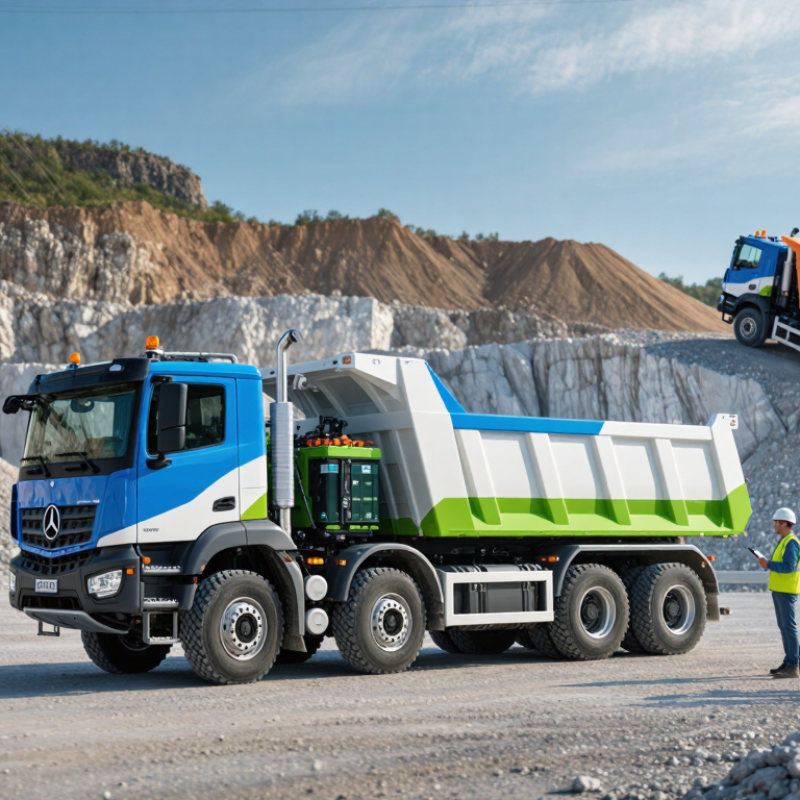
Define Payload, Route, and Grade Requirements Before Comparing Electric Dump Trucks
Before comparing electric dump trucks, define the work they must do. Record payload by material and load, including the body, tools, and occupants. A truck carrying wet aggregate may face a very different duty cycle from one hauling dry soil. The IEA’s Global EV Outlook 2024 reports nearly 54,000 electric truck sales in 2023, about 1.2% of global truck sales. The market is growing, but operating conditions still vary widely.
Map each route in detail. Measure loaded and empty distance, daily trips, waiting time, and access to charging. Note the steepest grade and how long the truck climbs it; a short ramp differs from a sustained ascent. Ask suppliers for energy-use data from a comparable duty cycle, not just a range figure. Check how payload and grade affect range, and confirm charging time against actual shift breaks. One missed detail can distort the comparison. I would also revisit the route after a trial; site plans are not always the route drivers take.
Tip: Share payload, route, grade, and shift records with every bidder. Request a written estimate for the same operating cycle, including reserve capacity for cold weather and detours. Compare usable payload after battery weight, not rated payload alone. Keep assumptions visible. They may be imperfect.
| Buying Tip | What to Define | Information to Gather | Why It Matters | What to Compare |
|---|---|---|---|---|
| 1. Set the required payload | Separate the intended material payload from the truck’s tare mass and gross vehicle weight. | Typical and maximum load per trip; material density; body volume; loading method; applicable local weight limits. | Payload affects legal road operation, trip count, energy use, tire loading, and vehicle selection. | Rated payload, gross vehicle weight, body capacity, and any stated derating for specific operating conditions. |
| 2. Map the route and duty cycle | Define the complete working cycle, including loaded and empty travel, stops, queuing, and return trips. | One-way distance; daily trips; operating hours; average and peak speed; road surface; stop frequency; seasonal changes. | Energy use depends on the full duty cycle, not distance alone. Frequent stops, rough surfaces, and long idle periods can change consumption. | Vehicle range and energy-consumption estimates under a duty cycle that resembles the planned operation. |
| 3. Record gradients and elevation | Identify the steepest sustained grade, short ramps, and total elevation gain on loaded routes. | Grade in percent; ramp length; elevation profile; loaded direction; road condition; required restart points. | Climbing a grade with a load requires substantial traction and power. Regenerative braking may recover some energy downhill, but recovery varies by conditions. | Gradeability at the intended payload, low-speed climbing performance, thermal limits, and braking capability on descents. |
| 4. Match the battery to the operating day | Determine the usable energy needed between charging opportunities, allowing for operating reserves. | Trips per shift; route energy estimates; ambient temperature; planned charging windows; battery reserve policy. | Battery capacity alone does not establish real-world range. Payload, grade, temperature, driving conditions, and auxiliary loads can all affect energy use. | Usable battery capacity, expected range for the stated duty cycle, charging limits, and battery performance in local temperatures. |
| 5. Plan charging around the shift | Specify where and when charging can take place, including whether charging is available during breaks or between shifts. | Available electrical supply; charger power; connector and charging protocol; parking time; number of vehicles charging at once. | Charging time depends on charger output, vehicle acceptance limits, battery state, and site electrical capacity. | Charging compatibility, estimated charging time for the planned window, installation requirements, and charging support in the destination market. |
| 6. Check the body, chassis, and site conditions | Confirm that the dump body, lifting system, dimensions, and vehicle configuration suit the material and loading site. | Material type and density; body volume; discharge method; clearance limits; turning space; ground conditions; access restrictions. | A suitable payload rating does not guarantee that the vehicle fits the loading, hauling, and tipping conditions of a particular site. | Body configuration, overall dimensions, axle loading, ground clearance, turning characteristics, and compatibility with site procedures. |
| 7. Verify support, safety, and total operating cost | Assess the availability of service, parts, training, and emergency support where the truck will operate. | Local service coverage; parts lead times; warranty terms; technician training; safety requirements; electricity and maintenance costs. | Uptime and operating cost depend on local support as well as the vehicle itself. Requirements for high-voltage work and road approval vary by jurisdiction. | Documented service arrangements, warranty coverage, safety features, regulatory compliance, and cost assumptions over the intended ownership period. |