What is Cold Rolled Coil and How is it Used?
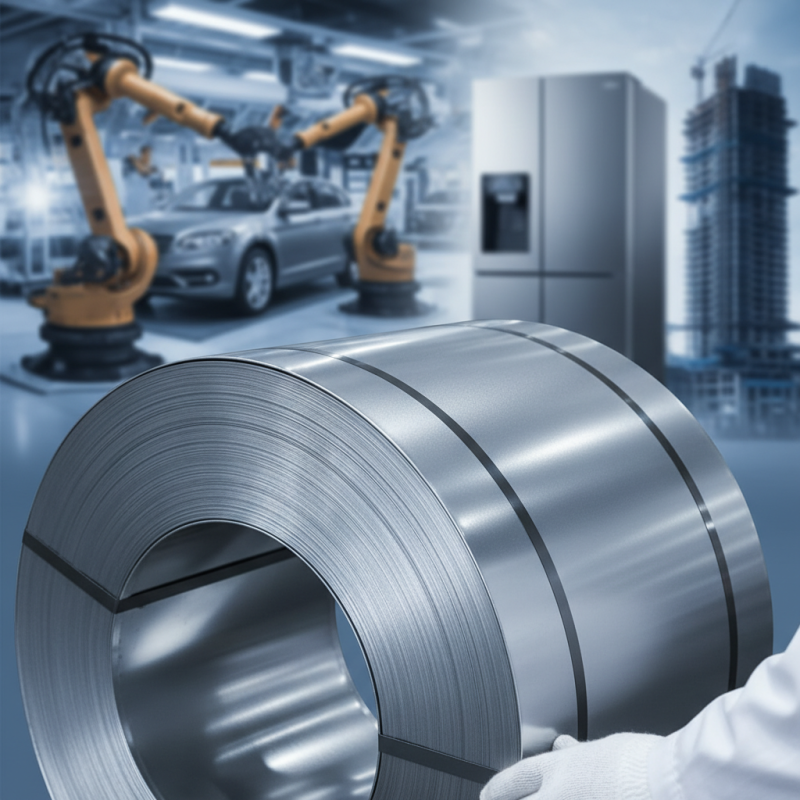
Cold Rolled Coil (CRC) plays a crucial role in various industries, particularly in automotive, appliances, and construction. According to a recent report by MarketsandMarkets, the global cold rolled steel market is expected to reach USD 450 billion by 2025, driven by increased demand for high-quality materials. CRC is characterized by its superior surface finish and precise dimensions, making it highly desirable for numerous applications.
Industry expert John Smith, a renowned metallurgist, emphasizes the significance of CRC, stating, "The consistent quality of Cold Rolled Coil is essential for the manufacturing process." This highlights the importance of maintaining stringent quality standards in the production of CRC to ensure optimal performance in end products.
However, the industry faces challenges, such as fluctuations in raw material prices and environmental concerns related to production methods. These issues prompt manufacturers to reflect on their practices and strive for better sustainability while meeting market demands. Cold Rolled Coil continues to be a vital component in shaping industries, yet it also requires constant innovation and improvement in response to evolving standards and expectations.
Definition and Characteristics of Cold Rolled Coil in Metal Industry
Cold rolled coil is a key product in the metal industry. It is made by processing hot rolled steel through a series of rolling steps at room temperature. This technique enhances its mechanical properties. The result is a product with a smoother surface and tighter tolerances compared to its hot rolled counterpart. It is commonly used in applications like automotive parts, appliances, and construction materials.
Cold rolled coils have their own unique characteristics. They display excellent strength and formability. The refined surface finish makes them suitable for painting and coating. However, they can be more susceptible to oxidation if not properly treated. Ensuring proper storage is crucial to prevent rust.
Tips: Always check for protective coatings during storage. Keep coils in a dry environment to prevent moisture damage. It’s vital to consider these factors to avoid expensive replacements. Making modifications to cold rolled products can be tricky, so planning and precision are key. Understand the limitations of the material before beginning any project.
Manufacturing Process of Cold Rolled Coil: Steps and Techniques
Cold rolled coil (CRC) is produced through a detailed manufacturing process. This process begins with hot rolled coil (HRC) that is further processed at ambient temperature. The aim is to enhance the material's strength and surface finish. CRC is widely utilized due to its high precision and versatility. According to industry reports, the global cold rolled steel market was valued at approximately $650 billion in 2022. This indicates a growing demand across various sectors.
The cold rolling process involves several key steps. Initially, the hot rolled coils are uncoiled and cleaned to remove any contaminants. Next, they pass through rollers that reduce their thickness while improving their surface quality. The reduction in thickness can range from 10% to 50%. Research shows that around 30% of steel production is dedicated to cold rolling, making it a significant portion of overall steel output. However, achieving the desired precision can sometimes be challenging, and defects can arise during this phase.
After the rolling process, the coils undergo various treatments. These can include annealing, which helps relieve internal stresses, or surface treatment to prevent rust. Although numerous technologies exist, not every process achieves perfect results. Inefficiencies in these steps can lead to variations in final product quality. According to a recent study, about 12% of cold rolled products return for rework due to imperfections. Understanding these processes and their limitations is crucial for manufacturers aiming to meet stringent quality standards.
Cold Rolled Coil Production Process and Applications
Applications of Cold Rolled Coil in Automotive and Construction Industries
Cold rolled coil (CRC) is a crucial material in the automotive and construction industries. Its production involves processing hot rolled steel at room temperature, resulting in enhanced strength and a smoother finish. According to industry reports, the global cold-rolled coil market was valued at approximately $250 billion in 2022, with an expected growth rate of 3-4% annually. This demand largely stems from the automotive sector, which utilizes CRC for various components.
In automotive manufacturing, cold rolled coil can be found in body panels, chassis, and structural components. The automotive industry prefers CRC due to its superior surface quality. A survey indicated that around 60% of car manufacturers choose cold rolled steel for its formability. Construction also heavily relies on CRC. It is used in beams, columns, and metal roofing. In 2023, the construction industry in North America alone is projected to consume over 15 million tons of cold-rolled products.
However, these industries face challenges. Fluctuating raw material prices can affect production costs. Additionally, CRC’s susceptibility to corrosion requires proper treatment and coatings, which can complicate manufacturing processes. Reflecting on these aspects, ongoing research and new technologies are essential. The industries must adapt continuously to optimize CRC applications amidst these challenges.
Market Trends and Demand Analysis for Cold Rolled Coil Products
The global market for cold rolled coil (CRC) products is witnessing significant growth. Reports indicate that the market is expected to reach $100 billion by 2025, expanding at a CAGR of around 5% over the next few years. This growth is driven by increasing demand from several sectors, particularly automotive and construction.
Cold rolled coils are primarily known for their superior surface finish and dimensional accuracy. These features make them ideal for high-end applications. However, there is an imbalance in supply and demand. In certain regions, manufacturers struggle to meet the increasing need for CRC due to production limitations. This has led to fluctuating prices, impacting profitability for many players in the industry.
Technological advancements are also reshaping the landscape. Automation in manufacturing processes is enhancing efficiency. Yet, companies must reflect on adopting sustainable manufacturing practices. Improving carbon footprints in CRC production can be a challenge. Industry stakeholders are urged to invest in innovation. Balancing quality, cost, and environmental responsibility remains a pressing concern in the evolving market for cold rolled coils.
Technical Specifications and Quality Standards for Cold Rolled Coil
Cold rolled coil (CRC) is a key material in various industries. Its technical specifications include thickness, width, and mechanical properties. The tolerance levels for thickness can be as low as ±0.1 mm. Width can range from 600 mm to 2000 mm. Such precision is vital for the automotive and appliance industries.
Quality standards are crucial for cold rolled coil. They often follow guidelines set by organizations like ASTM and ISO. A report from the American Iron and Steel Institute highlights that compliant CRC can improve product lifespan significantly. Also, the yield strength of cold rolled steel typically ranges from 250 MPa to 450 MPa. However, some manufacturers struggle to maintain these standards consistently.
The surface finish of CRC is also critically assessed. A high-quality surface minimizes defects. However, imperfections may still occur. These flaws can arise from improper handling or inadequate processing techniques. Addressing these issues is essential for manufacturers aiming to meet industry demands. Balancing quality and cost can be challenging but necessary for sustainable production.
What is Cold Rolled Coil and How is it Used? - Technical Specifications and Quality Standards for Cold Rolled Coil
| Specification | Value | Application |
| Thickness | 0.2 - 3.0 mm | Used in automotive components, appliances, and furniture |
| Width | 600 - 1600 mm | Sheet metal fabrication and construction |
| Yield Strength | 170 - 310 MPa | Manufacture of frames and structures |
| Tensile Strength | 270 - 450 MPa | Used in building construction and automotive industries |
| Surface Finish | Coated or uncoated | Electronics and consumer goods |
| Standard Compliance | ASTM A1008/A1008M | Quality assurance in manufacturing processes |