Top Climate Chamber Innovations for Research and Development in 2025
As we move further into the 21st century, the pressing need for advancements in climate research has become increasingly evident. A critical tool in this field is the climate chamber, which provides controlled environments for experimentation and analysis. The enhancements and innovations in climate chamber technology are pivotal for researchers and developers aiming to tackle some of the most significant challenges posed by climate change. In 2025, we are set to witness transformative developments in these chambers, enabling more precise simulations that can mimic a variety of climate conditions.
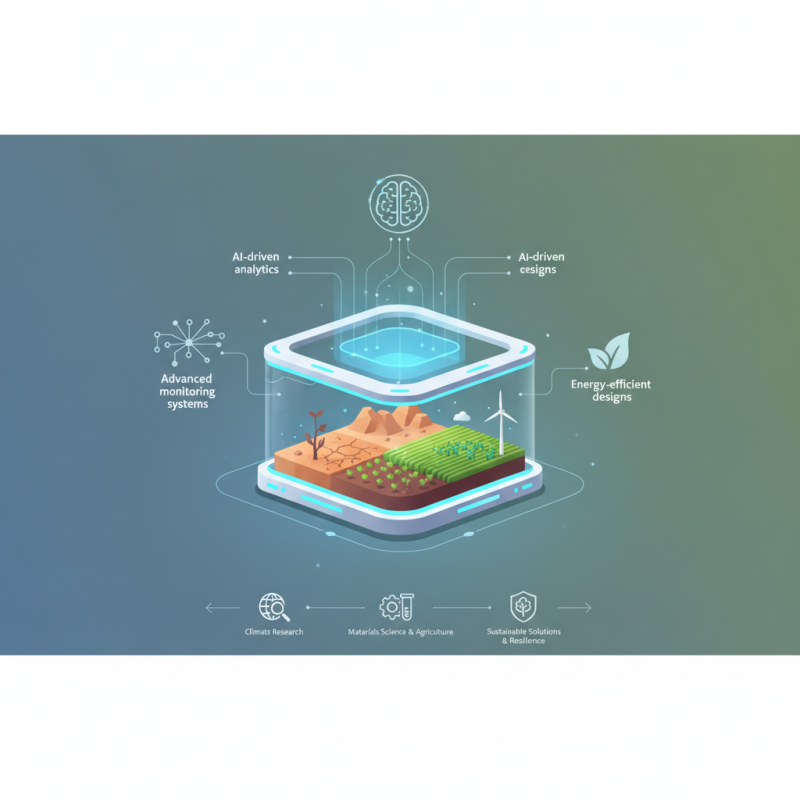
These innovations will not only improve the reliability of experimental data but also broaden the scope of applications across different research domains, from agriculture to materials science. By equipping climate chambers with advanced monitoring systems, AI-driven analytics, and energy-efficient designs, researchers can conduct more extensive and diverse studies. The evolution of climate chambers will empower scientists to better understand the impacts of climate variation on ecosystems and human activities, ultimately driving the development of sustainable solutions and resilience strategies.
In summary, the role of climate chambers in scientific research and development cannot be overstated. As we approach 2025, the expected breakthroughs in this technology will enhance our capabilities to study and respond to the complexities of our changing environment, fostering innovation that aligns with global sustainability goals.
Innovative Climate Chamber Designs Enhancing R&D Efficiency in 2025
The landscape of research and development is evolving rapidly, particularly in how we simulate environmental conditions. Innovative climate chamber designs are at the forefront of enhancing R&D efficiency in 2025. These advanced chambers provide researchers with the ability to create and control specific climatic conditions, allowing for accurate testing and development of products and materials. According to a recent report by the Global Chamber Innovation Association, the market for climate chambers is expected to grow by over 15% annually, reflecting the increasing demand for precise research environments that can replicate extreme weather conditions.
One major innovation is the integration of IoT technologies into climate chambers, which allows for real-time monitoring and data analysis. This connectivity not only streamlines research processes but also facilitates remote operation, making it easier for scientists to manage experiments from anywhere in the world. A study published in the Journal of Environmental Science indicated that R&D teams utilizing smart climate chambers reported a 30% increase in experimental output, a clear testament to the impact of these technologies on productivity.
Furthermore, energy efficiency has become a focal point for climate chamber design. Enhanced insulation materials and energy recovery systems are being implemented to reduce power consumption without compromising performance. The Energy Efficiency Framework for Laboratories has reported that modern climate chambers can reduce energy use by up to 50% compared to older models. This shift not only supports environmental sustainability goals but also significantly lowers operational costs, making innovative climate chambers an essential tool for forward-thinking research institutions.
Top Climate Chamber Innovations for Research and Development in 2025
| Innovation Type |
Description |
Key Benefits |
Expected Impact on R&D |
| Smart Climate Control |
Automated temperature and humidity adjustments using AI. |
Improved accuracy and reduced manual intervention. |
Increased reliability of experimental results. |
| Modular Chamber Design |
Flexible setup with interchangeable sections for different experiments. |
Tailored conditions and space optimization. |
Enhanced experimental versatility and efficiency. |
| Real-Time Data Monitoring |
Integration of IoT devices for continuous environmental tracking. |
Instant feedback on parameters and quicker adjustments. |
Accelerated decision-making in research processes. |
| Energy-Efficient Systems |
Innovative cooling and heating technologies that save energy. |
Lower operational costs and reduced environmental impact. |
Encouragement for sustainable research practices. |
| Enhanced Safety Features |
Advanced alarm systems and emergency protocols integrated into chambers. |
Increased safety for users and experiments. |
Greater confidence in conducting sensitive research. |
Key Technological Advancements in Climate Chamber Equipment for 2025
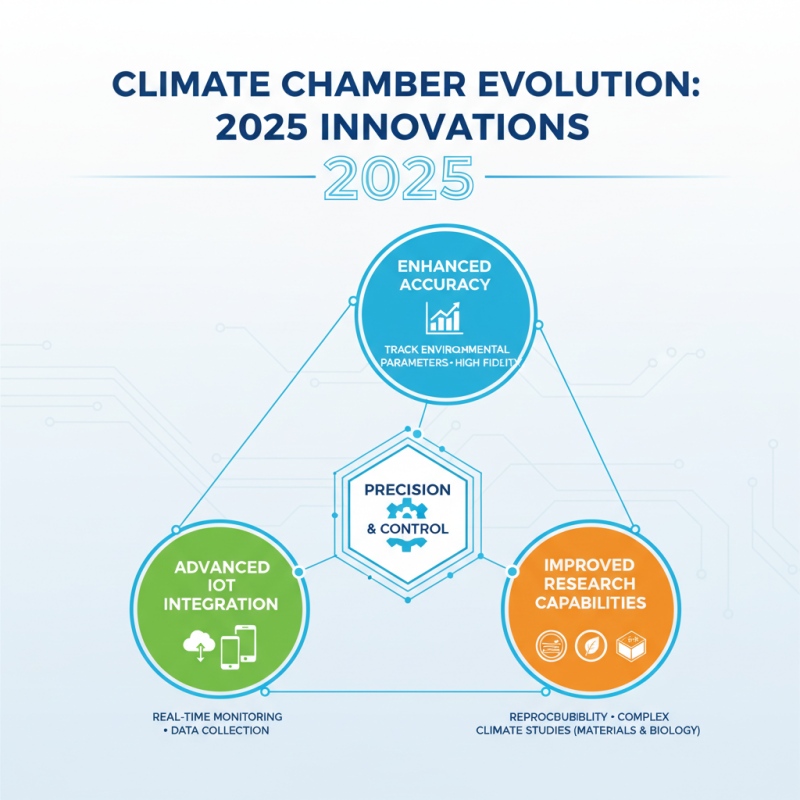
As research and development continue to evolve, the climate chamber equipment has seen remarkable advancements aimed at enhancing precision and control in experimental environments. In 2025, one of the key technological innovations is the integration of advanced IoT (Internet of Things) capabilities. These enhancements allow for real-time monitoring and data collection, offering researchers the ability to track various environmental parameters with high accuracy. The result is not only improved reproducibility of experiments but also the ability to conduct complex studies on the impact of climate variables on different materials and biological entities.
Another significant development in climate chamber technology is the implementation of AI-driven analytics. By utilizing machine learning algorithms, these advanced systems can predict and adjust conditions automatically based on predefined research protocols. Such automation reduces the potential for human error and increases the efficiency of experiments, allowing researchers to focus on analysis rather than equipment management. This focus on smart technology not only improves operational efficiency but also enables the exploration of multi-factorial influences in experimental settings, paving the way for groundbreaking discoveries in various fields, from materials science to agriculture.
Sustainable Materials Used in Modern Climate Chambers for Research Purposes
In the emerging landscape of research and development, climate chambers have evolved significantly, incorporating sustainable materials that align with the global push for environmental responsibility. Modern climate chambers are increasingly constructed from materials such as recyclable plastics, bio-based composites, and advanced insulation technologies. These materials not only contribute to the sustainability of the chambers but also enhance their operational efficiency. By utilizing locally sourced, sustainable materials, researchers can minimize the carbon footprint associated with the production and maintenance of these vital tools.
Additionally, innovations in the design and functionality of climate chambers facilitate the use of renewable resources. For instance, energy-efficient systems are being integrated to regulate temperature and humidity levels without excessive energy consumption. The implementation of smart technologies that monitor and adjust conditions automatically further reduces waste and improves the reliability of experiments. These advancements signal a shift in the research community towards environmentally friendly practices that support not just scientific inquiry but also the well-being of our planet.
Top Climate Chamber Innovations for Research and Development in 2025
This chart illustrates the percentage of sustainable materials used in modern climate chambers across various research purposes. The data reflects trends towards eco-friendly innovations in 2025.
Integration of IoT and AI Technologies in Climate Chamber Operations
The integration of Internet of Things (IoT) and Artificial Intelligence (AI) technologies in climate chamber operations is revolutionizing the landscape of research and development in 2025. By employing IoT sensors, researchers can gather real-time data on temperature, humidity, and other environmental variables, significantly enhancing the accuracy of experimental conditions.
 According to a report from the International Society for Climate Research, the adoption of smart climate chambers equipped with IoT capabilities can improve data collection efficiency by up to 40%, providing researchers with more reliable results and insights.
Furthermore, AI algorithms are becoming essential in analyzing the vast amounts of data generated by these smart environments. Machine learning tools can predict outcomes based on historical data, allowing for quicker experimental iterations and refined conditions. A study published in the Journal of Environmental Science noted that integrating AI with climate chamber operations could decrease the time needed for experimental trials by approximately 30%. This synergy not only accelerates research but also enhances reproducibility, a cornerstone for scientific validation.
Tips: When setting up IoT devices in climate chambers, ensure that the network connectivity is robust to avoid interruptions in data collection. Additionally, consider utilizing machine learning for predictive analysis to fine-tune experimental parameters more efficiently. A well-planned integration of these technologies can lead to significant advancements in your research outcomes.
Future Trends in Climate Chamber Applications for Environmental Research in 2025
As we look towards 2025, the applications of climate chambers in environmental research are expected to undergo significant evolution, driven by both technological advancements and the increasing need for comprehensive data on climate change impacts. Given that the global market for environmental testing equipment is projected to reach $11.7 billion by 2025, with a compound annual growth rate (CAGR) of 7.5%, climate chambers are gaining attention for their critical role in simulating and studying environmental conditions.
One of the key trends anticipated in climate chamber applications is the enhancement of simulation capabilities to mimic extreme weather patterns and changing climate scenarios. This will facilitate more accurate assessments of plant growth, material durability, and ecological interactions under various environmental stressors. Reports indicate that over 70% of researchers in environmental sciences are seeking advanced capabilities in climate chambers to support their work.
Additionally, the integration of IoT and real-time data analytics into climate chambers will enable researchers to collect and analyze vast amounts of data, enhancing predictive models and informing policy decisions related to sustainability and conservation.
Furthermore, as interdisciplinary research becomes more prevalent, climate chambers are likely to be employed across various fields, such as agriculture, biology, and materials science. The convergence of these disciplines within climate chamber environments can lead to innovative solutions for pressing environmental issues, underscoring the need for collaborative efforts among researchers. By 2025, we can expect to see an increased emphasis on the versatility of climate chambers in addressing diverse environmental challenges, propelling research forward in the quest for sustainable development.