How to Choose the Right Home Connectors in 2026?
Choosing Home Connectors in 2026 means looking beyond shape and price. A connector must match the device, wiring, environment, and expected load. It should also fit the way people actually use a home. A sleek smart-home setup is no help if a plug loosens behind a cabinet or a cable cannot reach the router. Small details matter.
Electrical-systems consultant Maya Chen puts it this way: “A reliable connector is chosen for the conditions it will face, not just the device it will join.” That principle guides this article. We’ll look at connector types, material quality, compatibility, safety ratings, and installation needs. Check manufacturer specifications carefully; similar-looking parts may have different limits. For fixed electrical work, get advice from a qualified professional. Guesswork has a place in decorating, not wiring.
There is no universal best option. A connector for a low-voltage sensor may be unsuitable for a high-demand appliance. Moisture, heat, vibration, and frequent unplugging can change what makes sense. Consider repair access, too. A connection hidden behind a built-in unit may be difficult to inspect later. That is easy to overlook. This guide will help you compare practical choices, spot trade-offs, and ask better questions before buying. One caveat: product specifications can be confusing, and even careful shoppers may miss a detail. Take time to verify.
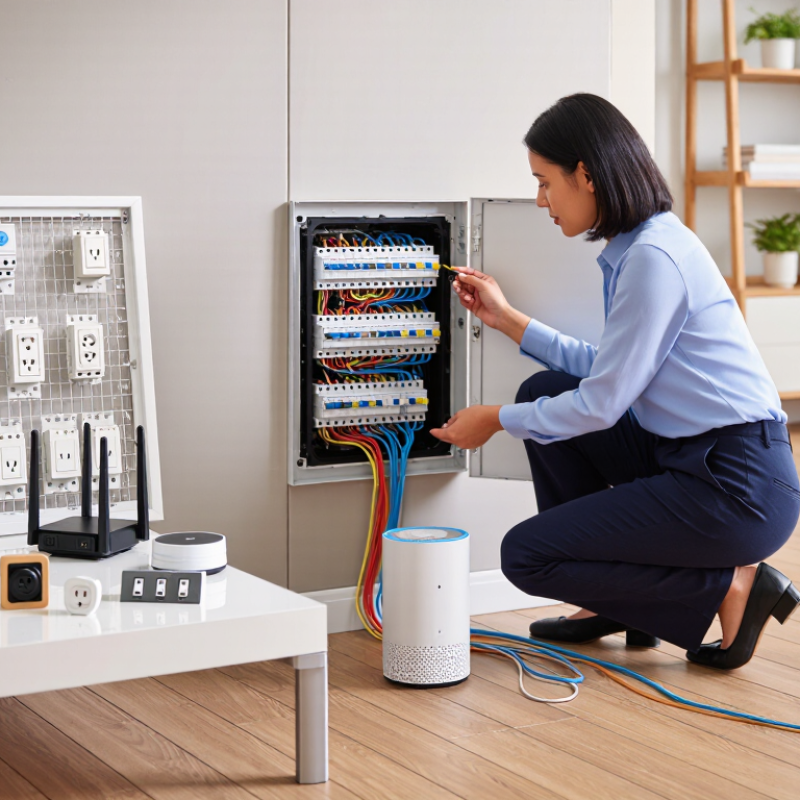
Classify the Connection: Mains, Low-Voltage, or Smart-Home Link
A connector should match the kind of connection, not just the shape of the wire. Mains wiring carries household power and can cause shock or fire if a connection is loose, overloaded, or exposed. Use connectors rated for the circuit’s voltage, current, conductor material, and wire size. Check that the enclosure protects the connection from dust, moisture, and accidental contact. For mains work, have a qualified professional select and install the connector.
Low-voltage connections serve devices such as sensors, door contacts, and control modules. Their smaller wires may need different terminals from mains wiring, even when the conductors look similar. Check polarity where it matters, and avoid forcing thin wires into terminals designed for thicker conductors. “Low voltage” is a broad label. It can be misleading.
A smart-home link is a separate category: it carries signals between devices, either wirelessly or through a dedicated cable. A data connector is not automatically suitable for power, and a power connector may not preserve a reliable data signal. Look at the device documentation for cable type, pin layout, and any limits on cable length. Keep signal wiring distinct from mains conductors where the system requires it. The small details matter. A tidy connector can still be the wrong one.
Match Ratings: NEMA 5-15 Devices Are Rated 15 A at 125 V
How to Choose the Right Home Connectors in 2026?
A NEMA 5-15 connector is rated 15 amperes at 125 volts.
That rating describes its electrical capacity, not a guarantee that every connected device can draw 15 amps safely. The familiar three-slot receptacle has two current-carrying contacts and a grounding contact. Check the connector marking and the appliance nameplate; appearance alone can hide important differences.
Match the connector to the branch circuit, cord, and expected load. A 5-15 plug belongs in a compatible, grounded receptacle with a firm fit and no cracks or discoloration. Small details matter. A heater or kettle can bring a shared circuit close to its limit, even when each plug fits. Consider the total load, not just one socket.
For equipment that runs for long periods, follow its instructions and have circuit capacity checked. Continuous loads may require extra headroom under applicable electrical requirements. The 125-volt figure is nominal, and supply voltage can vary.
If a connector feels hot, sparks, or slips out, stop using it and arrange an inspection by a qualified electrician. I would not choose by shape alone; a label cannot reveal the condition of the wiring behind the wall.
Check Wire-Connector Compliance: UL 486A-486B Covers Listed Connector Types
Choosing a home connector in 2026 starts with matching it to the wire, not its color or shape. UL 486A-486B is a key safety standard for listed wire connectors and their tested conditions of use. Check conductor material, wire gauge, wire count, temperature rating, and installation method against the connector’s listing. A connector rated for copper is not automatically suitable for aluminum. A snug fit alone proves little. Small details matter.
Tips: Read the markings before opening the package. Confirm the connector accepts every conductor in the joint. Strip insulation to the specified length, then follow the stated installation method. The tiny print is easy to overlook; pause there.
NFPA’s Electrical Fires report estimated 24,200 U.S. home fires yearly in 2015–2019 involving electrical distribution or lighting equipment. Those fires caused about $1.2 billion in annual property damage. The figures do not isolate connector failures, but they show why sound terminations matter. If a connector’s listing or instructions do not clearly match the wiring, don’t guess. Ask a qualified electrician to verify the choice. Even experienced DIYers can miss an incompatibility when wire materials or sizes differ.
Assess Location and Code: NEC 2023 Requires GFCI Protection in Specified Areas
Choosing a home connector starts with its location, not just its shape or rating. NEC 2023 requires GFCI protection for receptacles in specified dwelling areas, including bathrooms, garages, outdoors, kitchens, laundry areas, and locations near sinks. The rules cover receptacles rated 125 through 250 volts in these areas, with details and exceptions that depend on the installation. Local jurisdictions may adopt different code editions, so confirm which rules apply where you live.
Look closely at the room and nearby surfaces. A receptacle beside a kitchen sink, an outdoor outlet exposed to rain, and one in a garage may each need GFCI protection. This can come from a GFCI receptacle or a compatible circuit breaker. Check that the device is accessible, labeled clearly, and tested according to its instructions. Small details matter.
A GFCI helps reduce shock risk; it does not replace proper grounding or overcurrent protection. During a renovation, map every receptacle before choosing replacements, and note sinks, floors, and outdoor exposure. It is easy to miss a laundry-area outlet behind a machine. I would not guess about exceptions from a quick visual check. Have a qualified electrician verify the circuit and local requirements when the wiring is unclear.
Verify Smart-Home Compatibility: Check Matter 1.4 and Supported Network Protocols
Before buying a home connector, verify its exact Matter version and supported network protocols. A label that says “Matter compatible” does not tell you whether the device supports Matter 1.4 or needs a firmware update. Check the setup guide and product specifications, then confirm which features are available on your home network. Small print matters.
Matter devices commonly communicate over Wi-Fi, Ethernet, or Thread. Bluetooth Low Energy may help with initial setup, but it is not usually the ongoing connection. If you choose a Thread device, check that your home already has a compatible Thread border router. For Wi-Fi or Ethernet, confirm that IPv6 and local device discovery work on your router. Guest networks and strict network separation can prevent devices from finding each other.
Compatibility is more than a version number. Matter 1.4 adds capabilities, but a device may support only a subset, and updates can vary by model. I would check the specific functions you need, such as remote control or energy monitoring, rather than relying on a general claim. It is easy to overlook the router. That small detail can turn a simple setup into an afternoon of troubleshooting.