How to Choose an Electric Winch in 2026?
Choosing an Electric Winch in 2026 starts with the job, not the biggest number on a product label. A winch for a boat trailer, utility vehicle, or workshop faces different loads, duty cycles, and conditions. Picture a vehicle recovering on a wet, uneven track: line angle, traction, and secure anchoring can matter as much as rated pulling capacity. That context matters.
Rated line pull is only one part of the decision. Compare the manufacturer’s capacity guidance with your expected load, and account for added resistance from mud, slopes, or rolling friction. Check rope material and length, drum capacity, mounting dimensions, braking system, and the winch’s protection against water and dust. Small details count. A unit that fits the bumper but leaves little room for fairlead alignment may create avoidable wear.
Electrical requirements deserve equal attention. Confirm voltage, current draw, cable recommendations, and compatibility with the vehicle’s battery or power supply. Undersized wiring can cause voltage drop and overheating; follow the product manual or ask a qualified installer when specifications are unclear. Look for clear documentation, available replacement parts, warranty terms, and responsive technical support. These clues help distinguish a suitable tool from an attractive listing.
It is easy to overvalue peak capacity and overlook how the winch will be used repeatedly. Before buying, compare realistic use cases and installation constraints. Then verify the exact model’s instructions and limits. A careful choice may take longer. It can prevent a frustrating mismatch later.
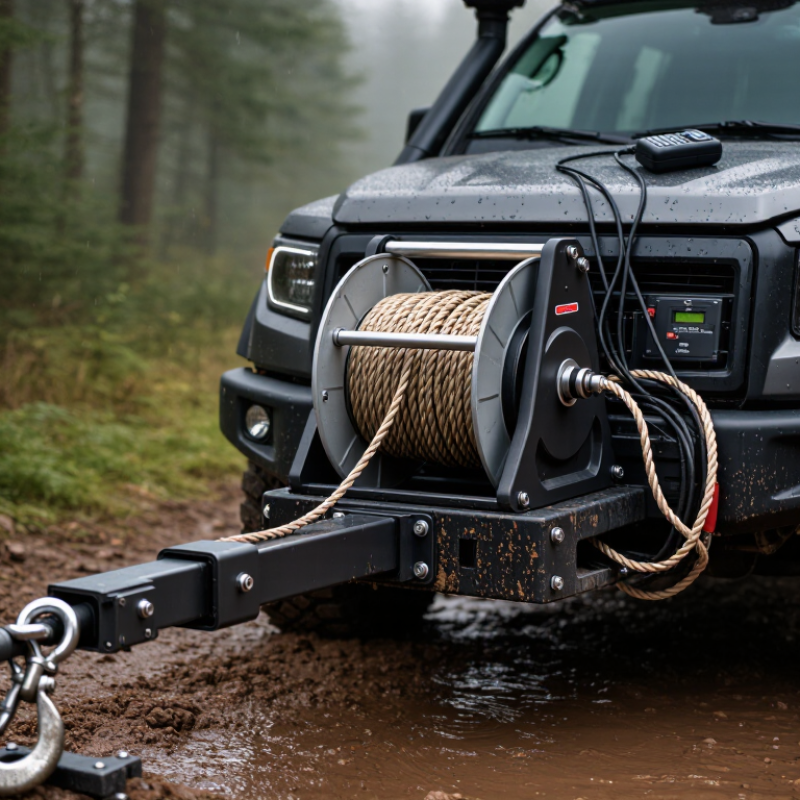
Define the Winch’s Intended Use and Operating Conditions
An electric winch should match a real task, not just an impressive capacity figure. Will it pull a vehicle onto a trailer, move equipment across a workshop, or assist with a boat ramp? Each job brings different loads, distances, and work cycles. A short, occasional pull differs from repeated operation over a full shift. That changes everything.
Estimate the heaviest load, then consider resistance from mud, slope, rolling friction, or a stuck object. Loads can rise sharply when movement stops and the line tightens. Allow a suitable margin, and check how the winch’s rated pulling force changes as rope builds up on the drum. Measure twice. Also assess the mounting point, available electrical supply, cable length, and access to the controls. A weak mount or undersized power system can undermine a capable winch.
Conditions matter just as much. Rain, dust, salt spray, freezing temperatures, and limited ventilation may affect durability or performance. Check the specified operating limits and maintenance needs rather than assuming “weather-resistant” means suitable everywhere. Think about recovery, too: Can you inspect the line, keep people clear, and stop the pull safely? I have seen planning focus on capacity while overlooking where the operator will stand. It is an easy detail to miss, and worth revisiting before choosing.
Compare Winch Types, Power Sources, and Line Materials
Electric winches differ by mounting style and workload. A vehicle recovery model is designed for intermittent pulls, while a fixed utility winch may suit repeated lifting or hauling within its rated limits. Portable units offer flexibility, but their mounting and power connections need careful checking. Match the winch’s rated capacity to the actual load, including added resistance from mud, slope, or obstacles. A spec sheet cannot predict every field condition.
Power source shapes performance. Twelve-volt systems are common in vehicles; 24-volt systems can support compatible heavy-duty setups. Mains-powered models suit locations with reliable electrical access, while generator-powered use depends on the generator’s output and startup demands. Check cable length, battery condition, and duty cycle—not just peak pulling force. A winch that repeatedly overheats is a poor fit. Details matter.
Line material changes handling and maintenance. Steel cable resists abrasion well, but it is heavy, can kink, and needs gloves during inspection. Synthetic rope is lighter and easier to handle, though sharp edges, heat, and grit can damage it. Use a compatible fairlead and follow the rope or cable maker’s inspection guidance. The trade-off is less tidy than a comparison chart suggests. For wet, dirty work, regular cleaning and checks may matter more than the material’s headline advantages.
Check Mounting Fit, Controls, and Essential Safety Features
How to Choose an Electric Winch in 2026?
Check Mounting Fit, Controls, and Essential Safety Features
Start with the mounting surface, not the advertised pulling capacity. Measure the bolt pattern, available depth, and cable path, then check that the bumper or platform can handle the expected load. A winch that fits the plate but blocks a fairlead or strains its supports is a poor fit. Check the manufacturer’s rated line pull and duty cycle, too; capacity can change as more cable winds onto the drum.
Controls should feel usable with gloves on. A sealed handheld remote, clearly marked directions, and a reachable emergency stop can reduce fumbling near a loaded line. Look for a load-holding brake, an accessible free-spool clutch, and clear overload guidance. Keep the operator outside the line of pull. Small details matter.
Safety deserves more than a checkbox. The U.S. Bureau of Labor Statistics reported 5,283 fatal work injuries in 2023, including 1,942 from transportation incidents. Those figures are not winch-specific, but they underline why careful equipment setup and operating procedures matter. Inspect the cable for broken strands, test controls before loading, and use rated recovery hardware. A sound setup still needs judgment; I’d double-check the anchor point, because it is easy to trust a mounting plate without checking what supports it.
How to Choose an Electric Winch in 2026?
Check mounting fit, controls, and essential safety features before choosing a winch. The chart shows two common nominal DC system voltages; select a winch voltage that matches the vehicle or power system.
Fit and safety checklist: Confirm the mounting plate and bolt pattern fit, and that the winch’s rated line pull suits the intended load. Check that the controls are accessible, the wiring and protection match the winch manufacturer’s requirements, and the winch has a load-holding brake. Follow the manufacturer’s instructions and never use a winch to lift people.
Assess Specifications, Warranty Coverage, and Maintenance Needs
Choosing an electric winch in 2026 starts with the work it must do, not the biggest number on a box. Match rated line pull to the vehicle or load, then allow a sensible margin for rolling resistance, slope, and stuck conditions. A winch rarely pulls under ideal conditions. Check duty cycle, motor voltage, drum capacity, and line speed under load; an unloaded speed figure tells little. For recovery work, confirm mounting strength and use compatible cables, connectors, and controls.
Warranty coverage deserves the same attention as pulling capacity. Read what counts as normal use, and look for exclusions involving water ingress, overheating, corrosion, or installation errors. Note the coverage period for the motor, gearbox, and electrical parts, plus who handles shipping and labor. Keep the receipt and installation record. Small detail, big difference. A long warranty is less useful if routine wear is excluded or service access is unclear.
Maintenance needs vary with exposure. After muddy or salty use, rinse the unit gently, dry it, and inspect the cable for broken strands, kinks, or flattening. Check fasteners, wiring insulation, battery connections, and the fairlead before each demanding job. Follow the manufacturer’s service intervals and test the winch briefly under light load. I would not assume a sealed housing needs no care; that assumption is easy to make, and sometimes wrong. A simple log helps reveal changes in noise, heat, or pulling speed before they become failures.