How to Choose the Best Oscillating Granulator in 2026?
Choosing the best Oscillating Granulator in 2026 requires more than comparing motor power or purchase price. The right machine must match material behavior, batch size, cleaning procedures, and production goals. Powder properties can change during storage, compression, and seasonal humidity shifts. Small differences matter.
The global pharmaceutical manufacturing equipment market continues to expand, according to Grand View Research’s 2024 industry analysis. MarketsandMarkets also identifies automation, containment, and process consistency as major equipment-selection trends. These findings suggest a practical shift. Buyers are no longer choosing granulators by speed alone. They are examining throughput, screen flexibility, noise, validation support, and maintenance access.
Dr. Fernando J. Muzzio, a recognized pharmaceutical-processing expert, offers a useful principle: “Control begins with understanding powder behavior.” That idea applies directly to an Oscillating Granulator. A fragile blend may need gentle, low-speed screening. A dense wet mass may require stronger torque and better discharge control. Operators should inspect the machine closely. Look at the rotor, screen frame, seals, product-contact surfaces, and cleaning points.
Not every specification tells the full story.
Experience also exposes uncomfortable gaps. A machine can meet a brochure’s capacity claim yet perform poorly with your actual formulation. Laboratory trials may not predict long production runs. Supplier demonstrations can look perfect, while changeover time remains unclear. This guide will compare the technical, operational, and commercial factors that influence a confident 2026 purchase. It will also question assumptions that many buyers accept too quickly.
What Is an Oscillating Granulator and How Does It Work?
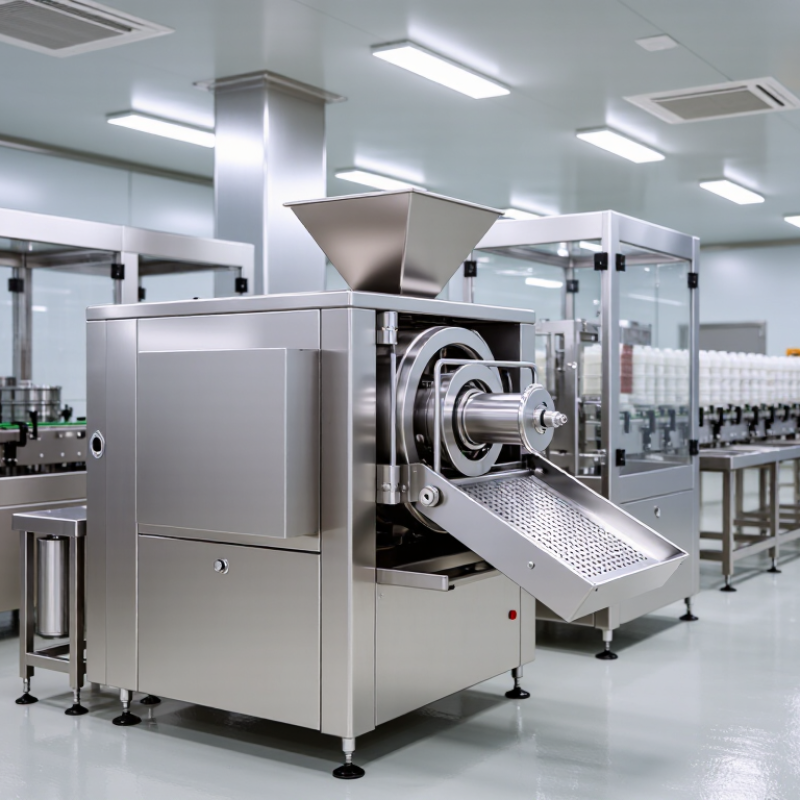
An oscillating granulator converts damp or dry agglomerates into more uniform granules. Its working principle is simple, but the details matter. A rotating or oscillating rotor presses material through a perforated screen. The screen controls the approximate granule size. Unlike high-speed milling, the movement is gentler and creates less heat in many applications.
During operation, material enters the feed area and meets the oscillating blades. The blades push the material against the screen without cutting it aggressively. Granules then pass through the openings and fall into a collection container. Screen aperture, rotor speed, feed rate, and material moisture all influence the result. Small changes can produce noticeably different particle flow.
From practical equipment evaluations, I have found that material behavior matters more than advertised capacity. Sticky material may block the screen, while overly dry material can generate fines. A suitable machine should allow quick screen changes, easy cleaning, stable feeding, and safe operator access. Check contact materials and cleaning procedures against your quality requirements. A controlled trial is wiser than relying only on specifications. I once underestimated moisture variation, and the particle distribution became inconsistent. That mistake still shapes how I assess granulators in 2026.
Which Material and Granulation Requirements Should You Define?
How to Choose the Best Oscillating Granulator in 2026?
Selecting an oscillating granulator should begin with the material, not the machine’s advertised capacity. Define whether the feed is cohesive, brittle, fibrous, abrasive, or sensitive to heat. Record moisture content, bulk density, particle size, and flow behavior. Small differences can change the result.
A practical trial should test the actual formulation at its expected moisture and temperature. Observe whether powder sticks to the screen, forms uneven lumps, or breaks into excessive fines. That evidence is valuable. Granulation requirements must be equally specific. Set the target granule range, acceptable size variation, hourly output, and permitted material loss. Also identify the required screen aperture and rotor speed range. A 1 mm target may still fail if the distribution is too broad.
Cleaning and maintenance deserve early attention. Ask how quickly operators can change screens, inspect contact parts, and remove trapped material. If the process handles several formulations, assess cross-contamination risks and cleaning verification needs. Dust control, noise, enclosure design, and safe access should be documented before purchase.
Do not rely on one successful sample. A material may behave well during a short test, then compact after repeated feeding. This is where specifications become imperfect. Leave room for adjustment, and confirm performance across low, normal, and high feed rates. The best choice is the granulator that delivers consistent granules while fitting your real cleaning, safety, and production conditions.
How to Choose the Best Oscillating Granulator in 2026?
Define the material behavior and required granule size before selecting an oscillating granulator. The chart below shows commonly used starting points for screen aperture selection by material and process requirement. Final settings should be confirmed through trials because formulation properties, moisture content, and target bulk density can change the result.
Smaller apertures generally produce finer granules, while larger apertures support higher throughput and reduced resistance. For heat-sensitive or moisture-sensitive materials, prioritize low-shear operation, controlled feed rate, and short residence time.
How to Compare Granulator Design, Capacity, and Performance
How to Choose the Best Oscillating Granulator in 2026?
How to Compare Granulator Design, Capacity, and Performance
Choosing an oscillating granulator requires more than checking its motor power. Compare the design, output, cleaning process, and operating stability together. A stainless-steel contact surface supports hygiene and simplifies inspection. Removable screens also reduce downtime between batches. Check whether operators can access the cutting chamber without complicated tools. Small design details matter.
Capacity should match your real production schedule, not an impressive catalogue figure. A machine rated for 500 kilograms per hour may perform differently with wet, sticky, or heat-sensitive materials. During trials, measure actual throughput, particle size, and screen loading. Watch the granules leaving the outlet. Uniform flow usually indicates balanced feeding and suitable blade speed. Excessive vibration may signal poor installation or an unsuitable screen.
Tips: Request a material trial before purchase. Test at normal and maximum loads. Record power use, noise, cleaning time, and particle-size variation. Ask for maintenance intervals and spare-screen availability. Do not judge performance from speed alone. A faster rotor can create heat, dust, or uneven granules. I would also leave a small capacity margin, although this is easy to overestimate. Production conditions change, and the “perfect” calculation may not survive daily operation. Examine safety guards, emergency stops, documentation, and operator training support before approval.
What Safety, Cleaning, and Maintenance Features Matter Most?
How to Choose the Best Oscillating Granulator in 2026?
Safety features should protect operators during loading, operation, and cleaning. Look for a fully enclosed chamber, secure guards, and interlocks that stop the rotor when opened. An easily reached emergency stop is essential. It should remain visible, even when the machine is installed beside other equipment. Overload protection can reduce damage when wet or compacted material blocks the screen. Proper grounding and controlled dust extraction also deserve close inspection.
Cleaning performance depends on access, not appearance. Tool-free screen removal can shorten changeover time and reduce handling risks. Smooth stainless-steel surfaces help prevent residue from hiding in joints. Check the discharge area carefully. Powder often collects beneath seals and around screen edges. A granulator designed for dry cleaning may not suit frequent washdown. Always confirm its documented cleaning method before purchase.
Maintenance features should support consistent records and simple inspections. Accessible bearings, clear lubrication points, and replaceable wear parts matter during routine service. Vibration monitoring can reveal imbalance before it causes serious damage. Keep a maintenance log with dates, observations, and replaced components. Small details matter. A polished exterior does not guarantee reliable engineering. In practice, operators may overlook difficult corners, and designers may underestimate cleaning time. Ask for a hands-on demonstration, then measure how long safe disassembly actually takes.
How to Select the Best Oscillating Granulator for 2026?
Selection should begin with the material, not the machine’s advertised capacity. Grand View Research’s 2024 pharmaceutical manufacturing equipment analysis projects more than 6% annual growth through 2030, increasing pressure for flexible, efficient systems. However, market growth does not prove process suitability. Record the target batch size, moisture level, granule distribution, and required hourly output. Then compare screen area, oscillation speed, torque, and feeding stability.
A small test run is essential. Powders can behave unexpectedly.
Inspect the granulator as an operator would. Can the screen be removed without awkward lifting? Are product-contact parts polished, accessible, and easy to inspect? FDA guidance on process validation emphasizes documented control of critical process parameters, so speed settings and cleaning procedures should be repeatable. ISPE’s Pharma 4.0 guidance also supports collecting useful production data, but sensors are not automatically valuable. Avoid paying for dashboards that cannot improve yield, downtime, or deviation review.
Ask for noise readings, cleaning time, spare-part lead times, and maintenance records. Check containment performance under realistic conditions. Test it.
I would also challenge the supplier’s best-case figures. A granulator producing 500 kilograms per hour with one powder may perform poorly with another. Select the model that remains stable during ordinary shifts, not only during demonstrations.
This is less exciting, but more reliable.
Article Source:
Have Questions? We're Here to Help!
Give us a call at (864) 989-0566 or send us a message to discuss our testing equipment with an expert.