How to Choose Surgical Dressing Pads for Wound Care?

Choosing Surgical Dressing Pads for wound care is not simply a matter of picking the thickest or softest option. The right pad should suit the wound’s size, location, drainage, and surrounding skin. A small incision on the forearm needs different coverage from a larger wound on a moving joint. Fit matters. So does comfort.

Dr. David G. Armstrong, a surgeon and wound-care researcher, is often cited for the reminder: “The best way to treat a diabetic foot ulcer is to prevent it.” That principle also highlights a broader point: dressing choice cannot replace careful assessment. For surgical wounds, check whether the pad is sterile, how much fluid it can absorb, and whether its contact surface may stick to the wound. Consider adhesive sensitivity, too. Red, sore skin beneath a pad is not a minor detail.

Look closely at the product instructions. A highly absorbent pad may be useful for heavier drainage, while a lighter option may suit a clean, dry incision. But wound needs can change. A pad that worked yesterday may not work today. That is easy to miss. If drainage increases, pain worsens, or the wound becomes warm or increasingly red, seek advice from a qualified healthcare professional. This guide will explain the main pad types, practical selection factors, and common mistakes. No single pad is right for every wound, and that uncertainty deserves honest attention.
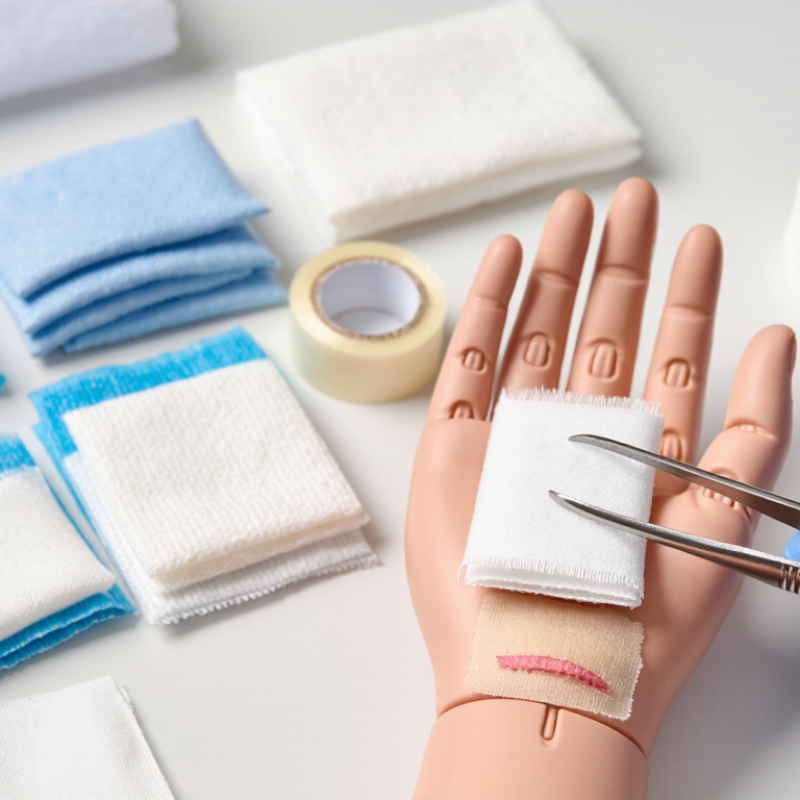
How to Choose Surgical Dressing Pads for Wound Care?

Assess the Wound Type, Size, and Level of Drainage

A surgical dressing pad should match the wound, not just the package size. A clean, closed incision with little drainage may need a soft, non-adherent pad that protects the skin without sticking to the healing line. A shallow wound that releases more fluid usually needs a more absorbent pad. Watch the wound edges, too. Redness that spreads, increasing pain, unusual odor, or thick drainage warrants advice from a healthcare professional.

Measure the area that needs coverage, then choose a pad that extends beyond the wound edges. A pad that is too small can expose the incision; one that is bulky may rub beneath clothing. Drainage can change over time. Check the pad when changing it: a small spot is different from fluid that soaks through or leaks at the edges. Follow the care instructions provided by the surgical team, especially for fresh incisions.

Tips: Note the wound’s size and drainage at each dressing change. Keep the surrounding skin dry, and secure the pad without pulling the skin tight. Avoid guessing when drainage rises. I have found that changes are easy to miss during a busy day, so a simple written note can help. If the wound opens or symptoms worsen, contact a clinician promptly.

Compare Dressing Pad Materials and Absorbency

Surgical dressing pads differ in how they handle fluid and protect fragile tissue. Woven cotton gauze is breathable and useful for light drainage, but it may cling to a drying wound. Nonwoven pads have a smoother surface and can shed fewer fibers, though they are not always more absorbent. Check the product’s stated use and construction, not just its thickness. A bulky pad can still leak if fluid spreads faster than it can hold it.

For moderate drainage, a foam pad may absorb fluid while cushioning the area; some versions also help limit moisture against the skin. Alginate dressings can manage heavier drainage, but they generally need a suitable cover and should be selected with clinical guidance. Match absorbency to what you actually see: a small stain after several hours differs from a pad soaked through quickly. Too little capacity can wet clothing; too much absorbency may dry surrounding tissue. It is not always obvious at first. Change intervals depend on the wound and the dressing instructions. If drainage increases, odor develops, or the skin becomes more irritated, ask a qualified health professional to reassess the care plan.

How to Choose Surgical Dressing Pads for Wound Care?

Compare Dressing Pad Materials and Absorbency

Absorbency ratings are a general, qualitative comparison—not standardized test results. Actual capacity varies by product construction and size. Match the dressing to wound exudate and follow product instructions; alginate and gelling-fiber dressings commonly need a secondary cover.

Choose the Right Pad Size and Protective Features

Choose a pad that covers the wound and extends onto clean, dry skin around every edge. This margin helps keep the wound covered when you move. A pad that is too small may shift or let fluid reach clothing. One that is much too large can wrinkle, especially near a joint.

Fit matters. For a wound with light drainage, a thin pad may be enough; heavier drainage may need a more absorbent option. Follow the care instructions you were given, since wound depth and location affect the choice.

Look for a soft, non-adherent wound-contact surface if the wound is prone to sticking. This can make removal gentler, though it does not replace careful dressing changes. A protective outer layer can help block dirt and reduce leaks, while breathable materials may feel more comfortable under clothing.

Not too tight.

Secure the edges without pulling the skin, and check that the pad stays in place when you bend or walk. Change it if it becomes wet, dirty, or loose, or as directed by a healthcare professional. If redness spreads, pain worsens, or drainage increases, seek medical advice. It is easy to assume a larger pad is always safer; in practice, comfort and a reliable seal matter too.

Check Compatibility with Skin, Treatments, and Fixation

A dressing pad should suit both the wound and the surrounding skin. If the skin is fragile or easily irritated, a non-adherent contact layer may reduce pulling during changes. Adhesive borders can be convenient, but they may cause redness or discomfort, especially with repeated use. Check the skin after removal. A small patch of irritation matters.

Match absorbency to the amount of wound fluid. A lightly draining wound may need a thin pad, while heavier drainage can require a more absorbent option. The pad should not dry out the wound or leave fluid pooling against the skin.

Consider any prescribed cream or wound treatment, too; some materials may interfere with its use. Ask a nurse or clinician if compatibility is unclear. Fixation also matters. Tape, a wrap, or a securement garment should hold the pad in place without restricting movement or circulation.

On a joint, check that it stays put when the limb bends. Not perfect every time. Reassess the fit and skin condition, and seek professional guidance for worsening pain, spreading redness, or unusual drainage.

Review Changing Frequency and Wound-Care Needs

Changing a surgical dressing depends on the wound, the amount of drainage, and the dressing’s instructions. A dry incision with little drainage may need fewer changes than a wound that produces fluid. Follow the schedule given by the treating clinician, rather than changing pads by habit. A plan may look tidy on paper; real wounds rarely behave so neatly.

Change a pad sooner if it becomes wet, dirty, loose, or soaked through. Clean hands matter. Use the cleaning method recommended for the wound, and avoid touching the pad’s contact surface. Frequent changes can disturb fragile new tissue, but leaving a saturated dressing in place can irritate nearby skin. There is no perfect interval for every wound. Check the wound during each change, and note changes in drainage, odor, redness, warmth, or pain. If these worsen, or fever develops, contact a healthcare professional promptly. If the pad sticks, do not pull hard; ask how to loosen it safely. The right choice balances protection, comfort, and the wound’s changing needs.

How to Choose Surgical Dressing Pads for Wound Care? – Review Changing Frequency and Wound-Care Needs

Dressing pad type Typical wound-care needs Absorbency / protection Typical change interval* Selection considerations
Sterile gauze pad Minor cuts, abrasions, or wounds needing a simple cover; may also be used as a secondary layer. Low to moderate; absorbs fluid but can adhere to a wound as it dries. Often daily, or sooner if wet or soiled; follow the product instructions and care plan. For a wound bed that may stick, consider a non-adherent contact layer beneath the gauze.
Non-adherent pad Superficial wounds or surgical incisions where minimizing trauma during removal is important. Usually low to moderate; some designs need an absorbent secondary dressing. Commonly daily or as directed; replace earlier if the outer layer becomes wet, loose, or soiled. Check whether the pad is designed to contact the wound and whether it requires a separate cover.
Foam pad Wounds with moderate to heavy drainage, or wounds where cushioning is useful. Moderate to high; helps manage exudate and protect the area from friction. May remain in place for several days, depending on drainage, product directions, and clinical advice. Choose a size that covers the wound and surrounding skin; avoid leaving it in place if saturated or leaking.
Alginate pad Moderately to heavily draining wounds, including some cavities, when recommended by a clinician. High; absorbs wound fluid and forms a gel-like material. Often changed every 1–3 days, or sooner if saturated; a secondary cover is generally needed. Generally unsuitable for dry wounds or wounds with little drainage; follow instructions for removal.
Hydrofiber pad Moderately to heavily draining wounds where fluid absorption and containment are needed. High; absorbs fluid and forms a cohesive gel in contact with exudate. Can often stay in place for several days; change based on saturation, leakage, and product guidance. Usually requires a secondary dressing and is not intended for dry wounds unless specifically directed.
Transparent film dressing Low-drainage superficial wounds or protection of a closed incision, when appropriate. Minimal absorption; creates a protective barrier while allowing visual inspection. May remain for several days if intact and clean; replace if edges lift, fluid collects, or it becomes soiled. Not a good choice for heavily draining wounds; use care when removing from fragile skin.

*Change intervals are general examples, not fixed schedules. Follow the dressing manufacturer’s instructions and the treating clinician’s advice. Change a dressing sooner if it is saturated, leaking, loose, or soiled. Seek medical advice for increasing pain, spreading redness, warmth, swelling, pus, fever, or a wound that is not healing as expected.

Request a Quote

For more information on our instruments, consumables, or services, or to request a quote, complete the contact form below, and one of our associates will reach out to you!

Request a Service Quote

To request service on your machine(s), complete the contact form below, and one of our associates will reach out to you!

Browse by:

  • Test Property
  • Manufacturer