How to Choose the Right 180 Rotation Rotary Actuator?
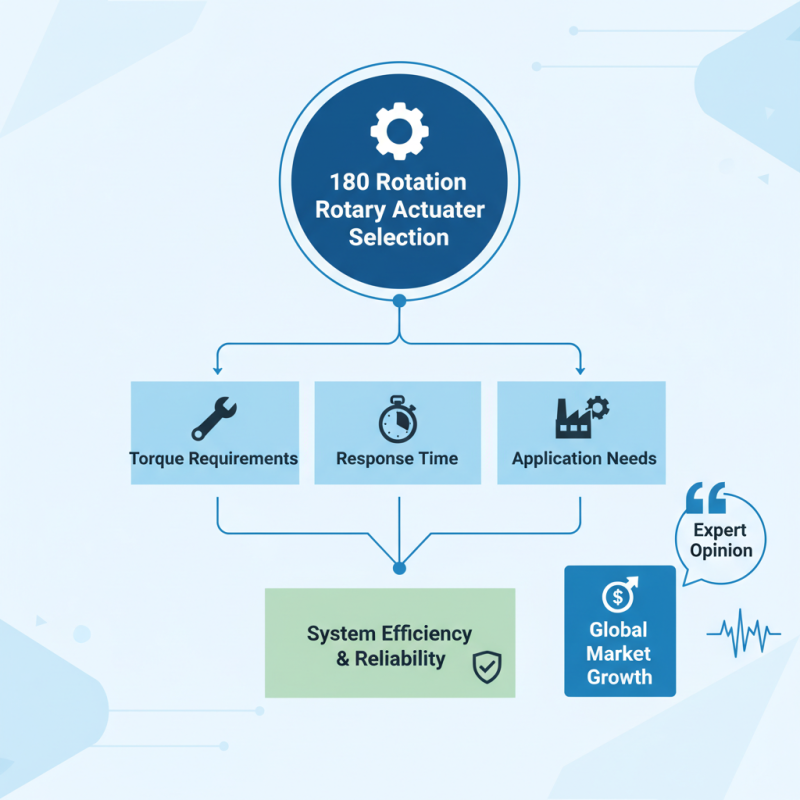
In the world of automation, selecting the right 180 Rotation Rotary Actuator is critical. An actuator's performance can greatly influence system efficiency. According to a report by MarketsandMarkets, the global rotary actuator market is expected to reach $7.8 billion by 2025, highlighting its importance in various industries.
Dr. Sarah Thompson, an expert in automation technology, emphasizes, "Choosing the right actuator can make or break your project." This statement reflects the high stakes involved. The correct 180 Rotation Rotary Actuator not only impacts precision but also determines operational reliability.
It's vital to consider factors such as torque requirements and response time. A mismatch can lead to inconsistent results. Understanding application needs is essential for making informed decisions. Investing time in research will pay off, enabling better performance and a smoother operational flow.
Understanding the Basics of 180 Rotation Rotary Actuators
When selecting a 180 rotation rotary actuator, it’s crucial to understand its basic components. These actuators typically consist of an electric motor, gears, and a control system. The motor provides the force needed for rotation. Gears amplify this force, allowing for smoother operation. The control system ensures precise movements, often through feedback mechanisms.
Many users overlook their specific application needs. Consider the torque requirements for your project. Too much torque can lead to wear and tear, while too little can affect performance. Additionally, the speed of rotation matters. Some applications need quick movements, while others require slow, deliberate rotations.
It’s also worth noting environmental factors. Will the actuator be exposed to dust, moisture, or extreme temperatures? These conditions can impact its lifespan. Choose an actuator designed for your environment. Regularly inspecting and maintaining your actuator can prevent unexpected failures.
Be prepared to adapt and make changes. Often, the ideal actuator isn’t the first one chosen. It's okay to reevaluate your options as you gather more data from initial uses.
Factors to Consider When Selecting a Rotary Actuator
Choosing the right 180-degree rotary actuator requires careful thought. The selection process can be daunting. Understanding key factors will help.
Start with torque requirements. The actuator must handle the load it will move. Calculate the torque needed for your application. This is crucial, as undersized actuators can lead to failure.
Size matters too. Measure the space available for installation. A compact actuator might be necessary for tight spaces. However, don’t compromise on efficiency for size alone.
Tips: Check compatibility with your existing systems. This will save you from problems later. Avoid choosing based solely on price. Quality can save time and money in the long run.
Don't overlook control methods. Consider how you will command the actuator. Electric, pneumatic, or hydraulic options offer different benefits. Know your needs before making a choice.
Tips: Test different models if possible. This real-life experience can reveal surprising differences. Document your findings for future reference. Learning from trials matters.
Types of 180 Rotation Rotary Actuators and Their Applications
Choosing the right 180 rotation rotary actuator depends on various types available in the market. These actuators are vital in industries ranging from robotics to automated machinery. Each type serves specific applications based on its design and performance characteristics.
Electric rotary actuators are widely used in automation. They offer precise control with minimal maintenance. Hydraulics provide high torque but may require more upkeep. Pneumatic actuators are less common but excel in applications needing quick, repeated movements. According to a recent industry report, the market for electric actuators is expected to grow at a CAGR of 7.8% from 2022 to 2028. This indicates a rising preference for efficiency and reliability.
Tips: Always evaluate the load capacity and cycle duration for your specific need. Assessing environmental factors is crucial as well. For instance, outdoor applications may require weather-resistant actuators. Experimentation might be needed to achieve optimal efficiency, and slight adjustments can often yield significant improvements. Don't forget to consider the actuator's compatibility. Some applications may need specific designs, which might not be clear at first glance.
Evaluating Performance Specifications for Your Actuator Choice
When selecting a 180 rotation rotary actuator, performance specifications are crucial. These specifications greatly impact the actuator's efficiency. Consider essential factors like torque, speed, and precision. Torque measures the actuator's ability to do work. Higher torque means better performance in demanding applications.
Speed is another critical aspect. It determines how quickly the actuator operates. A slow actuator may not meet the demands of fast-paced environments. Precision is equally vital. It affects the accuracy of movements. Small errors can lead to significant issues. Evaluate these aspects carefully.
Keep in mind that specifications may not always fit your needs perfectly. You might overlook the importance of environmental conditions. For instance, extreme temperatures can affect performance. Additionally, the actuator’s lifespan is significant. Sometimes, manufacturers provide optimistic longevity claims. Critical assessment of these factors is necessary. A well-rounded evaluation ensures that you make an informed decision. Emphasize the practicality of each specification in your application context.
How to Choose the Right 180 Rotation Rotary Actuator? - Evaluating Performance Specifications for Your Actuator Choice
| Specification | Value | Unit |
| Maximum Torque | 50 | Nm |
| Operating Voltage | 24 | V |
| Rotation Angle | 180 | Degrees |
| Speed | 0.5 | radians/s |
| Weight | 1.5 | kg |
| Operating Temperature Range | -20 to 60 | °C |
| Feedback Type | Absolute Encoder | |
Cost Considerations and Budgeting for Rotary Actuators
When budgeting for a 180 rotation rotary actuator, it's crucial to consider not just the initial purchase price. According to a 2021 report by the International Robotics Association, rotary actuators account for approximately 25% of total robotics costs. This statistic highlights the necessity of a well-planned budget. Overlooking additional expenses can easily lead to unexpected financial strain.
Installation and maintenance costs can add up significantly. For example, professionals estimate that installation fees may reach 15% of the actuator's cost. Whether it's labor charges or additional components needed, these costs accumulate quickly. Neglecting to allocate budget for future repairs can create issues later. A report from TechMarket Insights stated that maintenance could consume 10-20% of the actuator's overall cost annually.
Moreover, not factoring in energy consumption poses another risk. Efficient rotary actuators may cost more upfront but save energy in the long run. According to a study by Energy.gov, the right actuator can reduce energy costs by up to 30%. Therefore, investing time in research and budgeting can prevent regret later. Balancing immediate costs with long-term value is essential for effective financial planning.