How to Choose Galvanized Nails for Your Projects?
Choosing the right galvanized nails for your projects is vital. According to the Consolidated Nail Manufacturers Association, the demand for galvanized nails has surged by 25% in the past three years. This emphasizes their increasing importance in construction and woodworking.
Expert Mike Anderson states, "The quality of galvanized nails can make or break a project." His insight highlights the critical role that these fasteners play. Not all galvanized nails are created equal. Variations in coating thickness and corrosion resistance exist. A specific choice can greatly affect the durability of your work.
Consider your project’s environment before selecting galvanized nails. For outdoor projects, high corrosion resistance is essential. However, factors like cost and availability may influence your decision. Reflect on your needs carefully. The right choice can lead to a successful outcome, while poor selection may result in costly repairs.
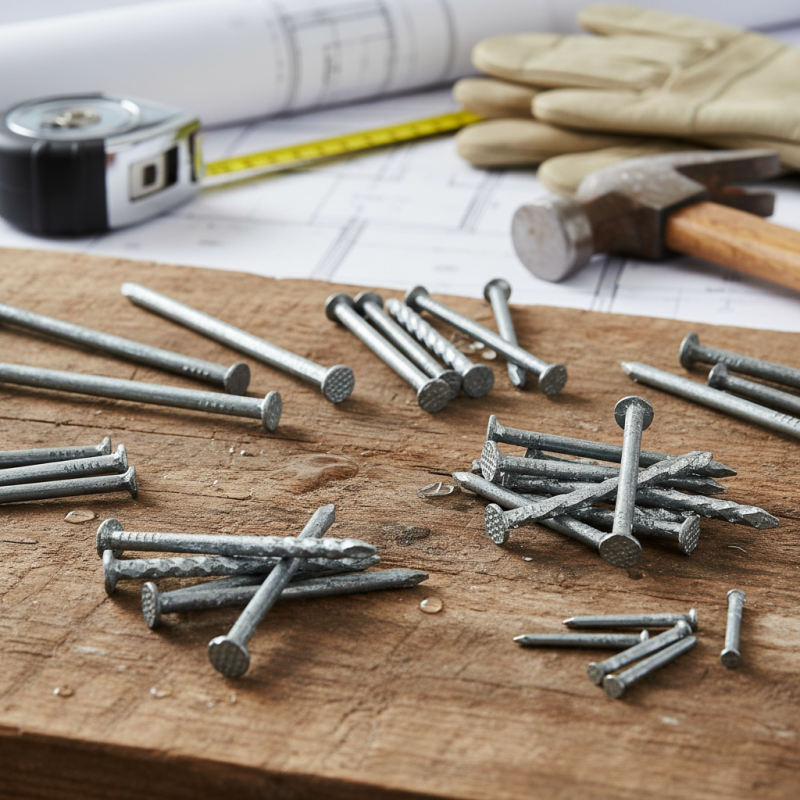
Factors to Consider When Choosing Galvanized Nails for Projects
Choosing galvanized nails for your projects requires careful consideration of several key factors. One prominent factor is corrosion resistance. According to industry reports, hot-dipped galvanized nails offer superior protection compared to electro-galvanized options. This makes them ideal for outdoor projects and areas exposed to moisture.
Another important consideration is nail size and gauge. Choosing the wrong size can compromise the durability of your project. For instance, a 16-gauge nail is typically stronger than an 18-gauge nail, making it a better choice for heavy-duty applications. Remember, the thicker the nail, the better it holds up under stress.
**Tip:** Whenever possible, test a few sizes on scrap materials. This helps you assess which nail provides the best grip and appearance.
Lastly, consider the nail's length in relation to the materials you plan to join. A general rule is to choose nails that are at least twice the thickness of the materials being fastened. This will ensure a snug fit, providing added strength.
**Tip:** Keep in mind that using nails that are too long can split your wood. Always double-check your measurements before proceeding.
Comparison of Different Types of Galvanized Nails for Projects
Types of Galvanized Nails: Hot-Dipped vs. Electro-Galvanized
When choosing galvanized nails for your projects, understanding the two main types is crucial. Hot-dipped and electro-galvanized nails differ significantly in their coating process and durability. Hot-dipped nails are submerged in molten zinc, resulting in a thicker, more robust coating. This process can increase corrosion resistance by up to 50%. They are ideal for outdoor projects or high-moisture areas, where exposure to the elements is a concern.
On the other hand, electro-galvanized nails are coated using an electrical charge. This method creates a thinner layer of zinc, making these nails less expensive but less durable. Studies show that electro-galvanized nails have a lower resistance to corrosion, lasting 3 to 5 years under severe conditions. For indoor projects or low-humidity environments, they may suffice. However, they may not withstand the test of time in harsher settings.
It's essential to weigh the intended use against the costs. Will hot-dipped nails offer better long-term value? Or are electro-galvanized options suitable for your needs? Analyzing your project's specifications can guide your choice.
Corrosion Resistance Ratings: Understanding ASTM Standards for Nails
When selecting galvanized nails, understanding corrosion resistance is crucial. The ASTM (American Society for Testing and Materials) provides standards to assess this. For example, ASTM A153 outlines specifications for hot-dip galvanizing, which adds a protective zinc layer. This layer helps resist rust and extends nail life.
Consider how your project environment influences nail choice. In coastal areas or high-moisture regions, you may need higher corrosion-resistant nails. Regular galvanized nails may not suffice in these settings. Knowing this helps prevent premature failure of your project.
**Tip:** Always check for the ASTM rating before purchasing. It can save you unnecessary repairs later.
It’s also important to recognize the limitations. Sometimes, even galvanized nails can corrode under extreme conditions. If errors in choice occur, reflect on project needs regularly. This insight could guide better decisions in future projects.
Size and Length Specifications: Ensuring Proper Fit and Strength
When choosing galvanized nails, size and length are critical factors. The right dimensions ensure proper fit and strength. For instance, a nail that is too short may not hold materials together securely. On the other hand, an excessively long nail can split the wood, causing damage. Understanding the specific requirements for your project helps you make better choices.
Consider the thickness of the materials involved. Thicker materials require longer nails for adequate grip. For example, using 2-inch nails for a 1-inch board might seem reasonable, but without proper length, the hold can be weak. Also, factors like climate and load-bearing needs can affect nail choice. Humidity may cause expansion, while heavy loads demand stronger connections.
It feels overwhelming to navigate all these specifications. Sometimes, experience is the best teacher. A nail that works well in one project may fail in another due to varying conditions. Experimenting with different sizes can lead to better understanding. Each project offers lessons, allowing for growth in your skillset.
How to Choose Galvanized Nails for Your Projects? - Size and Length Specifications: Ensuring Proper Fit and Strength
| Nail Type | Diameter (Gauge) | Length (Inches) | Common Uses | Strength Rating |
| Common | 16 | 2.5 | Framing, decking | Medium |
| Box | 18 | 1.5 | Thin wood, furniture | Low |
| Siding | 15 | 2 | Exterior siding | High |
| Finish | 20 | 2 | Trim, decorative work | Medium |
| Roofing | 11 | 1.75 | Roof shingles | High |
Application-Specific Uses: Best Practices for Selecting the Right Nail
When selecting galvanized nails, consider their application-specific uses. There are different types of galvanized nails, each designed for various projects. For instance, common nails are suitable for framing. However, for roofing, use smaller, ring-shank options. These provide a stronger grip and prevent loosening over time.
Statistics show that approximately 70% of construction projects utilize some form of galvanized nail. This indicates a strong preference for their corrosion resistance. Moreover, the right choice of nail can enhance the lifespan of your projects. A study revealed that using appropriate nails can increase durability by up to 25%.
Be aware of environmental factors. Humidity and exposure to moisture can affect nail performance. While galvanized nails resist rust, they are not impervious to corrosion. Proper storage before use is essential. This prevents moisture accumulation.
Take time to assess your specific needs. It’s not just about picking any galvanized nail. Each project has its quirks. Mistakes can lead to costly repairs.