How to Choose 201 304 or 430 Stainless Steel Plate in 2026

Choosing a 201 304 430 Stainless Steel Plate in 2026 is not just a price comparison. The right grade depends on where the plate will work, how it will be formed, and what it must resist. A bright showroom sample can look convincing. A damp kitchen corner or coastal walkway may tell a different story.

Grade 201 often suits cost-sensitive indoor applications, but its corrosion performance can be less forgiving than 304 in chloride-rich or persistently wet conditions. Grade 304 is a common choice for food equipment, tanks, and general fabrication because it combines useful corrosion resistance with good formability. Grade 430 is ferritic and magnetic, and it can be practical for appliance panels and interior trim where exposure is limited. None is universally best. Details matter.

Before ordering, compare the actual service environment, plate thickness, surface finish, forming requirements, and welding needs. Ask suppliers for material test certificates and verify the grade against the applicable product specification. A polished finish does not change the alloy’s basic corrosion resistance. Nor does a low quote reveal the full cost of fabrication or maintenance. In practice, a small mismatch can show up as staining, difficult forming, or early replacement. There is room for judgment here: project conditions vary, and a generic chart cannot replace a qualified materials review. This guide explains how to weigh those trade-offs and select a plate that fits the job, not merely the estimate. That distinction matters.
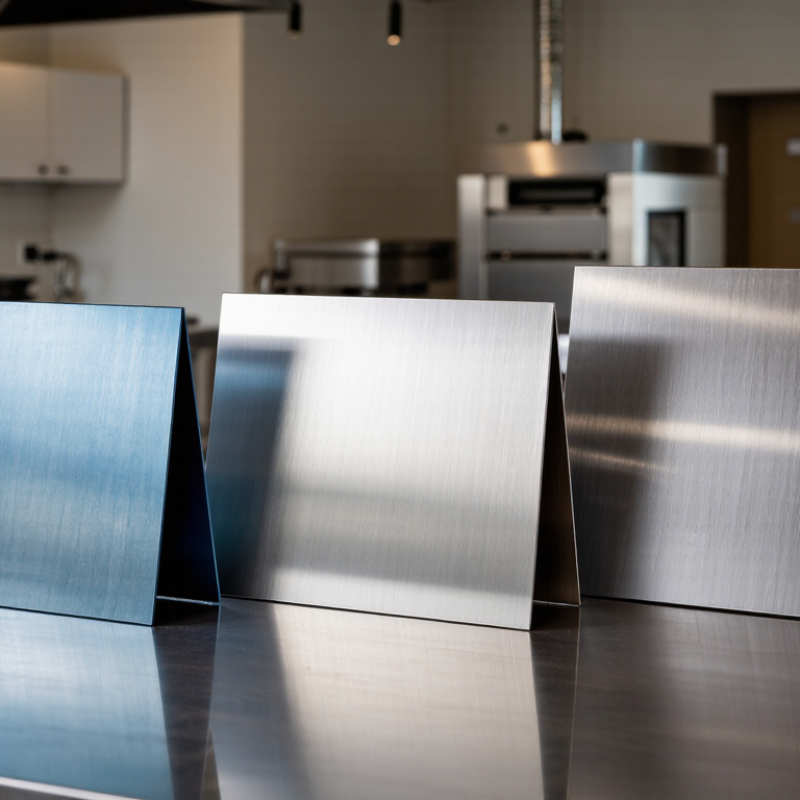
How to Choose 201 304 or 430 Stainless Steel Plate in 2026

What 201, 304, and 430 Stainless Steel Plates Are

Stainless steel plate is an iron-based alloy containing chromium, which forms a thin protective surface film. The film can renew itself when oxygen is present. Small differences in alloy chemistry create very different plate behavior. ASTM A240/A240M lists 201 and 304 as austenitic grades, while 430 is ferritic. A useful distinction.

Grade 201 uses less nickel than 304 and more manganese. Under ASTM A240/A240M, 201 contains 16–18% chromium and 3.5–5.5% nickel; 304 contains 18–20% chromium and 8–10.5% nickel. Grade 304 is a common choice for food-service surfaces, sinks, and equipment exposed to moisture. Grade 201 can suit indoor panels or formed parts where cost matters, but it is not an equal substitute in every corrosive setting. That shortcut can mislead.

Grade 430 contains 16–18% chromium and very little nickel, and its ferritic structure is magnetic. A refrigerator door or trim panel may use it where appearance and moderate corrosion resistance are needed. The World Stainless report on 2023 production recorded 58.4 million tonnes of stainless steel worldwide, up 4.6% from 2022; that broad figure reflects a diverse market, not equal performance across grades. For actual selection, check the service environment and the plate’s mill test certificate. I still double-check the finish, too. A rough surface can hold contaminants more readily.

How Their Composition and Structure Differ

The key difference starts in the chemistry. ASTM A240/A240M lists 201 stainless steel with 16–18% chromium, 3.5–5.5% nickel, and 5.5–7.5% manganese. Grade 304 contains 18–20% chromium and 8–10.5% nickel. Grade 430 has 16–18% chromium and no specified nickel range. These specification limits help explain why 201 uses manganese to partly replace nickel, while 430 relies on chromium. Actual mill certificates may show different values within the limits. Check the certificate.

Their crystal structures differ, too. The Nickel Institute’s technical guidance classifies 201 and 304 as austenitic stainless steels, with a face-centered cubic structure. Grade 430 is ferritic, with a body-centered cubic structure. In practical terms, 201 and 304 are generally non-magnetic when annealed, while 430 is magnetic. Austenitic grades are usually more formable; ferritic 430 can suit applications needing magnetic response and moderate forming. Structure alone does not predict service life, though. Surface finish, thickness, fabrication, and exposure matter, and a simple grade comparison can miss those details.

How to Compare Corrosion Resistance and Durability

How to Choose 201, 304, or 430 Stainless Steel Plate in 2026

Corrosion resistance depends on the plate’s environment, not just its grade. Grade 304 usually performs well around moisture, food residue, and many mild chemicals. Grade 201 can be a practical indoor option, but it is generally less resistant to corrosion, especially where salts collect. Grade 430 handles dry indoor conditions reasonably well, yet may show rust sooner in damp or chloride-rich settings. These are tendencies, not guarantees.

Check the actual exposure. A kitchen backsplash wiped daily is different from a plate near a coastal walkway, where salt spray can settle in seams. Look for staining around cut edges, fasteners, and welds; these spots often reveal trouble early. Small details matter. A quick rinse may help, but it cannot compensate for the wrong grade in a harsh location.

Durability also includes forming, joining, and maintenance. Grade 304 is commonly selected when fabrication and corrosion resistance both matter. Grade 201 may suit less demanding uses, though its performance varies with composition and surface finish. Grade 430 is magnetic and can be useful for indoor panels, but forming requirements deserve a trial. A simple grade ranking can mislead. Before ordering, compare mill certificates, thickness, finish, and the conditions the plate will face. I would still test a sample on site; real cleaning habits are rarely as tidy as a specification sheet.

How to Match Each Grade to Its Intended Use

Match the plate to its actual environment, not just its price. Grade 201 can suit indoor fixtures, light-duty equipment, and decorative panels where exposure to moisture and salts is limited. It typically costs less than 304, but offers less corrosion resistance. Context matters. A damp workshop or frequent contact with cleaning solutions may make 201 a poor fit, even when the surface looks fine at delivery.

Grade 304 is a practical choice for sinks, food-processing equipment, and general-purpose fabrication because it handles everyday moisture and many mild environments well. It is not immune to corrosion: chloride salts, harsh cleaners, and neglected crevices can still cause problems. Grade 430 is magnetic and often used for indoor appliance panels, trim, and other applications with modest corrosion demands. It can be economical, but outdoor coastal exposure is usually a poor match.

Consider the full job: indoor or outdoor placement, cleaning routine, welds, plate thickness, and surface finish. A polished sample can hide weak points at cut edges or joints. I would not choose from appearance alone. Check the material certificate and confirm the grade before fabrication; substitutions can change performance. If exposure conditions are uncertain, compare the cost of a more corrosion-resistant grade with the cost of early replacement. That estimate is easy to overlook.

How to Select a Grade for Cost and Service Conditions in 2026

Choosing 201, 304, or 430 plate in 2026 starts with the service conditions, not the lowest quote. 201 can suit indoor, relatively dry applications where budgets are tight. Its corrosion resistance is generally below 304, especially in damp or salty environments. Conditions change everything. A plate near washdown areas, coastal air, or cleaning chemicals needs closer evaluation.

304 is a common choice for general corrosion resistance and forming, but it usually costs more than 201 or 430. 430 is magnetic and often selected for indoor panels, equipment covers, and other mildly corrosive settings. It may be less suitable where moisture or chlorides remain on the surface. That matters. Consider how often the plate gets wet, whether water drains away, and how it will be cleaned.

Compare the full service cost, not just the price per kilogram. A cheaper grade can require more maintenance or earlier replacement if the environment is harsher than expected. Check the required thickness, finish, forming needs, and exposure before ordering. Ask for material documentation and confirm the grade against the actual application. If conditions vary across a site, specify the most demanding area rather than assuming every location is equally mild. There is no perfect grade for every job; borderline conditions deserve testing or a qualified materials review.

How to Choose 201, 304 or 430 Stainless Steel Plate in 2026 — How to Select a Grade for Cost and Service Conditions
Selection factor 201 stainless steel 304 stainless steel 430 stainless steel
Typical grade family Austenitic chromium-manganese-nickel stainless steel Austenitic chromium-nickel stainless steel Ferritic chromium stainless steel
Typical composition (mass %) Chromium 16–18%; nickel 3.5–5.5%; manganese 5.5–7.5% Chromium 18–20%; nickel 8–10.5%; manganese up to 2% Chromium 16–18%; nickel typically no intentional addition
Relative material cost Often lower than 304, but market prices and availability vary Often higher than 201 and 430; nickel-market changes can affect price Often competitive where its lower nickel content and properties suit the application
General corrosion resistance Moderate; generally less resistant than 304, especially in chloride-bearing or strongly corrosive environments Good general-purpose resistance in many indoor, food-service, and mildly corrosive environments Good in mild atmospheric and indoor environments; generally less resistant than 304 in many corrosive conditions
Chloride exposure Not the preferred choice for sustained salt, seawater, or chloride exposure Can pit or suffer crevice corrosion in chlorides; consider a more resistant grade for severe exposure Not generally preferred for sustained chloride exposure
Magnetic behavior Usually nonmagnetic in the annealed condition; forming or cold work can make it partially magnetic Usually nonmagnetic in the annealed condition; cold work can make it partially magnetic Magnetic in the annealed condition
Forming and fabrication Good formability; work hardens during forming, so tooling and forming sequence matter Very good formability and broad fabrication experience Good formability for many applications, though deep-drawing behavior differs from austenitic grades
Welding considerations Weldable with suitable procedures; select filler and practice for the service environment and joint design Generally weldable using established procedures; choose the appropriate grade and filler for the application Weldability can be more limited than 304, particularly in thicker sections; procedure selection is important
Typical plate applications Indoor panels, housings, food-service equipment, and formed components where the environment is mild and cost matters Kitchen and food-processing equipment, architectural components, tanks, and general-purpose fabricated parts Appliance panels, decorative trim, indoor equipment, and components where magnetic behavior is acceptable
Best fit when... Budget is important, forming is needed, and exposure is not highly corrosive A balanced combination of corrosion resistance, formability, and broad availability is needed A magnetic ferritic grade is suitable and the service environment is mild
Use caution when... The plate will face salt, aggressive cleaning chemicals, or demanding outdoor exposure The design assumes immunity to pitting, crevice corrosion, or stress-corrosion cracking in chlorides The application requires strong chloride resistance, extensive welding, or a nonmagnetic finished part
Practical selection check Confirm the required corrosion resistance, forming needs, and certified chemistry before choosing it as a lower-cost alternative Check actual exposure, surface finish, cleaning chemicals, and fabrication requirements Confirm that magnetic response, weldability, and corrosion performance meet the design requirements

Important: Composition ranges and properties depend on the applicable product standard, product form, and mill certification. Relative cost is indicative rather than a 2026 price quote; compare current local quotations for the same thickness, finish, dimensions, and specification. For critical or chloride-exposed service, have the material selection reviewed against the actual operating conditions.

Request a Quote

For more information on our instruments, consumables, or services, or to request a quote, complete the contact form below, and one of our associates will reach out to you!

Request a Service Quote

To request service on your machine(s), complete the contact form below, and one of our associates will reach out to you!

Browse by:

  • Test Property
  • Manufacturer