Top Canned Lychee Suppliers What Global Buyers Need to Know?
Choosing the right Canned Lychee supplier requires more than comparing prices on a spreadsheet. Global buyers must examine fruit quality, processing controls, export experience, and documentation. A bright can does not guarantee consistent taste.
Food scientist Dr. Kantha Shelke often stresses, “Food safety and quality must be built into the process, not inspected into the product.” This principle matters when evaluating canned lychee from Thailand, China, Vietnam, or other producing regions. Buyers should review the supplier’s HACCP plan, BRCGS or FSSC 22000 certification, laboratory reports, and traceability records. Product specifications should clearly state fruit size, syrup concentration, drained weight, net weight, can material, and shelf life.
Small details reveal operational maturity. Ask for recent batch samples. Check whether the lychees remain firm after opening. Look for clean syrup, intact cans, readable lot codes, and reliable container loading practices. Request pesticide-residue testing and certificates of analysis before signing a long-term agreement. Import requirements also differ by destination, so documentation must match the receiving market.
The cheapest offer may not be the best value. It may involve weaker fruit selection, unstable packing schedules, or incomplete records. Still, premium pricing alone proves little. No supplier is perfect, and buyers should challenge impressive claims with evidence. A practical sourcing decision combines sensory testing, factory verification, transparent communication, and landed-cost analysis. That approach helps global buyers build dependable Canned Lychee supply chains, even when harvest quality and freight conditions change unexpectedly.
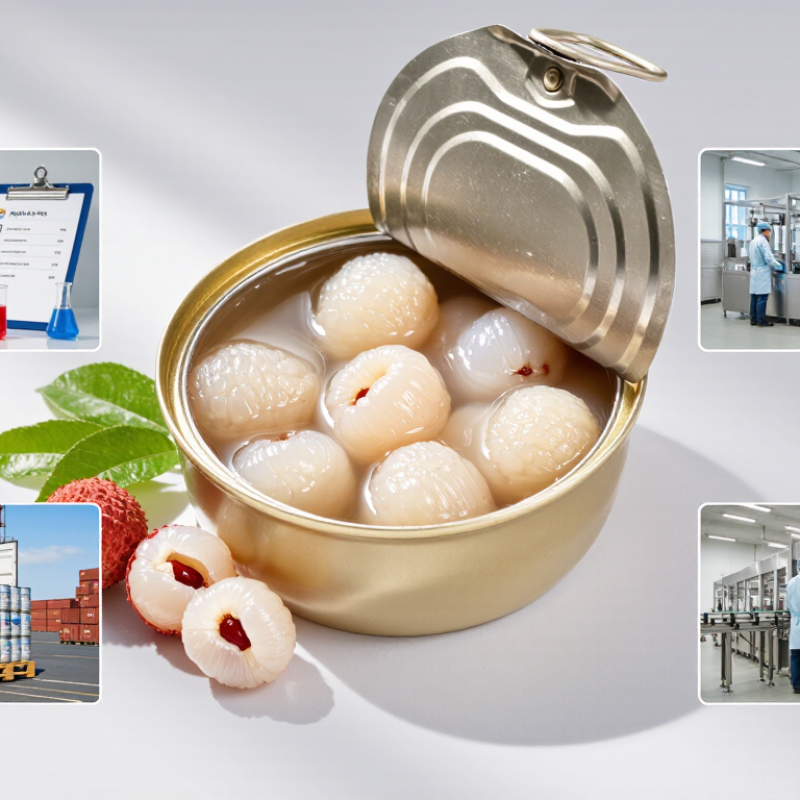
What Defines a Reliable Canned Lychee Supplier?
A reliable canned lychee supplier proves quality through repeatable daily practices. The fruit should have a clean aroma, firm texture, and pale, even color. Cans must arrive without swelling, rust, dents, or syrup leakage. Ask for harvest details, processing dates, batch codes, and traceability records. These documents help buyers connect one finished carton to its production line.
Professional suppliers provide product specifications before negotiations become complicated. The specification should state lychee size, drained weight, syrup concentration, can dimensions, shelf life, and storage conditions. Independent laboratory testing can verify microbiological safety, additives, heavy metals, and packaging integrity. Factory audits also matter. Buyers should inspect sanitation controls, water treatment, worker hygiene, and pest prevention. Photos are useful, but they are not enough.
Communication reveals another important difference. A dependable supplier answers questions clearly and reports delays early. They should explain how cartons are protected during humid ocean transport. Strong export packing uses suitable pallets, inner dividers, and moisture-resistant cartons. Requesting samples is sensible, yet one perfect sample cannot prove long-term consistency. That is an easy mistake. A small syrup variation may seem harmless, but repeated variation can affect retail complaints and production planning. No supplier is flawless. Still, reliable partners record problems, investigate causes, and show corrective actions instead of hiding them.
Key Regions and Production Standards in the Global Lychee Trade
Canned lychee supply is concentrated in Asia, where warm climates support reliable harvests. China, Thailand, and Vietnam remain important processing regions. Madagascar also serves selected export markets. Each region differs in fruit size, sweetness, labor practices, and shipping distance. Experienced buyers should inspect the processor’s orchards, factory records, and export history. A polished sample is not enough.
Production standards deserve close attention. Reputable facilities normally operate under HACCP-based controls and may hold ISO 22000 or equivalent certification. Buyers should check traceability from orchard lot to finished can. Important details include pesticide-residue testing, clean water controls, syrup concentration, can-seam inspections, and incubation checks. Codex guidance can support technical discussions, but destination-country rules still apply. Requirements may change. That part is easy to overlook.
Tips: Request recent laboratory reports, not old templates. Compare drained weight, fruit firmness, color, and syrup clarity across samples. Confirm packaging language and import documents before shipment. Ask how damaged cans are handled. A supplier may meet paperwork standards yet still deliver soft fruit. Buyers should record trial results and review them honestly, including disappointing findings. Overconfidence creates expensive surprises.
Top Canned Lychee Suppliers What Global Buyers Need to Know? - Key Regions and Production Standards in the Global Lychee Trade
Regional sourcing guide covering harvest timing, processing characteristics, trade formats and buyer quality requirements.
| Key sourcing region | Typical harvest window | Raw-material profile | Common canned formats | Production and food-safety benchmarks | Key buyer checks |
|---|---|---|---|---|---|
| Southern China | May–July, depending on province and cultivar | Large domestic supply base; sweet cultivars are commonly selected for whole-fruit canning. | In syrup, light syrup or juice; metal cans and easy-open formats; common retail sizes include approximately 425–850 g. | Commercial sterility; HACCP-based controls; compliance with the destination market’s microbiological, additive and labeling rules. | Fruit firmness after heat treatment, peel and seed removal, syrup concentration, can integrity, traceability and pesticide-residue documentation. |
| Thailand | May–July, with regional variation | Well-established tropical-fruit processing sector; lychees are frequently graded for size, color and intact appearance. | Whole lychees in syrup, juice or light syrup; retail cans and foodservice packs. | HACCP or equivalent preventive controls; many export programs also request GFSI-recognized certification such as BRCGS, IFS or FSSC 22000. | Consistent drained weight, low incidence of broken fruit, clean flavor, correct net weight and validated thermal-process records. |
| Northern Vietnam | May–July | Seasonal supply concentrated in northern growing areas; processing quality depends strongly on rapid handling after harvest. | Canned whole fruit in syrup; export cartons commonly use retail and foodservice can sizes. | HACCP-based processing, potable process water, lot traceability and destination-country labeling compliance. | Harvest-to-processing time, browning control, fruit-to-syrup ratio, foreign-matter prevention and laboratory test results. |
| India | May–August, varying by state and altitude | Important fresh-fruit producing country with processing potential; cultivar, size and post-harvest handling can vary by origin. | Whole lychees in syrup and processed fruit products; retail and institutional packs. | Food-business licensing, HACCP-style preventive controls and compliance with importing-country residue, allergen and labeling requirements. | Supplier approval, cold-chain or rapid-delivery arrangements, color retention, can-seam inspection and seasonal capacity. |
| Madagascar | November–January, during the Southern Hemisphere season | Seasonally complementary to Asian supply; fruit is often marketed for aroma, color and whole-fruit presentation. | Whole lychees in syrup, typically supplied in retail cans and selected foodservice formats. | HACCP-based controls, export inspection requirements and buyer-requested third-party audits where applicable. | Port and inland logistics, seasonal production planning, container loading conditions, residue testing and packaging durability. |
| South Africa | November–January | Smaller seasonal source compared with major Asian producing regions; useful for Southern Hemisphere availability. | Whole fruit in syrup and specialty preserved-fruit packs. | HACCP or equivalent food-safety system, documented sanitation programs and export-market compliance. | Available volume, pack customization, seasonal price volatility, fruit uniformity and documentation for retailer approval. |
| Taiwan | May–July | High-value fruit production with emphasis on cultivar identity, appearance and controlled processing. | Premium whole-fruit canned products and smaller retail formats. | HACCP-based controls, traceability, sanitation verification and compliance with importing-country food standards. | Premium appearance, sweetness-to-acidity balance, label accuracy, allergen statements and batch-level traceability. |
Global buyer checklist
The Codex Standard for Canned Lychees (CXS 42-1981) is a useful international reference for identity and quality. Buyers should also confirm the destination market’s maximum residue limits, additives rules, labeling requirements, net and drained weight, can-seam specifications, commercial-sterility validation, shelf-life evidence and lot traceability. Harvest periods and pack availability are indicative and should be reconfirmed for each crop year.
How to Evaluate Product Quality, Packaging, and Food Safety
Global buyers evaluating canned lychee suppliers should inspect fruit quality beyond attractive catalog images. Request samples from different production lots, not one carefully selected carton. The lychee should show consistent size, pale color, clean syrup, and a firm bite. Cloudy syrup, crushed fruit, or metallic odors deserve investigation. Ask for harvest dates, processing records, ingredient specifications, and test results. Good suppliers explain variation instead of hiding it. Some softness is normal.
Packaging protects quality during long ocean transport. Check can seams, dents, rust marks, label accuracy, and carton strength. For humid routes, cartons need suitable moisture resistance and secure pallet wrapping. Confirm net weight, drained weight, lot codes, shelf life, storage conditions, and language requirements. Food safety evidence should be current and traceable. Request laboratory reports for microbiological and chemical hazards, plus recognized food safety certification. Do not accept copied documents with mismatched lot numbers. I have seen paperwork look complete while basic traceability remained unclear. That gap matters.
Tips: Compare at least three production samples before placing a large order. Open cans after transport simulation when possible. Record color, texture, syrup clarity, and can condition. Ask who releases each batch and how complaints are investigated. Keep a retained sample for future comparison. No checklist is perfect. Recheck assumptions.
Pricing, Certifications, and Ordering Terms for International Buyers
For global buyers, canned lychee pricing depends on fruit size, syrup strength, pack format, and seasonal availability. A 565-gram can may look inexpensive, but freight, duty, insurance, and port charges can change the landed cost sharply. Request prices under clear Incoterms, such as FOB, CFR, or CIF. Compare identical specifications. Otherwise, the comparison is misleading.
Reliable suppliers should provide current food-safety documentation, production records, and laboratory reports. Common credentials include HACCP, ISO 22000, and recognized third-party audit certificates. Requirements vary by destination market. Ask for pesticide-residue testing, allergen statements, microbiological results, and traceability details. Check whether the certificate covers the actual processing facility. A trading office certificate may not prove factory compliance. This detail is often missed.
Ordering terms deserve equal attention. Confirm the minimum order quantity, carton dimensions, pallet configuration, shelf life, and remaining shelf life at shipment. Agree on can specifications, net weight, drained weight, label language, and date coding before production. Payment may involve a deposit and balance after inspection, but terms should match the buyer’s risk tolerance. Specify inspection rights and procedures for damaged cans or short shipments. One practical lesson: never approve a sample only by appearance. Taste, drained weight, seam integrity, and storage performance can differ between batches. I would also allow extra time for label approval. It feels inefficient, yet rushed artwork can delay an otherwise ready shipment.
Top Canned Lychee Suppliers: What Global Buyers Need to Know
Indicative FOB price benchmarks by standard can format for international buyers
The benchmark illustrates typical planning ranges for canned lychee sold in 24-can cartons. Larger cans generally provide a lower cost per kilogram, while pricing is influenced by fruit grade, syrup concentration, packaging materials, order volume, seasonality, and destination port. Buyers should request current quotations together with HACCP or ISO 22000 documentation, applicable food-safety certificates, packaging specifications, minimum order quantity, payment terms, and Incoterms such as FOB or CIF.
Import Logistics, Compliance, and Long-Term Supplier Management
Top Canned Lychee Suppliers: What Global Buyers Need to Know?
Import Logistics, Compliance, and Long-Term Supplier Management
Reliable sourcing starts with more than comparing prices. Buyers should verify production capacity, export experience, and batch consistency. Request recent product specifications, packing details, and shelf-life records. Small details matter. A weak carton can fail during humid sea transport, especially when pallets face repeated loading and unloading.
Import logistics need practical planning. Confirm the shipment’s container requirements, temperature exposure, port handling, and document timeline. Commercial invoices, packing lists, certificates of origin, and food safety documents must match exactly. Check label rules before production begins. Different markets may require specific language, allergen statements, net weight formats, or nutritional information. A minor label error can delay customs clearance.
Long-term supplier management depends on measurable communication. Agree on inspection procedures, acceptable defect levels, production updates, and claim handling. Use independent pre-shipment inspections when order value is significant. Keep approved samples for comparison. In practice, even good suppliers can miss details during busy seasons. Weather changes everything. Buyers should review delivery performance after each shipment, not only when problems appear. Forecasts are never perfect, and I would not trust a supplier based on one successful container alone. Regular audits, transparent records, and realistic purchase planning create stronger cooperation over time.
Article Source:
Have Questions? We're Here to Help!
Give us a call at (864) 989-0566 or send us a message to discuss our testing equipment with an expert.