2026 Best Galvanized Steel Plate Supplier for Global Buyers
Choosing the right Galvanized Steel Plate Supplier matters when projects face rain, salt air, heavy loads, and strict delivery schedules. According to the World Steel Association’s World Steel in Figures 2025, global crude steel production remained close to 1.9 billion tonnes in 2024. That scale reflects strong demand, but it also creates uneven quality across markets.
Edwin Basson, Director General of the World Steel Association, has stated, “Steel is essential to modern life.” His observation applies directly to galvanized plate selection. A dependable supplier should provide traceable coil sources, controlled zinc coating weights, accurate thickness tolerances, and complete mill test certificates. Buyers should also verify compliance with standards such as ASTM A123, ASTM A653, ISO 1461, or EN 10346, depending on the application.
The best supplier is not always the cheapest.
A serious 2026 evaluation should examine production capacity, coating consistency, export experience, inspection procedures, and after-sales support. The International Organization for Standardization continues to emphasize documented quality systems, while corrosion-control specialists regularly warn that surface preparation and coating uniformity influence service life. These details become visible on the jobsite: clean edges, stable dimensions, smooth coating surfaces, and fewer rejected sheets.
However, no supplier is perfect. Lead times can shift. Certificates may need independent verification. Buyers should compare samples, inspection records, packaging quality, and realistic delivery commitments before signing contracts. This guide reviews leading global options through that practical lens, balancing technical evidence, buyer experience, and the limitations that supplier marketing often overlooks.
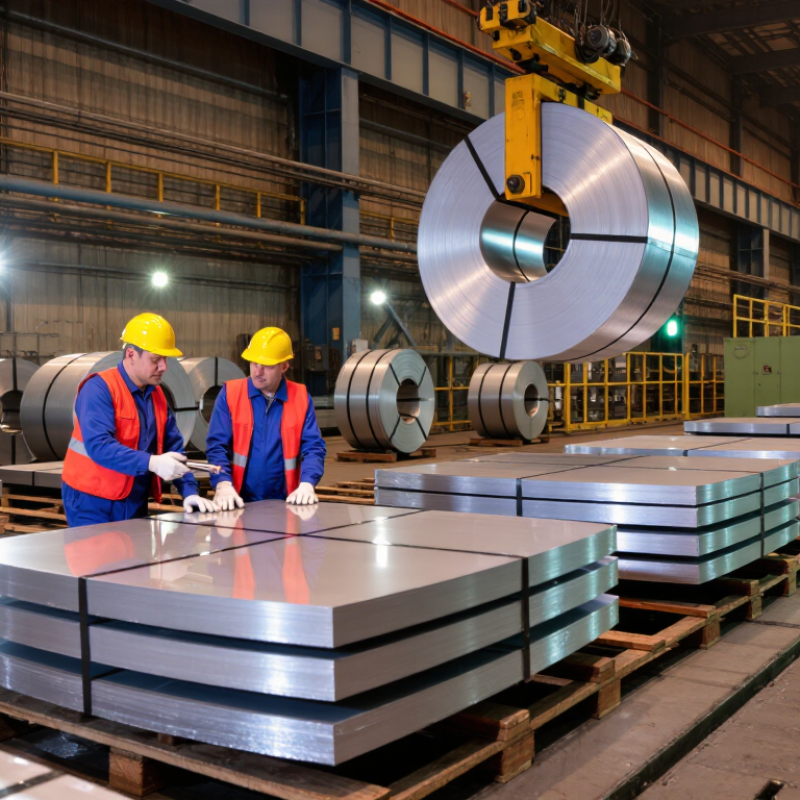
What Defines a Galvanized Steel Plate Supplier in 2026
In 2026, a reliable galvanized steel plate supplier is defined by evidence, not polished promises. Buyers need consistent coating mass, yield strength, thickness tolerance, and surface quality. Real experience shows in the details. Can the supplier explain how zinc adhesion is checked? Can it provide heat numbers, inspection records, and production dates for each batch? Clear answers matter.
Professional expertise includes material selection, forming performance, welding behavior, and corrosion expectations. A capable supplier should discuss common standards, testing methods, and acceptable tolerances without hiding behind technical language. Independent test reports can strengthen confidence, especially for infrastructure, roofing, and industrial fabrication projects. Still, a certificate alone proves little if the sample does not match the delivered plate. Buyers should compare measured results with agreed specifications.
Reliability also appears in communication and handling. Plates need protective packaging, clear markings, moisture control, and shipment updates. Global orders may face port delays or unexpected surface marks. Not every order runs perfectly. An honest supplier reports problems early, identifies the affected batch, and offers a practical correction. Verified production capacity, calibrated equipment, and trained inspectors support authority. Environmental claims also require measurable data, such as recycled content or documented energy practices. Vague promises should invite questions. The best supplier may not claim perfection, but it should show its process, acknowledge weak points, and keep improving.
Galvanized Steel Plate Grades, Coatings, and Technical Specifications
2026 Best Galvanized Steel Plate Supplier for Global Buyers
Galvanized steel plate selection starts with the application, not the catalog. Common grades include DX51D for forming and S250GD or S350GD for structural work. ASTM A653 grades are also widely specified in international projects. Confirm yield strength, tensile strength, elongation, and bending performance before ordering. A higher strength grade may reduce thickness, but it can complicate forming. That trade-off is often overlooked.
Zinc coating mass strongly affects corrosion protection. Typical specifications range from Z100 to Z275 g/m², measured on both surfaces. Heavier coatings suit humid, coastal, or industrial environments. However, coating thickness alone cannot predict service life. Surface preparation, drainage, cutting, and exposure conditions matter too. Standard thicknesses may range from 0.40 to 3.00 mm, with widths commonly near 1,000, 1,250, or 1,500 mm. Tolerances must follow the agreed standard.
Tips: Ask for the applicable standard, coating designation, heat number, and mill test certificate. Check thickness at several points, not one edge. Inspect for bare spots, peeling, rough edges, and excessive spangle variation. Request sample forming tests for deep-drawn parts. Salt-spray results can help, but they do not perfectly represent outdoor aging. One practical mistake is treating “galvanized” as a complete specification. It is not. State the grade, dimensions, coating mass, surface treatment, oiling requirement, packaging method, and inspection criteria in the purchase contract.
| Category | Grade or Specification | Applicable Standard | Typical Product Form | Coating Designation | Typical Coating Mass | Typical Thickness Range | Key Technical Characteristics | Common Applications |
|---|---|---|---|---|---|---|---|---|
| Commercial Quality | DX51D+Z | EN 10346 | Hot-dip galvanized sheet or coil | Z100–Z275 | 100–275 g/m² total both sides | 0.40–3.00 mm | Good general-purpose formability; suitable for profiling, bending, and light fabrication. | Roofing panels, wall cladding, ducts, general sheet-metal work |
| Deep-Drawing Quality | DX52D+Z | EN 10346 | Hot-dip galvanized sheet or coil | Z100–Z275 | 100–275 g/m² total both sides | 0.50–2.50 mm | Higher formability than commercial-quality material; intended for more demanding pressing operations. | Pressed panels, appliance parts, formed enclosures |
| Extra Deep-Drawing Quality | DX53D+Z | EN 10346 | Hot-dip galvanized sheet or coil | Z100–Z275 | 100–275 g/m² total both sides | 0.50–2.00 mm | Designed for complex forming; requires controlled tooling and forming practice. | Automotive components, complex pressed parts, deep-drawn housings |
| Structural Quality | S220GD+Z | EN 10346 | Hot-dip galvanized sheet or coil | Z100–Z600 | 100–600 g/m² total both sides | 0.50–3.00 mm | Minimum specified yield strength of 220 MPa; suitable for structural cold forming. | Building frames, purlins, structural profiles, support members |
| Structural Quality | S350GD+Z | EN 10346 | Hot-dip galvanized sheet or coil | Z100–Z600 | 100–600 g/m² total both sides | 0.60–3.00 mm | Minimum specified yield strength of 350 MPa; combines higher strength with moderate formability. | Roofing and wall systems, framing components, industrial structures |
| Structural Quality | S550GD+Z | EN 10346 | Hot-dip galvanized sheet or coil | Z100–Z600 | 100–600 g/m² total both sides | 0.60–3.00 mm | Minimum specified yield strength of 550 MPa; high-strength option for weight reduction. | Light-gauge structural framing, solar support components, high-strength profiles |
| Commercial Quality | CS Type B | ASTM A653/A653M | Hot-dip galvanized sheet or coil | G30–G90 | 0.30–0.90 oz/ft² total both sides Approximately 92–275 g/m² | 0.30–3.40 mm | General-purpose commercial-quality steel for forming and fabrication. | Roofing, siding, HVAC components, general fabrication |
| Structural Quality | SS Grade 50 | ASTM A653/A653M | Hot-dip galvanized sheet or coil | G60–G90 | 0.60–0.90 oz/ft² total both sides Approximately 183–275 g/m² | 0.45–3.40 mm | Minimum specified yield strength of 50 ksi, approximately 345 MPa; suitable for structural applications. | Structural panels, framing, construction components, formed sections |
| Automotive Quality | SGMCC | JIS G3302 | Hot-dip galvanized sheet or coil | Z12–Z27 | 120–275 g/m² total both sides | 0.40–2.30 mm | General commercial-quality galvanized steel with controlled surface quality and formability. | Automotive parts, appliance panels, formed sheet-metal components |
| Structural Quality | SGH540 | JIS G3302 | Hot-dip galvanized sheet or coil | Z12–Z35 | 120–350 g/m² total both sides | 0.60–3.20 mm | High-strength structural grade with a minimum tensile strength of approximately 540 MPa. | Structural profiles, construction equipment, industrial components |
| Zinc Coating | Regular Spangle | Available under ASTM, EN, and JIS product standards | Hot-dip galvanized sheet or coil | Specified by coating mass or designation | Selected according to corrosion-resistance requirements | Grade-dependent | Visible zinc crystal pattern; suitable where appearance is acceptable and standard corrosion protection is required. | Roofing, cladding, structural profiles, general fabrication |
| Zinc Coating | Minimized Spangle | Available under selected ASTM, EN, and JIS product standards | Hot-dip galvanized sheet or coil | Specified by coating mass or designation | Selected according to corrosion-resistance requirements | Grade-dependent | Reduced visible spangle and more uniform surface appearance than regular spangle material. | Visible architectural panels, appliances, painted components |
| Surface Treatment | Chromate-Free Passivation | Customer specification and applicable product standard | Galvanized sheet or coil | Used with Z, G, or equivalent coating designations | Does not replace the metallic zinc coating | Grade-dependent | Helps reduce wet-storage staining; preferred where restricted-substance requirements apply. | Indoor storage, appliances, automotive and environmentally controlled applications |
| Surface Treatment | Oiled Surface | Customer specification and applicable product standard | Galvanized sheet or coil | Used with the selected zinc coating | Oil quantity is specified separately by the purchaser | Grade-dependent | Temporary corrosion protection during storage and transportation; oil must be considered before painting or bonding. | Export shipments, fabrication stock, industrial processing |
| Dimensional Tolerance | Standard Tolerance | ASTM A924/A924M, EN 10143, or JIS G3302 as applicable | Sheet or coil | Not applicable | Not applicable | Typical ordered thickness: 0.40–3.20 mm | Thickness, width, flatness, camber, and length tolerances depend on the governing standard and ordered class. | International procurement and general manufacturing |
| Supply Dimensions | Common Width Options | Subject to mill capability and purchase specification | Coil or cut-to-length sheet | Any compatible coating designation | Any compatible coating mass | Common widths: 914, 1000, 1220, and 1250 mm | Custom widths and cut lengths may be specified; availability depends on thickness, grade, and coating combination. | Roofing, roll forming, fabrication, construction projects |
| Technical note: Coating designations are not directly interchangeable across standards. Confirm the required standard, grade, coating mass, surface condition, dimensional tolerance, inspection requirements, and test certificate before purchase. Zinc coating mass values are normally stated as the total for both surfaces unless the applicable standard specifies otherwise. | ||||||||
How Global Buyers Can Evaluate Supplier Quality and Production Capacity
2026 Best Galvanized Steel Plate Supplier for Global Buyers
Global buyers should test a supplier’s process, not trust a polished capacity claim. In its World Steel in Figures 2025, the World Steel Association reported 1.88 billion tonnes of crude steel production in 2024. Claims need evidence. Request monthly output records, line speed, coil width, thickness range, and current utilization. Compare these figures with equipment maintenance logs and shipment history. Capacity is not the same as available capacity. An overloaded galvanizing line may deliver late, even when annual tonnage looks impressive. Ask for contingency plans.
Quality evaluation needs measurable checkpoints. Measure the coating. Specify coating mass, adhesion, surface finish, flatness, and dimensional tolerances before requesting quotations. ISO 1461 provides reference requirements for hot-dip galvanized coatings, while ASTM A123/A123M covers structural steel products.
For sheet and coil, buyers should align testing with the agreed product standard and end-use environment. Request mill test certificates, batch traceability, calibration records, and independent inspection access. The OECD’s 2025 steel analysis projects global excess capacity could reach 721 million tonnes by 2027.
When margins tighten, shortcuts become more tempting. I would audit a supplier twice: remotely, then on the production floor. Paperwork alone is insufficient.
International Pricing, Documentation, Compliance, and Shipping Factors
2026 Best Galvanized Steel Plate Supplier for Global Buyers
International buyers should compare more than the quoted price per metric ton. A dependable supplier states the steel grade, plate thickness, zinc coating mass, tolerance, and price basis. Confirm whether the offer uses FOB, CFR, or CIF terms. Also check the currency, quotation validity, and surcharge policy. A low price may exclude testing or inland delivery. That mistake becomes expensive later.
Documentation should match the physical cargo. Request a commercial invoice, packing list, bill of lading, certificate of origin, and mill test certificate. Coating test results are useful when the plates face outdoor exposure. The supplier should also provide the correct HS classification and destination-specific compliance documents. Requirements differ between markets. Do not assume one certificate works everywhere. Verify the importer’s rules before production.
Shipping details deserve equal attention. Ask for seaworthy packaging, protective separators, bundle weights, and container loading photographs. Galvanized surfaces can develop white rust when moisture remains trapped during transit. Desiccants and ventilation planning may reduce this risk, but they are not perfect. I have seen buyers focus heavily on price and overlook port storage charges. That decision delayed installation by several days. A written inspection plan, pre-shipment approval, and clear claims process make international purchasing more dependable. Still, every contract needs review; even experienced teams miss small exclusions.
How to Select the Best Galvanized Steel Plate Supplier for Your Needs
2026 Best Galvanized Steel Plate Supplier for Global Buyers
Choosing the best galvanized steel plate supplier requires more than comparing quoted prices. World Steel Association data reports global crude steel production at about 1.89 billion tonnes in 2023. This scale creates many suppliers, but quality can still vary. Confirm the steel grade, plate thickness, zinc coating mass, surface finish, and dimensional tolerances. Ask for mill test certificates, coating test results, and batch traceability. Standards such as ASTM A653 and EN 10346 provide useful reference points, but your project specification must control the final choice. A supplier should explain differences clearly, not hide behind technical language.
Review production capacity, inspection procedures, export packaging, and delivery records. A reliable supplier can show how plates are protected against white rust during humid sea transport. Check whether each bundle carries readable heat numbers and weight details. The International Energy Agency notes that steelmaking produces around 7% of global energy-related carbon dioxide emissions. Therefore, sourcing data on recycled content and production emissions can support stronger procurement decisions. Low price looks attractive. It may not remain low after rework, delays, or rejected coils.
Tips: Request one recent inspection report and one packing photograph. Compare coating mass, not only zinc thickness. Confirm Incoterms, claim procedures, and replacement timelines in writing. Speak with the technical team before ordering. No supplier scores perfectly. Your evaluation should record both strengths and unresolved risks.
2026 Best Galvanized Steel Plate Supplier for Global Buyers
How to Select the Best Galvanized Steel Plate Supplier for Your Needs
Coating mass is an important factor when comparing galvanized steel plate suppliers. The ASTM A653 coating designations shown here represent approximate total zinc coating mass on both sides of the sheet. Higher coating mass generally provides greater corrosion protection, but buyers should also verify steel grade, dimensional tolerances, surface quality, certification, lead time, packaging, and export compliance.
Article Source:
Have Questions? We're Here to Help!
Give us a call at (864) 989-0566 or send us a message to discuss our testing equipment with an expert.