What Is the Best Animal Healthcare Syringe for 2026?
What Is the Best Animal Healthcare Syringe for 2026? The answer depends on the animal, dose, and setting—not just the label. A small clinic drawing up a precise vaccine dose has different needs from a farm team treating larger animals. Fit matters. The syringe should offer clear graduations, a comfortable grip, and dependable compatibility with the selected needle and medication. These details can affect accuracy when hands are gloved or an animal moves unexpectedly.
The wider market is growing, but that does not identify a single winning syringe. Grand View Research’s Veterinary Healthcare Market Size, Share & Trends Analysis Report estimated the market at USD 43.3 billion in 2023 and projected 8.4% annual growth from 2024 to 2030. That estimate covers veterinary healthcare broadly, not syringes alone. FAO’s Livestock and livelihoods resource notes that livestock supports the livelihoods of nearly 1.3 billion people worldwide, underscoring the practical reach of animal care. For 2026, compare syringe capacity, measurement clarity, materials, cleaning requirements, and suitability for the intended species and procedure. Ask a veterinarian or supplier to confirm compatibility with the medication and equipment. A tidy product specification is useful, but it cannot show how a syringe feels during a real treatment. That uncertainty deserves attention.
Understanding Animal Healthcare Syringes and Their Uses
What Is the Best Animal Healthcare Syringe for 2026?
Understanding Animal Healthcare Syringes and Their Uses
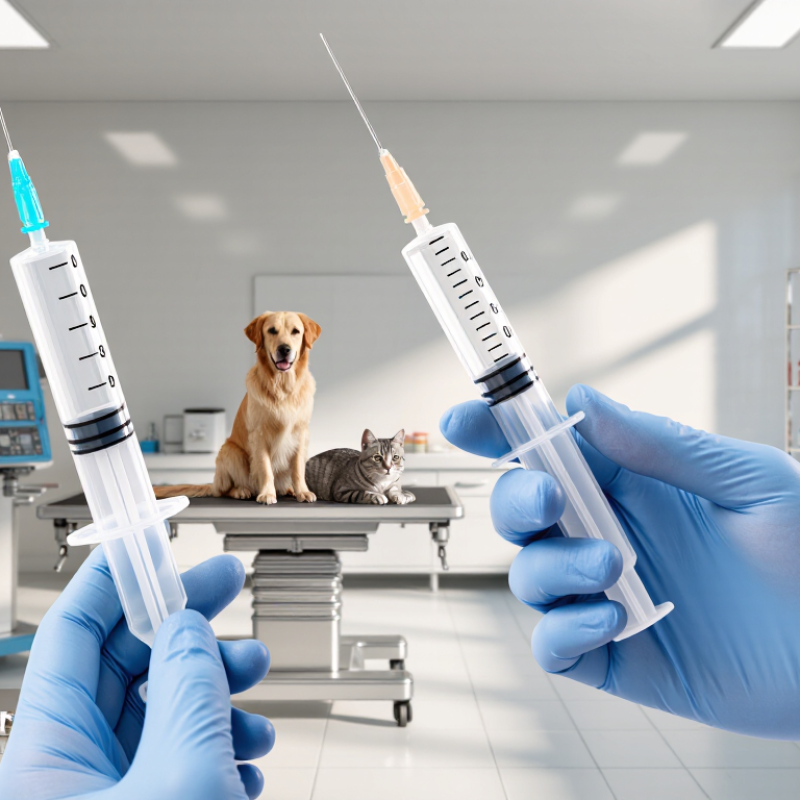
Animal healthcare syringes help measure and deliver fluids, medications, and vaccines under veterinary guidance. The right type depends on the animal, the route of administration, and the amount being measured. An oral dosing syringe is designed for liquid given by mouth; an injectable syringe is used for a different purpose. They are not interchangeable. Small details matter: a clear scale, a secure plunger, and a size suited to the prescribed volume can make handling more controlled.
For accurate measurement, read the graduations at eye level and check that the markings match the prescribed dose. A large syringe may be awkward for a tiny volume. A smaller one can be easier to read. Needle choice also depends on the animal and procedure, so a veterinary professional should select it. Never guess. Follow instructions for sterile, single-use equipment, and clean reusable devices only as directed.
Good handling is calm and deliberate. Keep the animal safely positioned, prepare supplies before beginning, and watch for stress or unexpected movement. Stop and ask a veterinarian if the syringe is damaged, the markings are hard to read, or the instructions seem unclear. The choice can feel less tidy than expected; one syringe does not suit every animal or task. That is worth remembering.
What Is the Best Animal Healthcare Syringe for 2026?
Understanding animal healthcare syringes and their uses
How to read this chart: These are common nominal syringe capacities, not recommendations for a particular animal or treatment. Choose a syringe that allows accurate measurement of the prescribed volume and is appropriate for the route of administration. Follow veterinary guidance and the product instructions.
Exploring Syringe Types for Different Animals and Treatments
What Is the Best Animal Healthcare Syringe for 2026?
The best syringe depends on the animal, medicine, dose, and route—not a single universal design. APPA’s 2025 State of the Industry Report estimated that 94 million U.S. households owned at least one pet. The AVMA’s 2022 U.S. Pet Ownership and Demographics Sourcebook reports dog ownership in 44.6% of households and cat ownership in 26.5%. Different animals need different handling. Small doses matter.
For liquid medicine given by mouth, choose a needle-free oral syringe with clear graduations. For injections, a tuberculin syringe can help measure small volumes, while insulin syringes must match the prescribed insulin concentration. AAHA’s diabetes guidance emphasizes checking syringe calibration against insulin strength. This is an easy detail to miss. Never swap syringe types based on appearance alone; confirm the markings with a veterinarian.
For livestock or larger treatment volumes, a veterinarian may recommend a higher-capacity or repeat-dose syringe. Needle length and gauge should suit the species, injection site, medicine, and route. A thicker liquid may require different equipment than a watery vaccine. For birds and reptiles, tiny doses make measurement accuracy especially important. Ask the clinic to demonstrate the exact syringe and dose, then read the markings at eye level. Even careful owners can misread a scale.
Comparing Key Features to Find the Best Syringe for 2026
What Is the Best Animal Healthcare Syringe for 2026?
Comparing Key Features to Find the Best Syringe for 2026
For 2026, the best animal healthcare syringe is the one that suits the species, dose, and care setting. A large barrel may work for some tasks, while small doses call for clear, fine graduations. Check whether the markings remain easy to read when the syringe is tilted. Small details matter.
Compare barrel capacity, plunger movement, grip, and compatibility with the intended needle or feeding tip. A plunger that moves evenly can help prevent sudden delivery when an animal shifts. But “smooth” should not mean loose; a poor seal can affect dose control. Fit matters.
Material and construction influence cleaning, durability, and whether a syringe is designed for single use or reuse. Follow the product instructions and veterinary guidance; do not assume every syringe can be sterilized safely. I might be tempted by the largest capacity, but that is not always the most precise choice. Before buying, compare graduations, dead space, and tip style. A veterinarian or trained animal-care professional can help confirm the appropriate format for the animal and intended use. The best option may differ between a small companion animal and livestock. That trade-off deserves a second look.
Using, Cleaning, and Disposing of Syringes Safely
Using a syringe safely starts with matching it to the treatment. Use an oral syringe for liquid given by mouth, and an injection syringe only as directed by a veterinary professional. Check the markings and confirm the dose before drawing up medicine. Small marks matter. Keep the work area clean, and avoid touching the tip or needle. If a dose or route seems unclear, pause and ask the clinic rather than guessing. For oral medicine, give it slowly into the side of the mouth; forcing liquid can cause choking.
After use, follow the syringe maker’s cleaning instructions. Some syringes are single-use and should not be washed for another dose. Reusable types may need prompt rinsing, careful washing, and complete air-drying, but do not boil or disinfect them unless the instructions say to. A damp barrel can hold residue. It is easy to rush this part. Keep each animal’s equipment separate when advised, and replace syringes that are cracked, sticky, or hard to read. Put used needles and other sharps in a sturdy, puncture-resistant sharps container, never loose in household waste. Ask your veterinary clinic or local waste service how to dispose of a full container safely.