7 Tips for Choosing a Restringing Rackets Machine
Choosing a Restringing Rackets Machine is not simply a matter of comparing prices and tension ranges. A machine may look impressive under bright showroom lights, yet perform poorly beside a busy workshop bench. Loose clamps, uneven supports, or a drifting tension head can quietly damage consistency.
Ron Yu, founder of Stringway, makes the point clearly: “The stringer is more important than the machine.” His statement deserves attention. Good equipment supports skilled work, but it cannot replace careful calibration, patient mounting, or knowledge of racket frames. This guide explores seven practical tips for selecting a machine that fits real restringing demands.
Consider the details you can touch. Does the mounting system hold a racket firmly without crushing the frame? Do the clamps grip a thin badminton string without leaving sharp marks? Can the tensioner remain stable after repeated pulls? These questions matter more than polished marketing language. A digital display is useful, but accuracy must be tested with a reliable calibrator.
Budget also requires honest reflection. The cheapest machine may create higher costs through repairs, inconsistent results, and frustrated customers. However, the most expensive model is not automatically the best choice. Some premium features may remain unused in a small home studio.
A sensible decision balances workload, string types, available space, maintenance support, and future growth. Even experienced technicians can overlook ergonomics. A poorly positioned turntable can leave your shoulders aching after several rackets. That is not a minor detail. It can change the quality of your work.
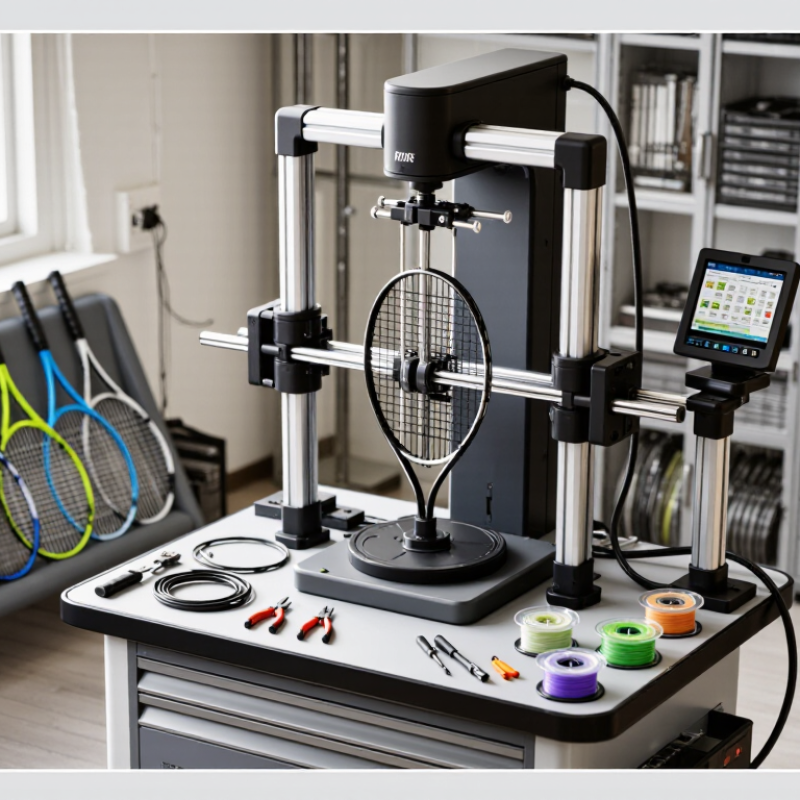
Define Your Racket Restringing Requirements
Before choosing a restringing racket machine, define your workload clearly. The ITF Global Tennis Report estimates 87 million tennis players worldwide. That scale creates varied demand, from occasional repairs to continuous professional service. Count your weekly rackets, string types, tension ranges, and customer expectations. A home user may need reliable manual control, while a busy workshop needs speed and repeatable results.
Write down your real requirements. Constant-pull tension is valuable when accuracy matters. A calibrated digital tension head can reduce inconsistent results. Six-point mounting may provide better frame stability, especially during high-tension jobs. Check the machine’s supported tension range, clamp quality, turntable movement, and calibration process. These details affect both workflow and string safety. The Tennis Industry Association’s 2024 participation report recorded 23.8 million tennis players in the United States during 2023. Even a small service desk may face many frame designs.
Do not buy capacity you cannot use. I once focused too much on maximum tension and overlooked adjustment time. That was a costly mistake. Ask whether the machine fits your bench, power supply, training level, and maintenance habits. Some specifications look impressive but offer little value for light workloads. Test the mounting system with several racket shapes when possible. Record tension readings over repeated jobs. Your first decision may still be imperfect, but measured evidence is better than guesswork.
Compare Machine Types and Stringing Mechanisms
Choosing a restringing racket machine starts with its tension mechanism. A drop-weight model uses gravity and a lever. It is affordable, portable, and mechanically honest. However, it needs a level table and careful visual alignment. A crank machine locks tension after the lever reaches its setting. It works faster, but the pull may change slightly during tightening. An electronic constant-pull machine keeps tension active as the string settles. It offers speed and repeatability, though its sensor needs periodic checking. Listen to the motor. Strange noise matters.
Next, examine the mounting system. Two-point supports are simple, but they can allow more frame movement. Six-point supports distribute pressure around the racket head. They usually improve stability, especially with higher tensions. Check whether supports touch the frame evenly. Tight knobs can leave marks. Then inspect the clamps. Fixed clamps hold firmly and resist twisting. Swivel clamps move around the frame and often reach difficult angles. Some swivel designs feel slower than expected. Try them with a short scrap string.
Finally, compare the pulling path. A linear gripper guides string directly and reduces sharp bends. A rotational gripper can be flexible, but poor alignment creates friction. Check calibration with a tension tester, not only the dial. Test ten pulls and record variation. Ask about replacement clamps, springs, and service access. A cheaper machine may become expensive when small parts disappear. My own mistake was choosing a compact model before measuring table depth. It fit the room, but not my working posture. Leave space for the racket, tools, and string coil.
Evaluate Compatibility, Build Quality, and Ease of Use
7 Tips for Choosing a Restringing Rackets Machine
Start with compatibility. Check whether the machine supports your racket’s head shape, frame width, and stringing pattern. Some models handle badminton frames but struggle with tennis frames. Verify the mounting range before buying. A reliable machine should hold the racket firmly without pressing fragile areas. Examine the tension range, too. It should match your usual string materials and playing needs.
Build quality affects accuracy and safety. Choose a rigid base with minimal movement during tensioning. Metal supports usually provide better stability than thin plastic parts. Inspect the clamps closely. They should grip strings evenly without leaving deep marks. A calibrated tension system is essential. Ask whether calibration can be tested or adjusted. I once trusted a machine’s factory setting and found a noticeable tension difference. That mistake changed my selection process. Check replacement parts and service access before committing.
Ease of use matters during long sessions. Look for smooth turntables, clear controls, and comfortable adjustment handles. Tool storage near the working area can prevent misplaced cutters and awls. The machine should allow quick mounting without forcing the frame into position. Read real user experiences, but question overly perfect reviews. Hands-on testing remains valuable. Try several adjustments. Notice awkward movements. A machine may look professional yet feel tiring after three rackets. Consider your workspace, lighting, and noise level. Small details often shape consistency more than advertised features.
7 Tips for Choosing a Restringing Rackets Machine
Evaluate compatibility, build quality, and ease of use before purchasing a racket restringing machine.
The chart presents a practical 100-point evaluation model. Compatibility receives the highest priority because mounting systems, racket sizes, and string types must match the machine. Build quality, tension accuracy, adjustment range, usability, safety, and maintenance requirements complete the selection criteria.
Review Maintenance Needs, Safety Features, and Overall Value
Choosing a restringing racket machine requires more than comparing tension ranges. In regular workshop use, dust collects around the tension head, clamps, and turntable bearings.
Tip 1: Choose a model with accessible cleaning points.
Tip 2: Check whether replacement clamps and calibration tools are easy to obtain.
A machine that needs specialized servicing can become expensive during a busy season.
Safety deserves equal attention.
Tip 3: Inspect the frame supports for smooth adjustment and secure locking.
Tip 4: Look for stable feet, rounded edges, and protected moving parts.
Tip 5: Confirm that the tension mechanism releases gradually instead of snapping under pressure.
Keep fingers clear during operation. Small design details prevent painful mistakes.
I once focused too heavily on maximum tension and overlooked clamp comfort. That decision made long sessions unnecessarily tiring.
Overall value includes accuracy, durability, training time, and maintenance costs.
Tip 6: Compare calibration stability after repeated stringing, not only the first reading.
Tip 7: Consider the machine’s working height and storage needs.
A precise machine still loses value if it causes poor posture or remains unused in a crowded room. Ask for clear service instructions and test the adjustment controls before buying.
Records help.
Note calibration dates, cleaning work, and unusual tension changes. A machine may perform well for years, but only when its maintenance routine matches real working conditions.