7 Best Internet Of Things IOT Trainers for Global Buyers
Choosing the right Internet Of Things (IOT) Trainer can shape how quickly learners understand connected devices, sensors, and real-time data. Global buyers need more than attractive specifications. They need dependable hardware, clear lessons, regional compatibility, and support that remains useful after purchase.
Kevin Ashton, the technology strategist who coined the term “Internet of Things,” wrote in RFID Journal, “If we had computers that knew everything there was to know about things—using data they gathered without any help from us—we would be able to track and count everything, and greatly reduce waste, loss and cost.” His observation still guides practical IoT training today. A strong trainer should make that idea visible through working sensors, dashboards, wireless modules, and safe automation exercises.
This guide examines seven leading options for international learners, educators, and technical teams. Each choice is considered through build quality, programming access, connectivity, documentation, classroom value, and long-term support. Some kits excel with beginner-friendly interfaces. Others provide deeper industrial testing and cloud integration. No single model serves every buyer.
That matters.
A compact board may suit a student’s desk, while a rugged trainer may better fit a factory workshop. Buyers should also check voltage standards, language support, shipping restrictions, replacement parts, and software licensing. These details are easy to overlook. I have found that impressive demonstrations can hide weak documentation or limited expansion options. Therefore, this selection is useful, but not final. Local teaching goals and technical experience should influence the decision. The best Internet Of Things (IOT) Trainer is the one learners can confidently build, test, troubleshoot, and improve.
What IoT Trainers Are and How They Support Practical Learning
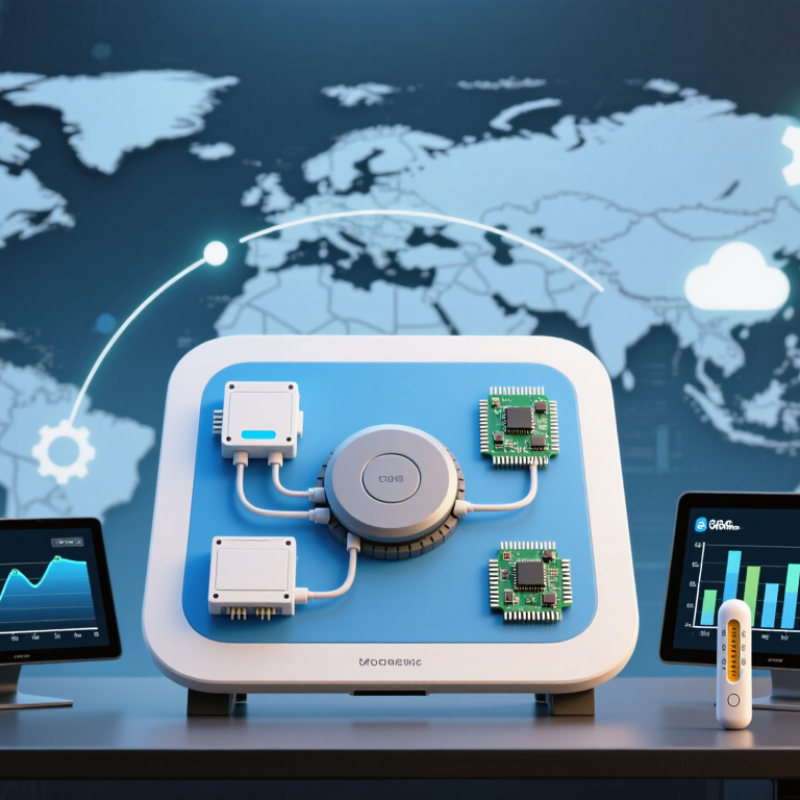
IoT trainers are practical learning systems for connected-device skills. They combine sensors, microcontrollers, wireless communication, and software dashboards. A learner can measure room temperature, send readings, and inspect changes on a screen. This feels more useful than memorising protocols alone.
IoT Analytics reported about 18.8 billion connected IoT devices in 2024. That scale increases demand for hands-on technical training. However, a trainer is not automatically effective. Clear documentation, replaceable parts, and realistic exercises matter more than a crowded feature list.
Strong trainers support a complete learning path. Students should wire a sensor, publish data through a messaging protocol, and troubleshoot a failed connection.
They should also examine data quality, device security, and energy use. The World Economic Forum’s Future of Jobs Report 2025 identifies networks and cybersecurity among rapidly growing skill areas. Practical trainers can address both areas through controlled experiments.
A visible fault is valuable. A blinking light may look simple, but it can expose poor wiring or weak logic. I still find that many courses rush toward dashboards and neglect testing. That weakness deserves attention.
Tips: Choose trainers with guided projects, accessible circuit diagrams, and measurable outcomes. Check whether learners can repeat experiments without specialist tools. For global buyers, review language support, voltage compatibility, spare-part access, and online technical assistance. Ask for sample lessons before purchasing. A polished demo can mislead; real learning often begins when the first connection fails.
Key Criteria for Evaluating IoT Trainers Worldwide
A strong IoT trainer must match the buyer’s target role, region, and technical starting point. IoT Analytics reported 16.6 billion connected IoT devices in 2023, with 18.8 billion forecast for 2024. That scale demands practical coverage of sensors, gateways, cloud platforms, networking, and device management. Proof matters. Ask for a sample lesson, lab access, and clear learning outcomes. A useful course should let learners wire a sensor, inspect message traffic, and diagnose a failed connection.
Trainer expertise also needs careful checking. Look for instructors with field experience in industrial automation, embedded systems, data engineering, and cybersecurity. Their lessons should explain protocols such as MQTT, CoAP, and secure transport without hiding behind jargon. The curriculum should reflect recognized security guidance and include identity management, updates, encryption, and vulnerability testing. The 2024 Global Cybersecurity Outlook identified cyber skills gaps as a continuing business concern, making security competence a selection requirement rather than an optional module.
Global buyers should compare assessment quality, language support, time-zone access, and local compliance awareness. A certificate alone proves little. Request anonymized project examples and verify whether assessments test real troubleshooting. Some trainers overpromise job readiness after a short course. That deserves skepticism. I would also check accessibility on a modest laptop and a weak internet connection, because polished demonstrations often ignore real learning conditions. Forecasts can change, too. A trainer that reviews its content each quarter may be more reliable than one selling a permanent “complete” syllabus.
Seven Leading IoT Trainers for Global Buyers
7 Best Internet Of Things IOT Trainers for Global Buyers
Seven Leading IoT Trainers for Global Buyers
Global buyers need IoT trainers that make complex systems easier to test. Seven leading options cover different learning and development needs. Sensor trainers help beginners connect temperature, motion, and light modules. Industrial gateway trainers reproduce factory networks in a controlled workspace. Smart-home trainers demonstrate lighting, access, and energy monitoring. Edge-computing trainers process data near connected devices. Wireless protocol trainers compare short-range and long-range communication methods. Cloud dashboard trainers show how data becomes useful information. Cybersecurity trainers expose weak passwords, unsafe updates, and poor device access controls. Practical evaluations should include circuit quality, software documentation, language support, and replacement parts.
Tips: Check voltage compatibility before purchase. Confirm regional power requirements. Ask for sample lessons and technical manuals. Choose trainers with visible wiring and replaceable components. Verify support hours across time zones. Test data export formats before committing. Certification claims should be independently documented. A low price can hide limited support.
My review experience suggests that clear instructions often matter more than advanced features. Some attractive kits become frustrating after the first failed connection. I once valued a large feature list too highly. That was a mistake. Reliable trainers should support safe experiments, repeatable results, and gradual learning. Buyers should also inspect privacy settings and update procedures. No trainer fits every classroom or engineering team. Local teaching goals may expose weaknesses that specifications overlook.
Comparing Features, Skill Levels, and Training Applications
The seven strongest IoT trainers differ by learning purpose, not appearance.
Sensor-kit trainers suit beginners who need visible results, such as temperature readings on a small dashboard. Microcontroller trainers add wiring, coding, and power management. Single-board computer trainers introduce Linux, gateways, and local data processing. Cloud-simulation trainers reduce hardware costs and support remote learners. Industrial gateway trainers teach protocols, device security, and maintenance workflows. Digital-twin trainers model factories before deployment. Cybersecurity trainers examine authentication, firmware updates, and network weaknesses.
Skill level matters. A beginner needs guided wiring, clear error messages, and short projects. An intermediate learner benefits from MQTT, REST APIs, databases, and event rules. Advanced users should test edge analytics, device provisioning, and fault recovery. The World Economic Forum reported that 44% of workers’ core skills may change by 2027. Its research also found that 60% of workers could require training before then. That makes adaptable courseware valuable, though many training kits still oversimplify industrial conditions.
Application fit should guide purchasing. A smart-building course needs occupancy sensors and energy dashboards. A logistics course needs location data, battery planning, and intermittent connectivity. A manufacturing course needs industrial protocols and realistic failure scenarios. IoT Analytics reported about 16.6 billion connected IoT devices in 2023, with further growth expected in 2024. Therefore, trainers should measure more than successful demos. Look for documentation, reproducible experiments, safety controls, and assessment records. I would still question impressive dashboards. They can hide weak security and poor maintenance habits. Real learning is messier.
How to Choose, Purchase, and Deploy the Right IoT Trainer
Choosing among the seven best IoT trainers starts with the learner’s real deployment goals. A trainer should match the target sensors, communication protocols, cloud workflows, and security requirements. IoT Analytics reported 18.8 billion connected IoT devices worldwide in 2024. That scale makes practical training more valuable than isolated theory.
Check the trainer’s processor, sensor range, gateway options, and network interfaces before purchasing. Confirm whether it supports MQTT, HTTP, IPv6, and secure credential management. NIST SP 800-213 recommends defining device cybersecurity requirements before acquisition. Ask for firmware update procedures, access controls, documentation quality, and replacement-part availability. A low price can hide weak support.
Deployment should begin with a small classroom or laboratory pilot. Test signal stability, data accuracy, power consumption, and dashboard response times. Keep several devices active for repeated exercises. GSMA Intelligence projects billions of enterprise IoT connections, yet many training plans still ignore maintenance skills. That is a genuine weakness. Learners should troubleshoot failed sensors, expired certificates, and intermittent networks. These failures feel inconvenient, but they resemble real operations. Review assessment results after each session, then adjust the trainer configuration. A technically impressive kit may still be unsuitable for beginners, remote classes, or multilingual teams.
7 Best Internet of Things (IoT) Trainers for Global Buyers — How to Choose, Purchase, and Deploy the Right IoT Trainer
| Rank | IoT Trainer Type | Primary Connectivity | Typical Hardware Included | Software and Protocol Support | Recommended Users | Typical Use Cases | Power and Deployment Notes | Typical Budget Range (USD) | Best Selection Criterion |
|---|---|---|---|---|---|---|---|---|---|
| 1 | Entry-Level Connected Sensor Trainer | Wi-Fi and Bluetooth Low Energy | Microcontroller board, temperature and humidity sensors, light sensor, motion sensor, LEDs, buttons, breadboard, and USB cable | Arduino-compatible development, MicroPython or C/C++, HTTP, MQTT, and REST API basics | Students, beginners, educators, and prototype teams | Environmental monitoring, simple automation, classroom experiments, and dashboard development | USB-powered; generally designed for indoor laboratory use and short-term demonstrations | $40–$150 | Clear documentation and easy access to sensor data |
| 2 | Industrial Automation IoT Trainer | Ethernet, Wi-Fi, and industrial fieldbus interfaces | Programmable controller, digital and analog I/O, relays, motor-control module, simulated process panel, and industrial sensors | PLC programming, Modbus TCP/RTU, OPC UA, MQTT, ladder logic, and industrial Ethernet concepts | Automation technicians, engineering students, system integrators, and factory trainers | Condition monitoring, process control, production-line simulation, and predictive maintenance training | Usually mains-powered or 24 V DC; requires protected bench space and electrical safety procedures | $600–$3,500 | Support for the industrial protocols used at the target facility |
| 3 | Long-Range Low-Power IoT Trainer | LoRaWAN or other sub-gigahertz low-power radio | Battery-powered sensor node, gateway, antenna, environmental sensors, signal-strength test tools, and optional outdoor enclosure | LoRaWAN device classes, MQTT, gateway configuration, payload encoding, and low-power firmware design | Smart agriculture teams, utilities, environmental researchers, and field engineers | Soil monitoring, water metering, campus sensing, asset tracking, and remote environmental data collection | Battery operation is common; range depends on antenna, terrain, building materials, and local radio regulations | $180–$900 | Battery-life measurement and reliable gateway coverage testing |
| 4 | Cellular IoT Deployment Trainer | LTE-M, NB-IoT, or 4G/5G cellular | Cellular modem, SIM or eSIM support, GNSS receiver, antenna, battery pack, sensor interface, and developer board | AT commands, TCP/IP, MQTT, TLS, device provisioning, GNSS, and cellular power-management techniques | Fleet operators, logistics teams, telecom learners, and remote monitoring developers | Vehicle tracking, remote equipment monitoring, mobile assets, and locations without local Wi-Fi | Requires compatible network coverage, an activated data plan, and attention to regional frequency bands | $120–$700, excluding recurring connectivity fees | Regional network compatibility and transparent data-plan requirements |
| 5 | Edge Computing and AIoT Trainer | Ethernet, Wi-Fi, and optional cellular connectivity | Single-board computer or edge computer, camera, microphone, accelerator module, storage, sensors, and cooling accessories | Linux, Python, containers, REST, MQTT, TensorFlow Lite or equivalent edge inference frameworks | AI developers, researchers, robotics teams, and advanced engineering students | Visual inspection, occupancy detection, anomaly detection, predictive maintenance, and local decision-making | Typically mains-powered; processing locally can reduce latency and cloud bandwidth requirements | $250–$1,500 | Processing performance, supported model formats, and thermal management |
| 6 | Smart Building and Home Automation Trainer | Wi-Fi, Bluetooth Low Energy, Thread, or Zigbee | Smart switches, occupancy sensors, temperature sensors, lighting loads, power-metering module, gateway, and wall-panel simulator | Matter, MQTT, automation rules, APIs, secure commissioning, and energy-monitoring dashboards | Building managers, electricians, smart-home installers, and energy-efficiency learners | Lighting control, HVAC optimization, access monitoring, occupancy analysis, and energy management | Low-voltage kits are preferable for training; mains-connected modules require qualified installation | $150–$1,000 | Interoperability across protocols and safe installation design |
| 7 | IoT Security and DevSecOps Trainer | Ethernet, Wi-Fi, Bluetooth Low Energy, and virtual network interfaces | Secure microcontroller, gateway, test sensors, debug interface, firewall or network appliance, and isolated lab environment | TLS, secure boot, encrypted storage, certificate management, OTA updates, vulnerability testing, and network segmentation | Security teams, embedded developers, auditors, and advanced technical trainers | Threat modeling, device hardening, secure provisioning, penetration testing, and incident response exercises | Best operated in an isolated lab network; never connect intentionally vulnerable devices to production systems | $300–$2,000 | Repeatable security labs, resettable devices, and strong isolation controls |
Note: Budget ranges are indicative purchase ranges for training hardware and may vary by region, configuration, shipping, taxes, software licenses, cellular service, and required accessories.
Article Source:
Have Questions? We're Here to Help!
Give us a call at (864) 989-0566 or send us a message to discuss our testing equipment with an expert.