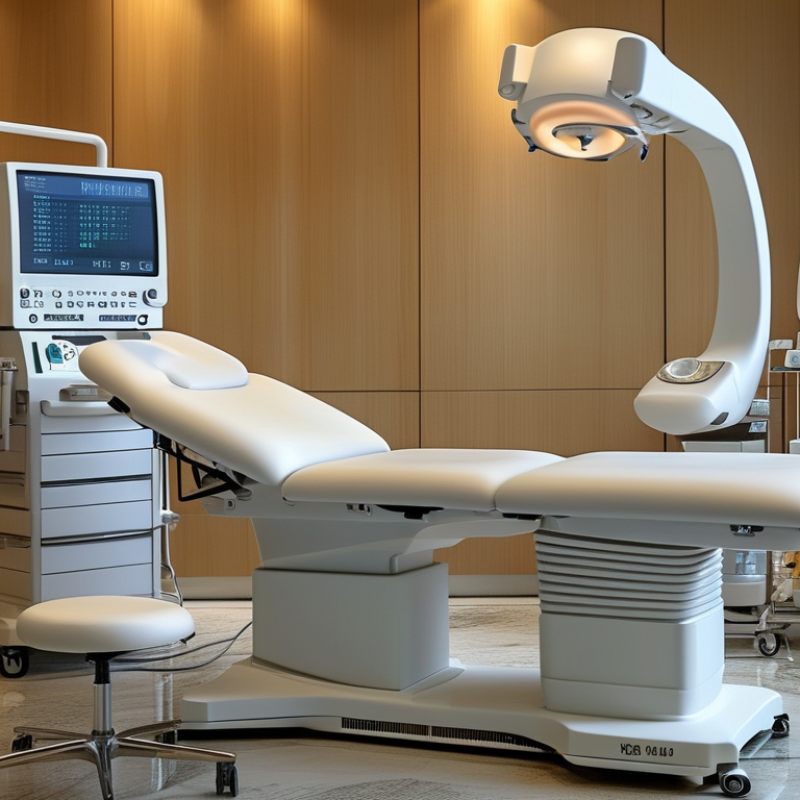
| Intended Use and Technology | Confirm whether the system is intended for non-medical aesthetic use, temporary appearance enhancement, wellness use, or treatment of a medical condition. Identify the energy modality, such as radiofrequency, focused ultrasound, cryogenic cooling, electromagnetic stimulation, or mechanical massage. | The intended use determines regulatory classification, labeling obligations, clinical evidence requirements, and operator training needs in the destination market. | Obtain the product specification, intended-use statement, contraindications, treatment protocol, and user manual before comparing suppliers. | High |
| Supplier Legal Qualification | Check the supplier’s registered legal entity, manufacturing site, authorized representative where required, export history, and ownership of technical documentation. | Supplier registration documents, manufacturing-site information, quality-management records, and traceable product identification. | Match the legal entity shown on the quotation, certificate, declaration, invoice, product label, and warranty document. | High |
| Quality Management System | Determine whether the manufacturer operates a controlled quality system appropriate to the product’s intended use and risk level. | ISO 13485:2016 is the internationally recognized quality-management standard for organizations involved in the life cycle of medical devices. It is not, by itself, market approval. | Verify the certificate number, issuing body, scope, manufacturing address, validity period, and certificate status directly with the issuing organization. | High |
| Risk Management | Review whether foreseeable risks have been identified for burns, excessive cooling, pain, skin injury, electromagnetic interference, electrical shock, and misuse. | ISO 14971:2019 provides a framework for risk management of medical devices throughout the product life cycle. | Request a current risk-management summary, hazard controls, residual-risk information, and contraindication list. Do not require confidential design files unless covered by a suitable agreement. | High |
| Electrical Safety | Confirm electrical protection, leakage current control, insulation, grounding, abnormal-operation testing, and suitability for the destination voltage and frequency. | IEC 60601-1 is the general standard for basic safety and essential performance of medical electrical equipment where applicable. | Request a complete test report from a competent laboratory, including the exact model, accessories, rated input, and tested configuration. | High |
| Electromagnetic Compatibility | Check immunity and emissions performance, especially for systems used near monitoring equipment, implanted devices, or other electrically sensitive equipment. | IEC 60601-1-2 addresses electromagnetic compatibility for applicable medical electrical equipment. | Verify that the EMC report covers the final commercial configuration and includes installation, cable, and accessory conditions. | High |
| Software and Cybersecurity | Assess touchscreen software, treatment presets, user access controls, update procedures, backup behavior, and protection of service data. | IEC 62304 may apply to medical-device software life-cycle processes. Cybersecurity expectations also depend on the destination regulator and product function. | Request software version control, release notes, access permissions, vulnerability-response procedures, and a clear policy for remote access. | Medium |
| Usability and Operator Safety | Confirm that controls, warnings, emergency stop functions, treatment limits, alarms, and cleaning instructions are understandable to the intended operator. | IEC 62366-1 addresses usability engineering for medical devices where applicable. | Review the user manual, quick-start guide, training materials, alarm list, emergency procedure, and records of usability validation. | High |
| Market Access: European Union | Establish whether the product is a medical device under Regulation (EU) 2017/745 or a non-medical aesthetic product. Do not assume that every body-contouring machine follows the same route. | CE marking indicates conformity with applicable European Union requirements; it is not a universal quality ranking. Medical-device classification and conformity-assessment route depend on intended purpose and risk. | Request the EU Declaration of Conformity, applicable certificate from a notified body when required, technical documentation index, labeling, and instructions for use. | High |
| Market Access: United States | Determine whether the product requires establishment registration, device listing, premarket notification, another premarket pathway, or falls outside medical-device requirements based on its claims and function. | FDA requirements vary by device classification and intended use. A 510(k) clearance is not automatically required for every aesthetic device and is not the same as FDA approval. | Request the relevant FDA pathway documentation, listing details where applicable, labeling, and evidence that the product configuration matches the submitted device. | High |
| Market Access: United Kingdom and Other Markets | Check the current rules for Great Britain, Northern Ireland, Canada, Australia, the Gulf region, Southeast Asia, and Latin America before importation. | Market-access rules, authorized-representative obligations, language requirements, and transitional arrangements differ by jurisdiction and may change over time. | Obtain a destination-specific regulatory gap assessment from the supplier or an independent regulatory specialist before placing a large order. | High |
| Clinical and Performance Evidence | Separate laboratory performance data from clinical outcomes. Check the tested population, treatment area, endpoint, follow-up period, adverse events, and whether the evidence applies to the exact model. | Clinical evidence should support the stated intended purpose and should not be substituted by marketing photographs, testimonials, or unrelated publications. | Request peer-reviewed studies, clinical evaluation reports where applicable, test protocols, sample sizes, measurement methods, and limitations. | High |
| Output and Treatment Consistency | Verify output parameters, temperature or energy limits, applicator contact, cooling or heating control, session duration, and repeatability across treatment heads. | The acceptable range depends on the technology and intended use. Published specifications should identify units, tolerances, measurement conditions, and calibration methods. | Conduct a pre-shipment inspection using calibrated instruments or an independent laboratory, with results recorded against the agreed specification. | High |
| Consumables and Applicators | Compare applicator life, single-use components, gel or membrane requirements, connector design, cleaning method, and availability of replacement parts. | Consumables should be identified by part number, material, compatibility, shelf life, storage conditions, and traceability requirements. | Include a consumables list, annual usage estimate, unit pricing, minimum order quantity, lead time, and compatibility statement in the contract. | Medium |
| Calibration and Preventive Maintenance | Confirm calibration intervals, service tools, inspection points, firmware or software maintenance, and the conditions that invalidate calibration. | The maintenance schedule should be based on the manufacturer’s instructions, usage level, risk, and local service capability. | Request a maintenance manual, calibration certificate format, recommended service interval, spare-parts list, and estimated annual maintenance cost. | High |
| Warranty Terms | Compare warranty duration, coverage for the main unit and applicators, exclusions, response time, freight responsibility, labor, travel, and software support. | A useful warranty clause defines measurable service obligations rather than only stating a general warranty period. | Put the warranty start date, covered components, repair-or-replacement rules, maximum response time, and escalation route in the sales contract. | High |
| After-Sales Response | Evaluate technical support hours, language coverage, remote diagnosis, spare-parts availability, field-service capability, and escalation for safety incidents. | Recommended procurement benchmark: written acknowledgement within 1 business day and a technical action plan within 3 business days for normal service cases. | Require a support-level agreement with contact channels, severity definitions, response targets, repair targets, and reporting procedures. | High |
| Spare Parts Availability | Identify critical parts such as power supplies, cooling modules, sensors, handpieces, cables, fuses, filters, and control boards. | Availability should be assessed against the expected product-support period and the buyer’s geographic location. | Request a recommended two-year spare-parts plan, local stock information, part obsolescence notice period, and replacement instructions. | Medium |
| Training and Installation | Check installation requirements, operator qualification, treatment protocols, safety checks, cleaning, troubleshooting, and training records. | Training should be appropriate to the device risk, operator role, local law, and intended treatment claims. | Require installation qualification, operator training, attendance records, competency assessment, and updated training after major software or hardware changes. | High |
| Import and Logistics Readiness | Confirm product dimensions, gross weight, packaging, shock and tilt indicators, customs classification, electrical plug, voltage, language labels, and insurance responsibility. | International shipments should use documented packaging and delivery terms that clearly allocate transport risk and import obligations. | Request a packing list, commercial invoice data, certificate of origin where needed, export documents, installation requirements, and agreed Incoterms® 2020 rule. | Medium |
| Total Cost of Ownership | Compare purchase price with shipping, duties, installation, training, consumables, preventive maintenance, calibration, software fees, warranty extensions, and downtime. | A lower initial price can result in a higher operating cost when consumables, service travel, or proprietary applicators are expensive. | Build a three-year cost model using written prices, expected treatment volume, replacement intervals, service rates, and realistic downtime assumptions. | High |
| Supplier Due-Diligence Scorecard | Use a documented scoring method rather than selecting only on price. Suggested weighting: regulatory compliance 25%, safety and performance evidence 25%, after-sales support 20%, total cost 15%, delivery capability 10%, and usability 5%. | A weighted scorecard makes supplier comparisons repeatable and creates an audit trail for procurement decisions. | Score each supplier from 0 to 5 for every criterion, record evidence for each score, and exclude any supplier that fails a mandatory safety or regulatory requirement. | High |
| Red Flags | Be cautious of unverifiable certificates, inconsistent legal names, unsupported medical claims, missing contraindications, unusually low prices, pressure for full prepayment, and refusal to provide test documentation. | A certificate must identify the correct product, legal manufacturer, scope, address, issuing body, and validity status. Generic logos or self-created certificates are not sufficient evidence. | Suspend approval until discrepancies are resolved through independent verification and a documented corrective response. | High |